


Geography Is Destiny: How the Trade War Rewired Asia — and What It Means for Your SGX Portfolio
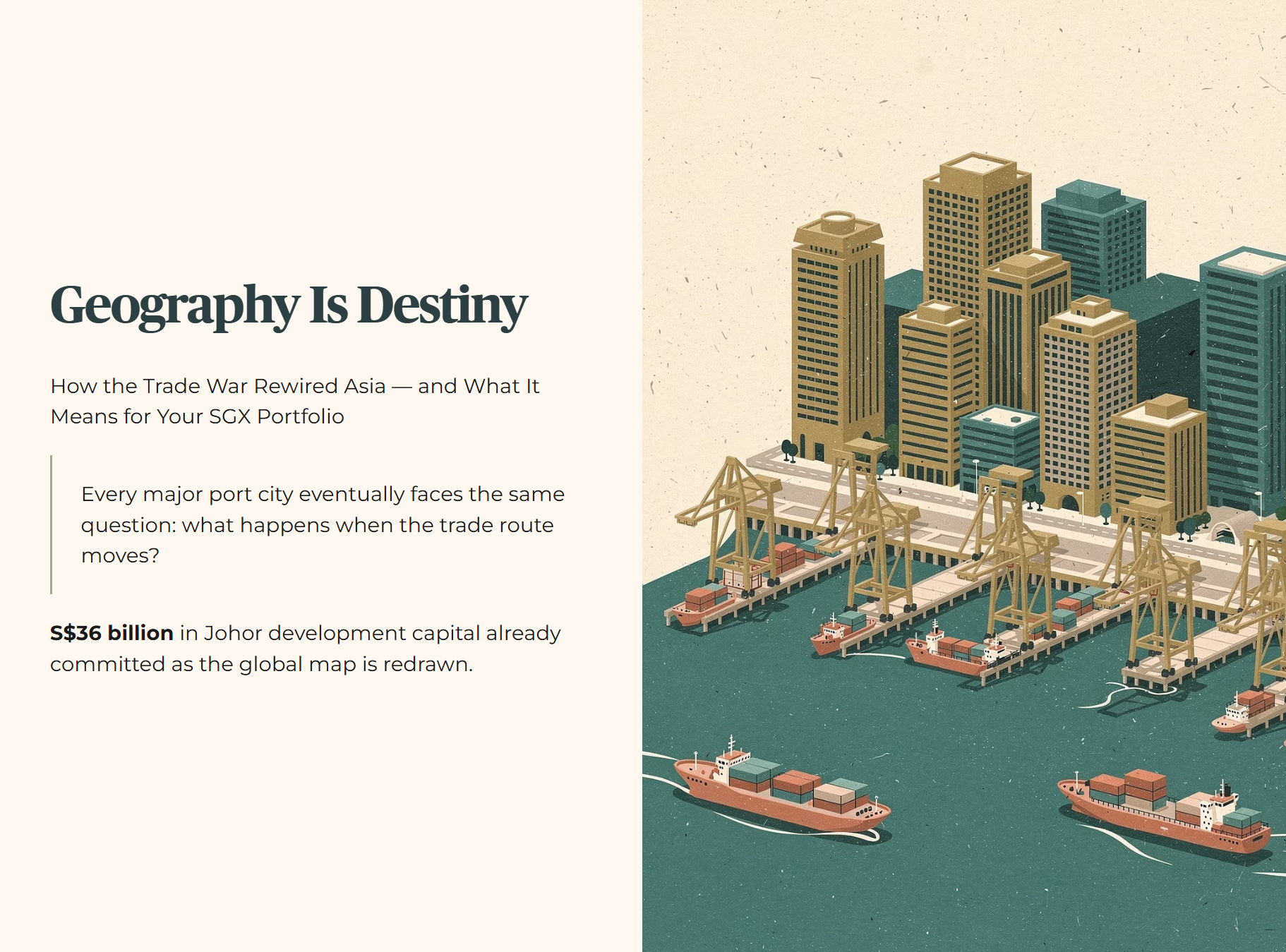
Every major port city in history has eventually faced the same existential question: what happens when the trade route moves? Malacca asked it in the sixteenth century as colonial powers bypassed the traditional spice trails. Rotterdam asked it when containerisation rewrote the logistics of the European interior. Singapore is asking it now. Quietly, officially, and with more than S$36 billion in Johor development capital already committed as a hedge against a global map being redrawn in real time.
The Great Reconfiguration of 2026 is not a theory or a diplomatic talking point. It is a $165 billion diversion of trade that has physically moved from the direct US-China corridor into the “China Plus Three” industrial strategy.
For a Singaporean investor sitting at a kitchen table in Marine Parade or Bedok, the macro lens reveals a paradox. While the headlines speak of decoupling, the data shows a world becoming more deeply integrated through intermediate hubs.
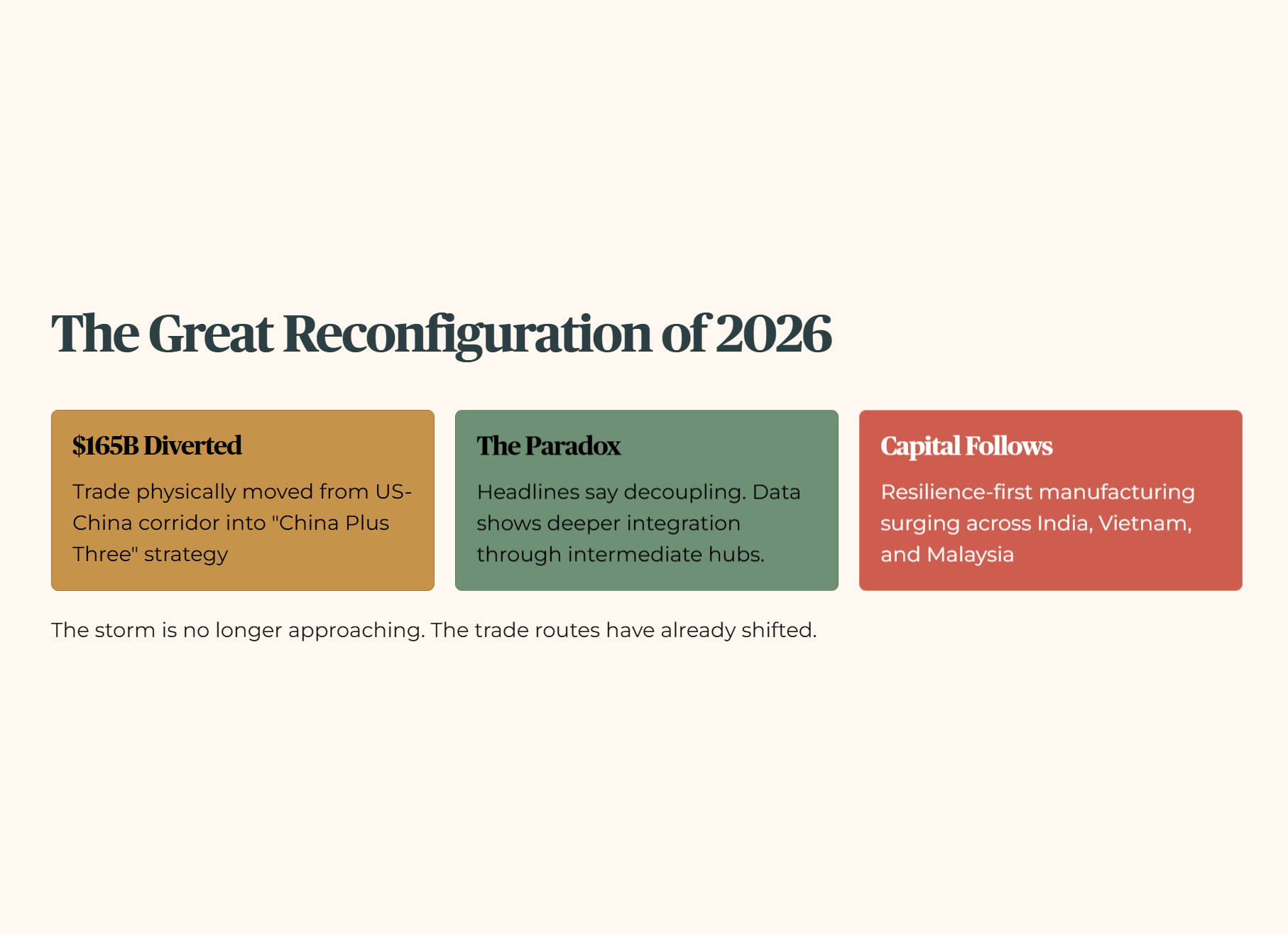
The storm is no longer approaching. The trade routes have already shifted, and capital is following the new scent of resilience-first manufacturing across India, Vietnam, and Malaysia.

In This Article:
The Local Impact — The Wallet
The Data Proof — The Evidence
The Strategic Picture
The Singapore Investor Playbook
Closing
Iggy’s Forensic Compliance Standards — Standard Disclaimer
About Iggy & the Elite Investors
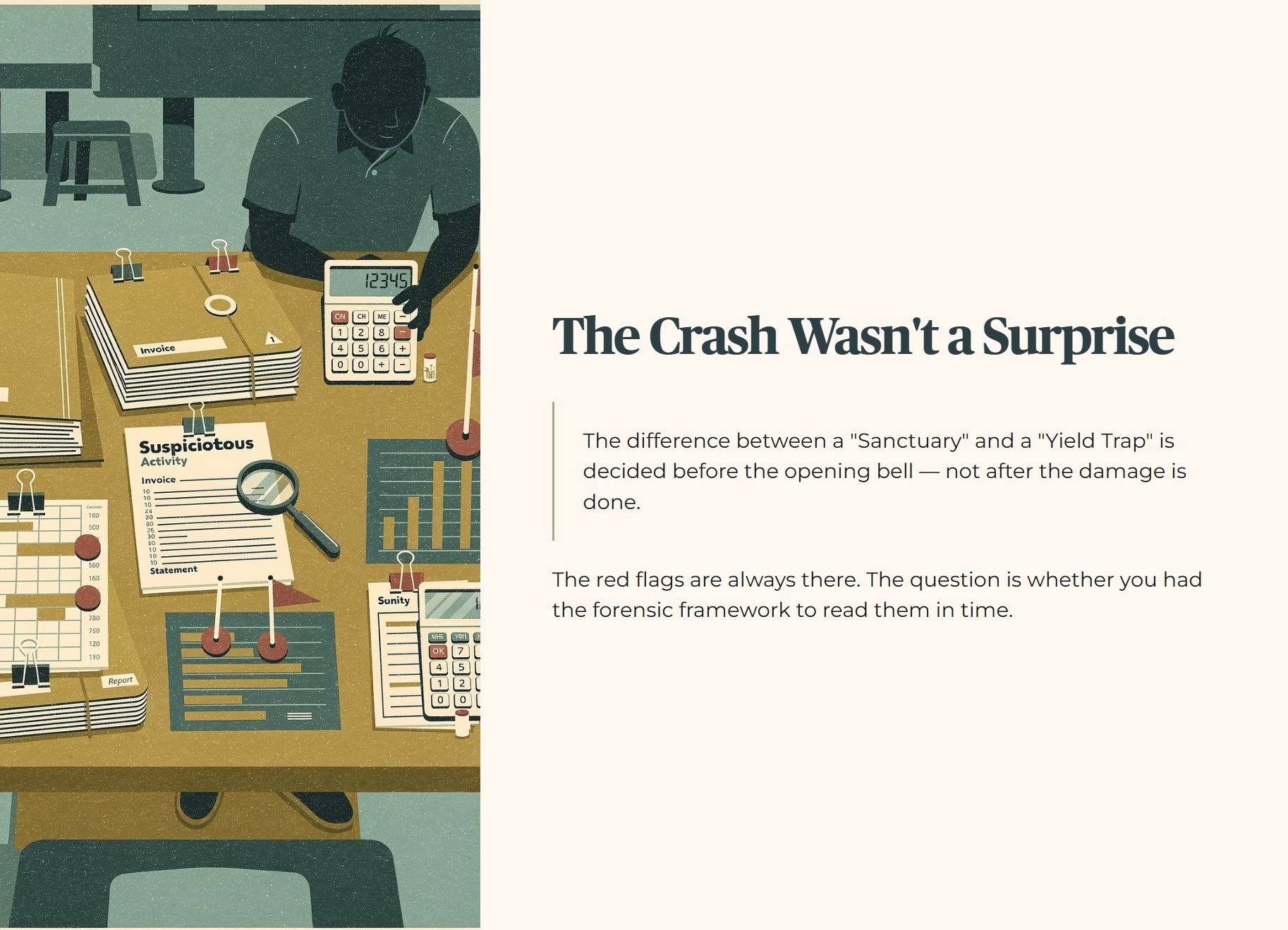
The Crash Wasn’t a Surprise. In this market, the difference between a “Sanctuary” and a “Yield Trap” is decided before the opening bell — not after the damage is done. The red flags are always there. The question is whether you had the forensic framework to read them in time.
Iggy’s Elite Investors didn’t chase the headline yield. They had the full forensic breakdown — the gearing ratios, the occupancy gaps, the debt overhang — before the market opened and before the price moved. Zero-day reports, the complete “Red Zone” watchlist, and institutional-grade cheatsheets that flag the landmines disguised as opportunities.
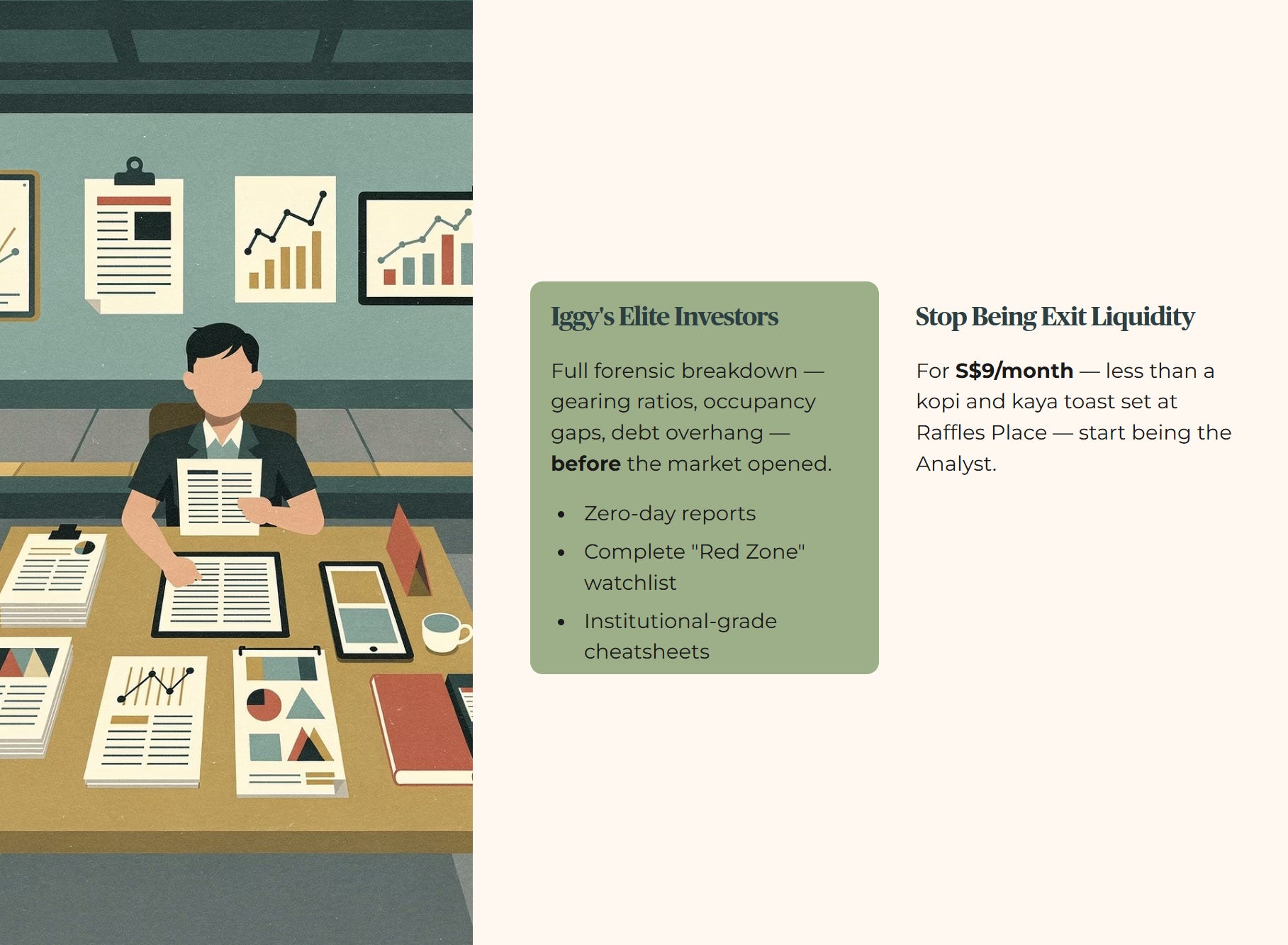
For S$9/month — less than a kopi and kaya toast set at Raffles Place — you stop being the Exit Liquidity and start being the Analyst.
The Forensic Gap about Globalisation
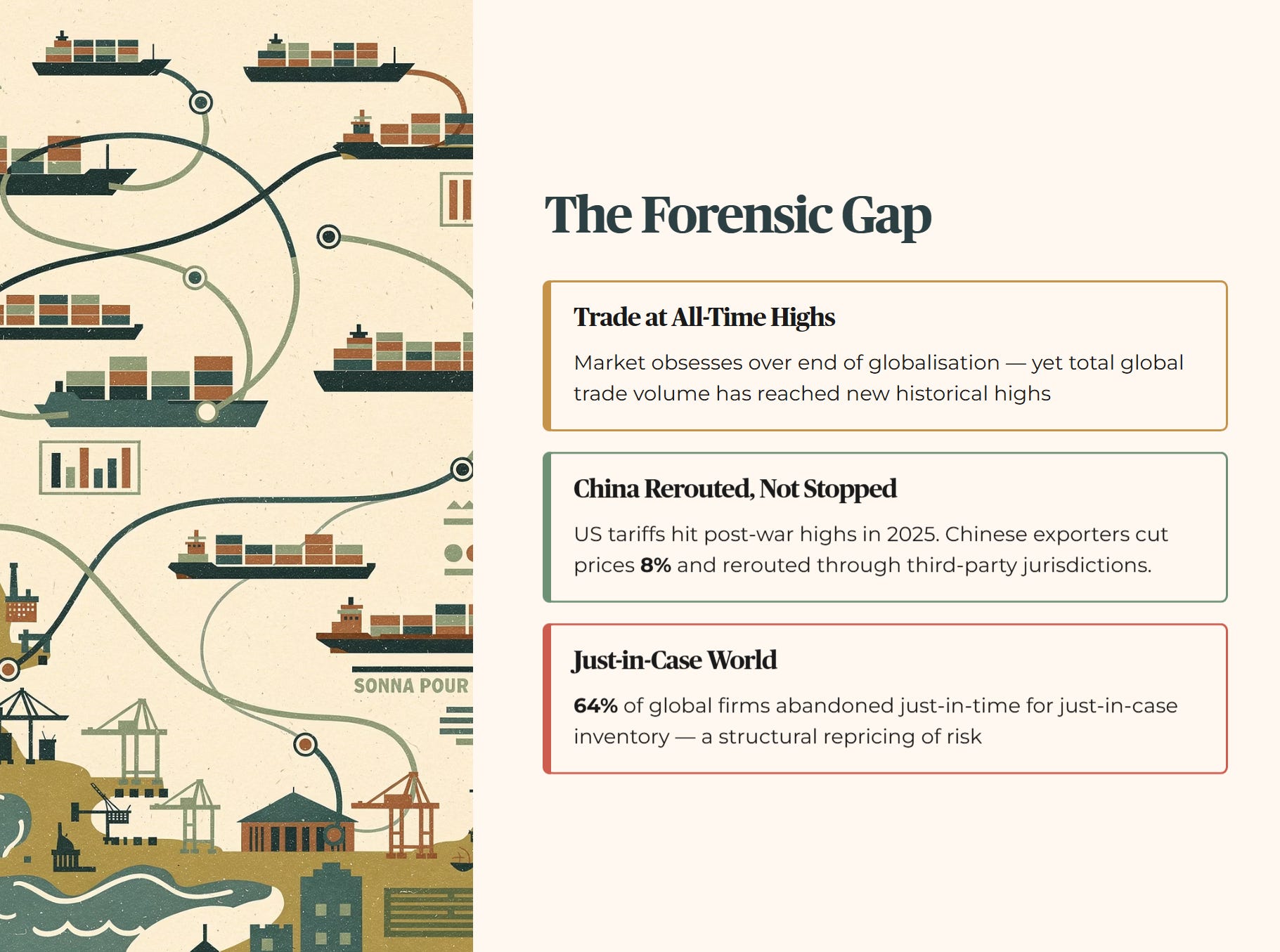
The forensic gap between the consensus narrative and the data reality is stark. The market obsesses over the end of globalisation, yet total global trade volume has reached new historical highs. The catch is that goods no longer travel in straight lines.
When US tariff rates hit their highest levels since post-war reconstruction in 2025, Chinese exporters did not stop selling. They cut prices by an average of 8% and rerouted production through third-party jurisdictions. This unpredictability overhang is the new baseline for 2026. We are watching a world where 64% of global firms have abandoned just-in-time efficiency for just-in-case inventory building.
This shift is not an industrial adjustment. It is a structural repricing of risk that will determine which SGX sectors remain sanctuaries and which become yield traps as the debt wall of late 2026 approaches.
🦎 Iggy’s Insight
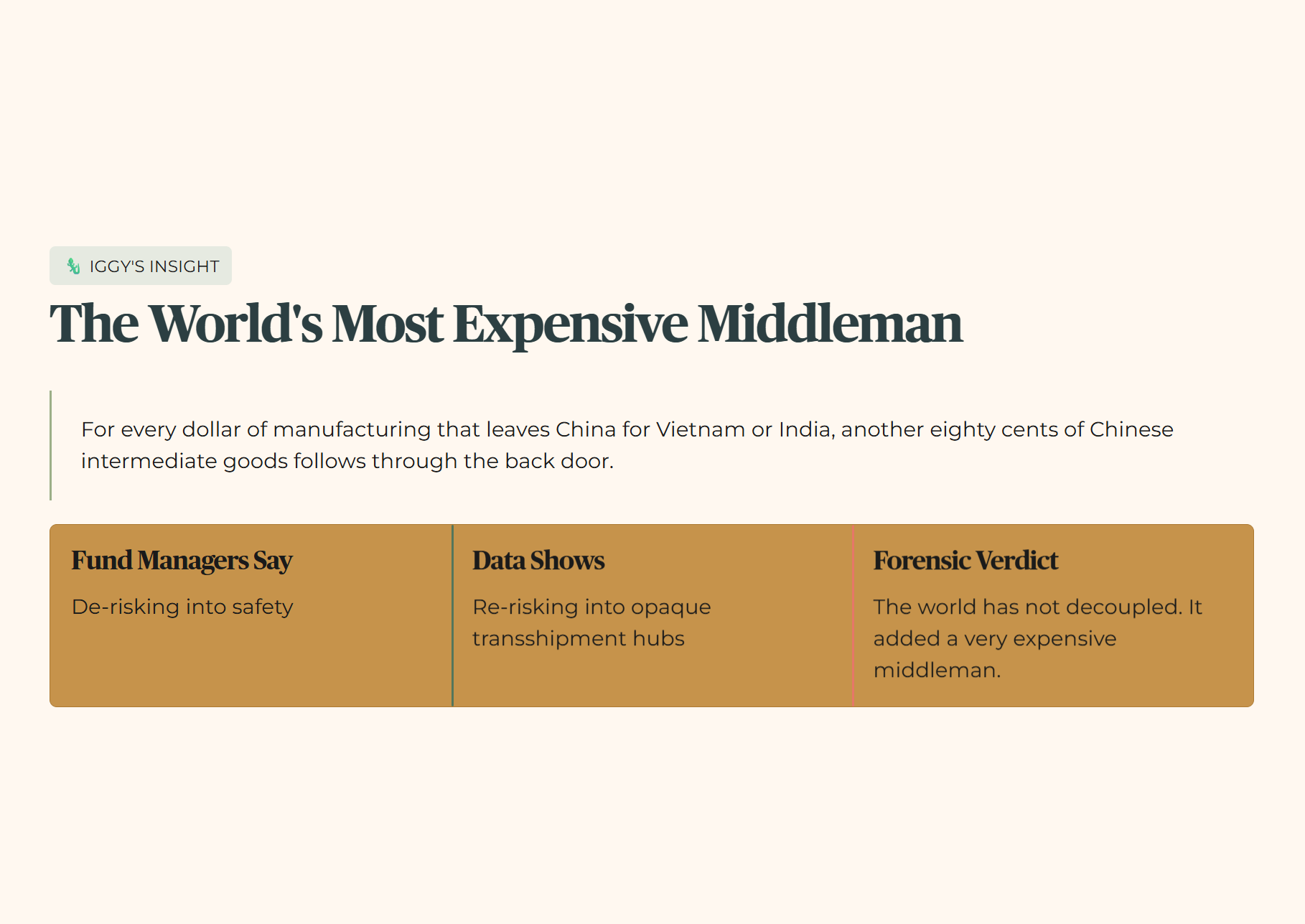
The institutional consensus is obsessed with de-risking. A forensic look at capital flows suggests they are actually re-risking into more complex, opaque jurisdictions. This is the great psychological gap of 2026: fund managers talk about safety while pouring capital into intermediate hubs that carry massive transshipment risks. They are betting Western powers will tolerate ASEAN acting indefinitely as a final-stage assembly node for Chinese components. It is a fragile peace built on a loophole.
The data shows that for every dollar of manufacturing that leaves China for Vietnam or India, another eighty cents of Chinese intermediate goods follows through the back door. The forensic punchline: the world has not decoupled. It has simply added a very expensive middleman.
Section 2: The Local Impact — The Wallet
On a Tuesday morning in Tanjong Pagar, the price of a standard coffee holds steady. Yet the macro-economic weight pressing down on that cup has never been heavier. The trade war is not just a battle of tariffs and semiconductor sovereignty. It is a direct contributor to the inflationary drift that every Singaporean household now navigates.
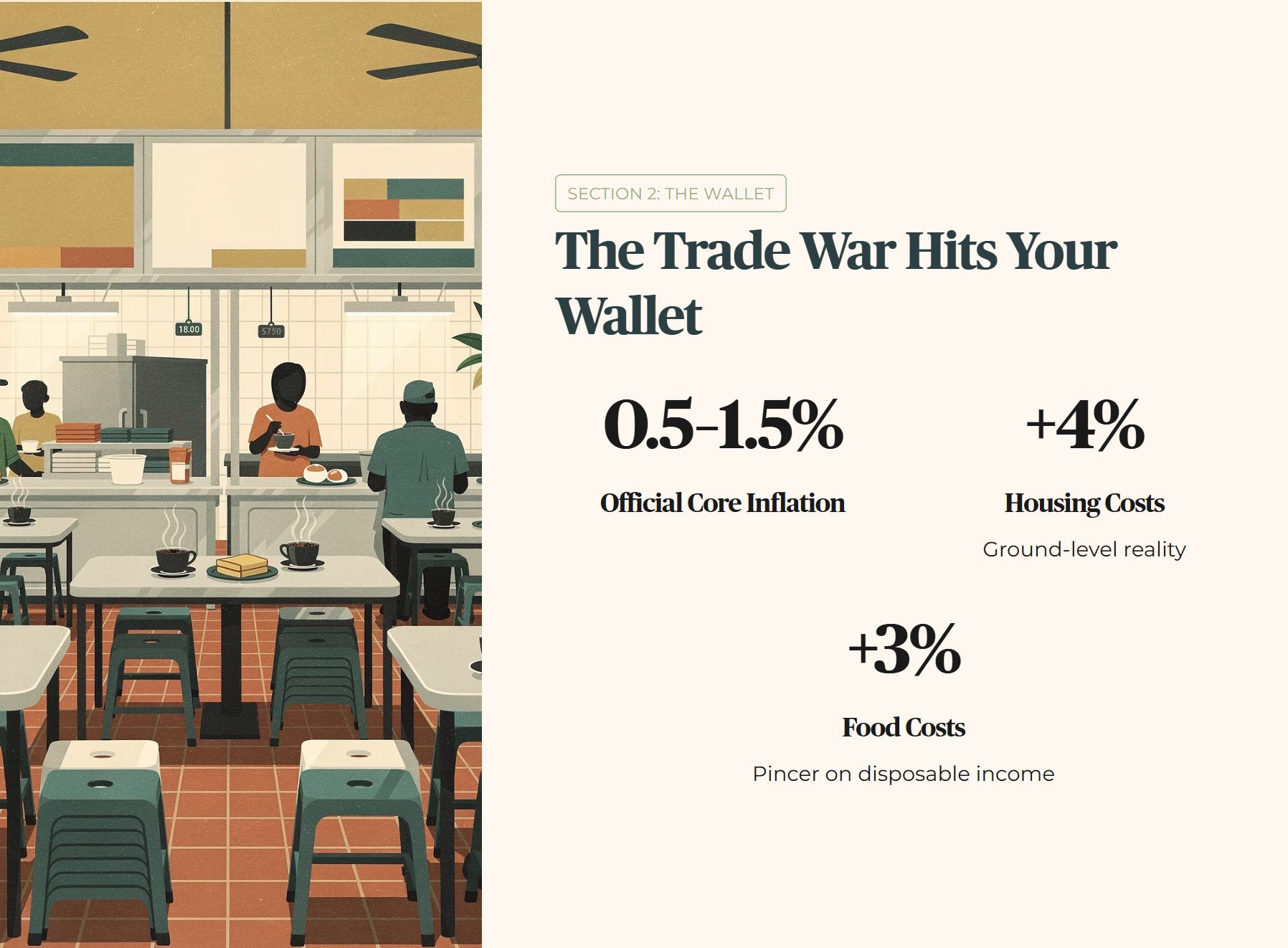
Core inflation officially sits between 0.5% and 1.5%. The ground-level reality in the heartlands tells a different story. Housing and food costs are up 4% and 3% respectively. That creates a pincer effect on disposable income.
For an investor managing a retirement portfolio through CPF or SRS, the trade realignment changes what safe yield actually means. The risk-free benchmark of the CPF Special Account at 4.0% has become the ultimate sanctuary. Any equity investment yielding less than the 4.7% forensic hurdle looks increasingly like a poor trade-off for the volatility involved.
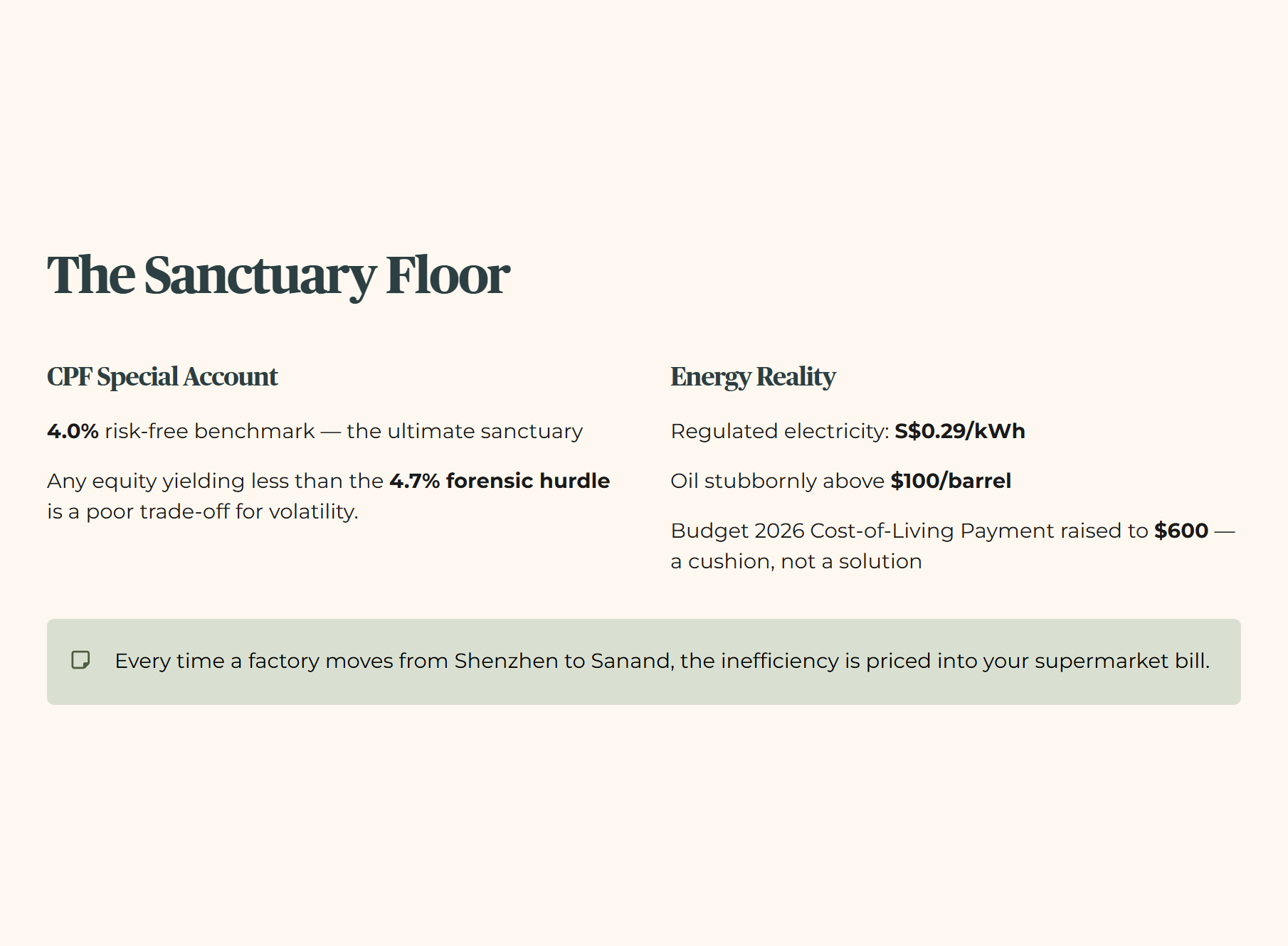
The cost of living impact is most visible in utility and housing sectors. The regulated electricity tariff sits at S$0.29/kWh, influenced by global oil prices that have stubbornly averaged above $100 per barrel. For a family in a 4-room flat in Toa Payoh, this is not a rounding error. It is a monthly reminder that Singapore is a price-taker in a world of energy volatility.
The government stepped in with the Budget 2026 Cost-of-Living Special Payment, increasing it to $600 for those earning up to $100,000. These are cushions, not solutions. The macro lens shows the Standard of Living Tax is rising because the costs of reconfiguring global supply chains get passed directly to the consumer.
Every time a manufacturer moves a factory from Shenzhen to Sanand, the inefficiency of that move is eventually priced into the goods we buy at the supermarket.
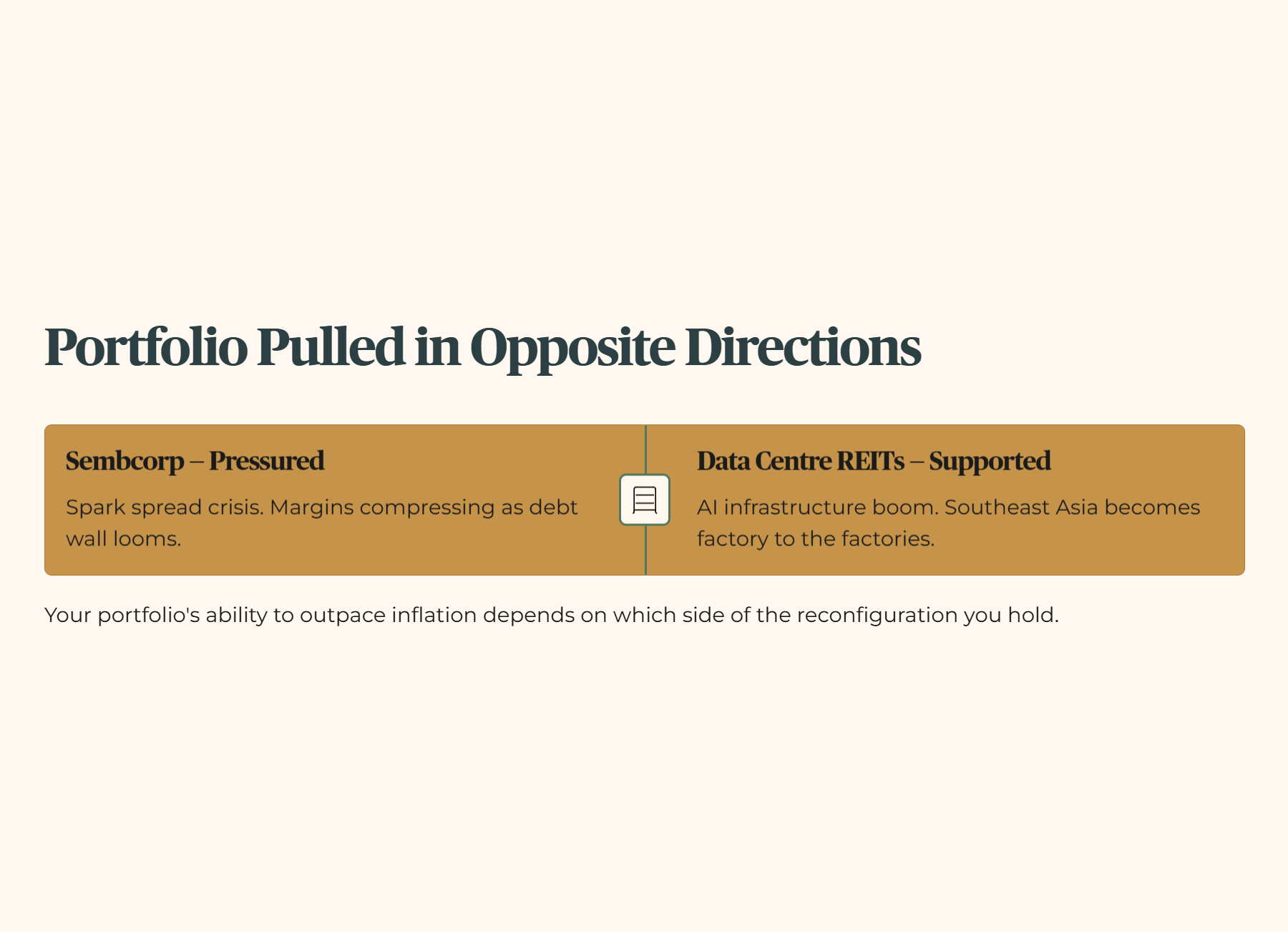
This macro squeeze pulls SGX utilities and REITs in opposite directions. Sembcorp Industries, once the darling of the energy transition, now navigates a spark spread crisis. Margins are compressing just as a massive debt wall looms. Meanwhile, data centre REITs benefit from a different regional shift: the AI infrastructure boom.
As Southeast Asia becomes the factory to the factories, demand for the digital infrastructure powering these facilities surges. This is the wallet consequence for the heartland investor. Your portfolio’s ability to outpace inflation now depends on whether you hold assets that benefit from the reconfiguration, like hyperscale data centres, or assets being crushed by the inefficiency of it, like traditional industrial manufacturing with high gearing.
But the $276 billion China-ASEAN trade surplus figure in the dashboard below exposes the fragility of this growth entirely.
