



Did You Lose Money Using Your CPF for the HDB? Three Questions to Check Before You Sell
Selling your flat means putting the CPF money back, with interest. Here is what that refund is, what it is not, and what to check first.
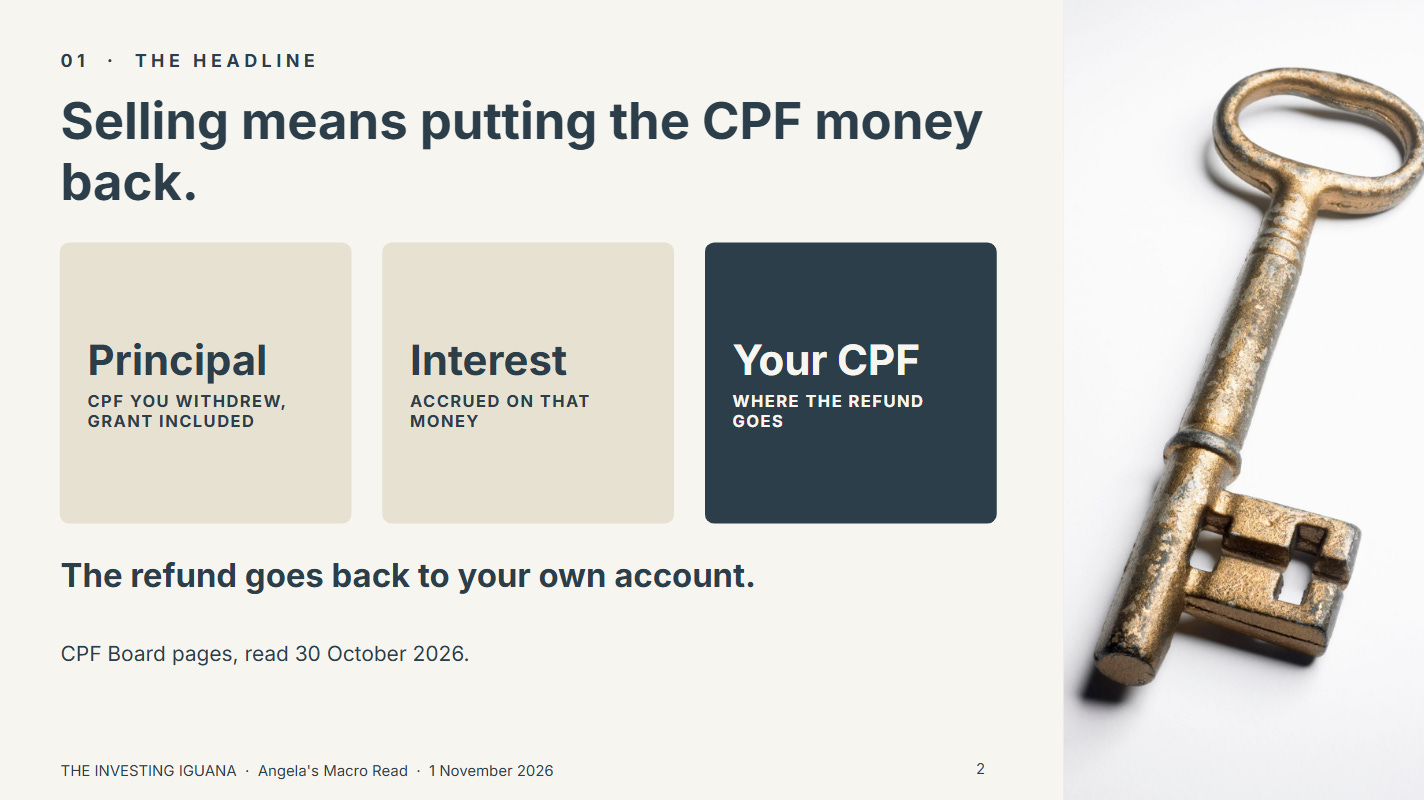
When you sell an HDB flat, the sale price does not all reach you as cash. The CPF money you used for the flat has to go back into your CPF account first, together with interest. Many owners hear that and ask the same thing: did using my CPF for the flat cost me money, and is the interest a charge?
I am not a CPF Board officer, and I take no view on whether anyone should use CPF for a home, refund early or leave things as they are. I read the CPF Board’s own pages on refunds when a property is sold, on accrued interest, on housing grants, on voluntary refunds and on current interest rates, and the CPF page on the HDB loan and the bank loan. The CPF Board pages carry “last updated” dates between 29 May and 9 October 2026, and I read them on 30 October. If you own a flat, or know someone who does, the practical question is what the refund is and what to look at before the sale, and that is the question I try to answer, as far as the sources allow.
What This Piece Does
It sets out what the CPF pages say you must put back when you sell, and where the money goes.
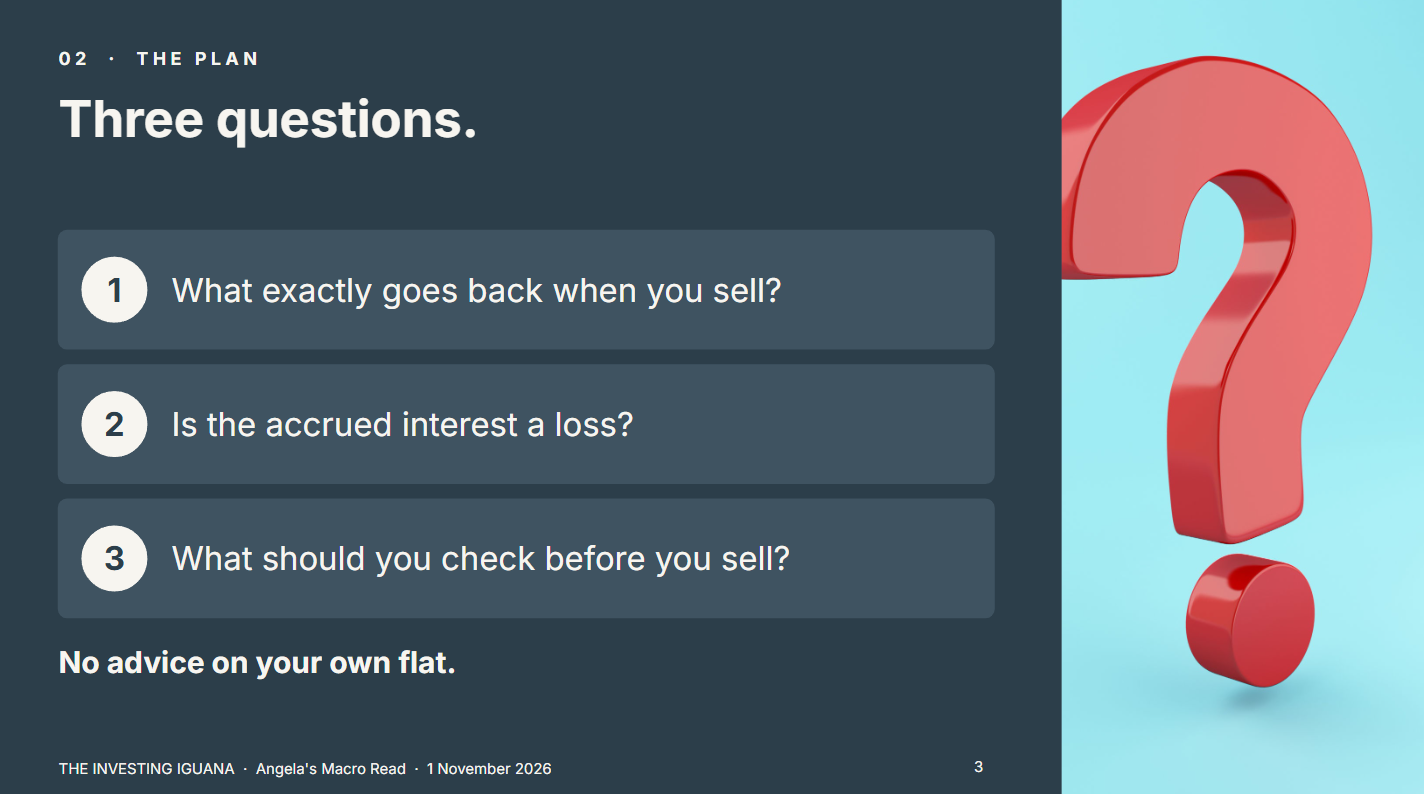
It works through three questions: what exactly goes back, whether the interest is a loss, and what to check before you sell.
It uses made-up numbers wherever I need an example, and it says so each time.
Nothing here is advice on your own flat, and no figure in the examples is your figure. The whole piece is free.

What This Piece Does
What the CPF Pages Say, in Order
What you must put back
Where the refund goes
What accrued interest is
Question 1: What Exactly Goes Back When You Sell?
The order of payments
What happens if the sale price is lower than the refund
The objection
Angela’s Observation
Question 2: Is the Accrued Interest a Loss?
Two questions that get mixed together
A made-up example
The objection
Angela’s Observation
Question 3: What Should You Check Before You Sell?
What is your own refund figure today?
Where will the refund land, given your age?
Is a voluntary refund part of your thinking, and what does it change?
What I am watching next, without predicting
Angela’s Observation
What the CPF Pages Say, in Order
What you must put back
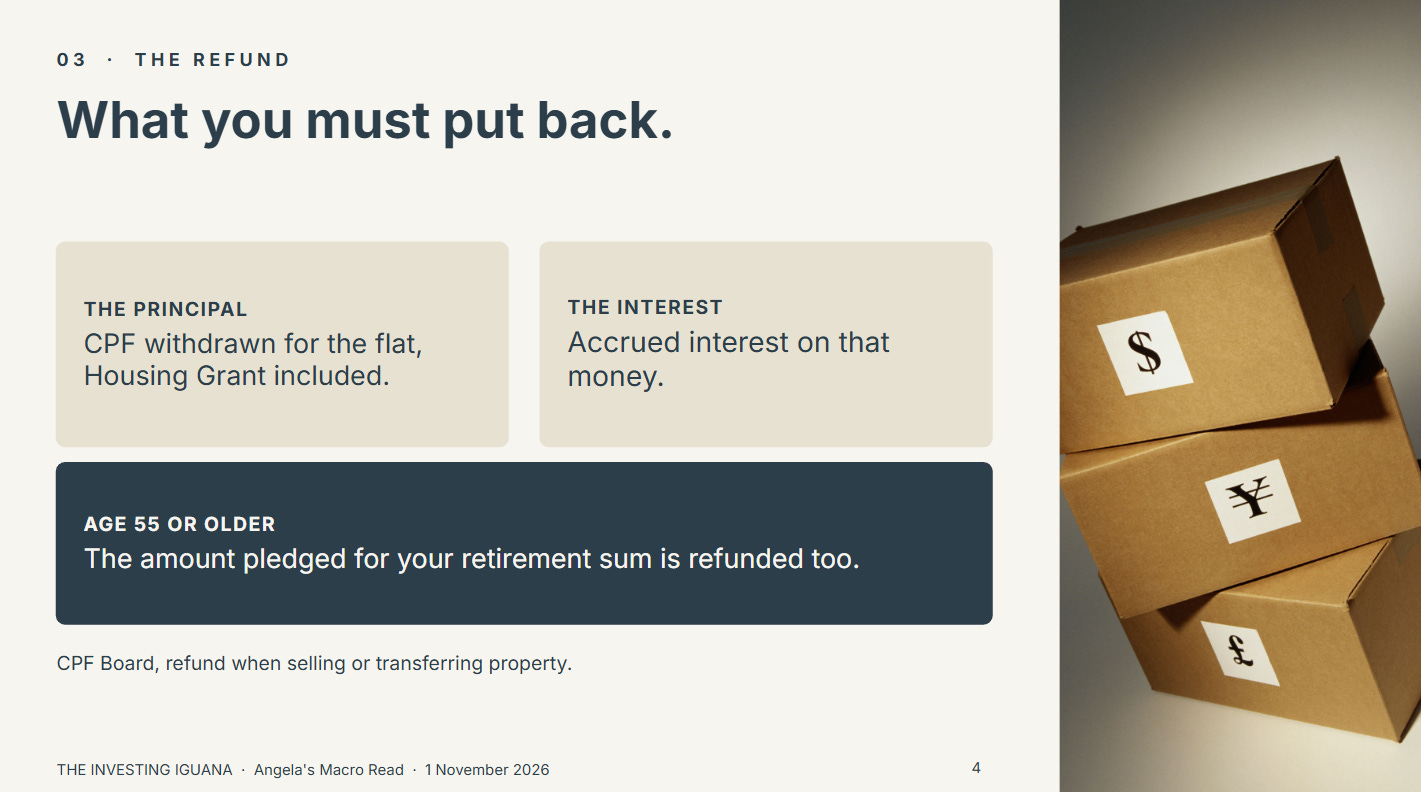
On a sale, you refund the CPF principal you withdrew for the property and the accrued interest. The CPF page on selling or transferring property says so in one sentence, and it adds that if you are 55 or older and pledged your property to set aside your retirement sum, the pledged amount is refunded too. The CPF pages on housing grants say the CPF Housing Grant counts in the same way: the principal withdrawn, including the grant, plus accrued interest.
Where the refund goes
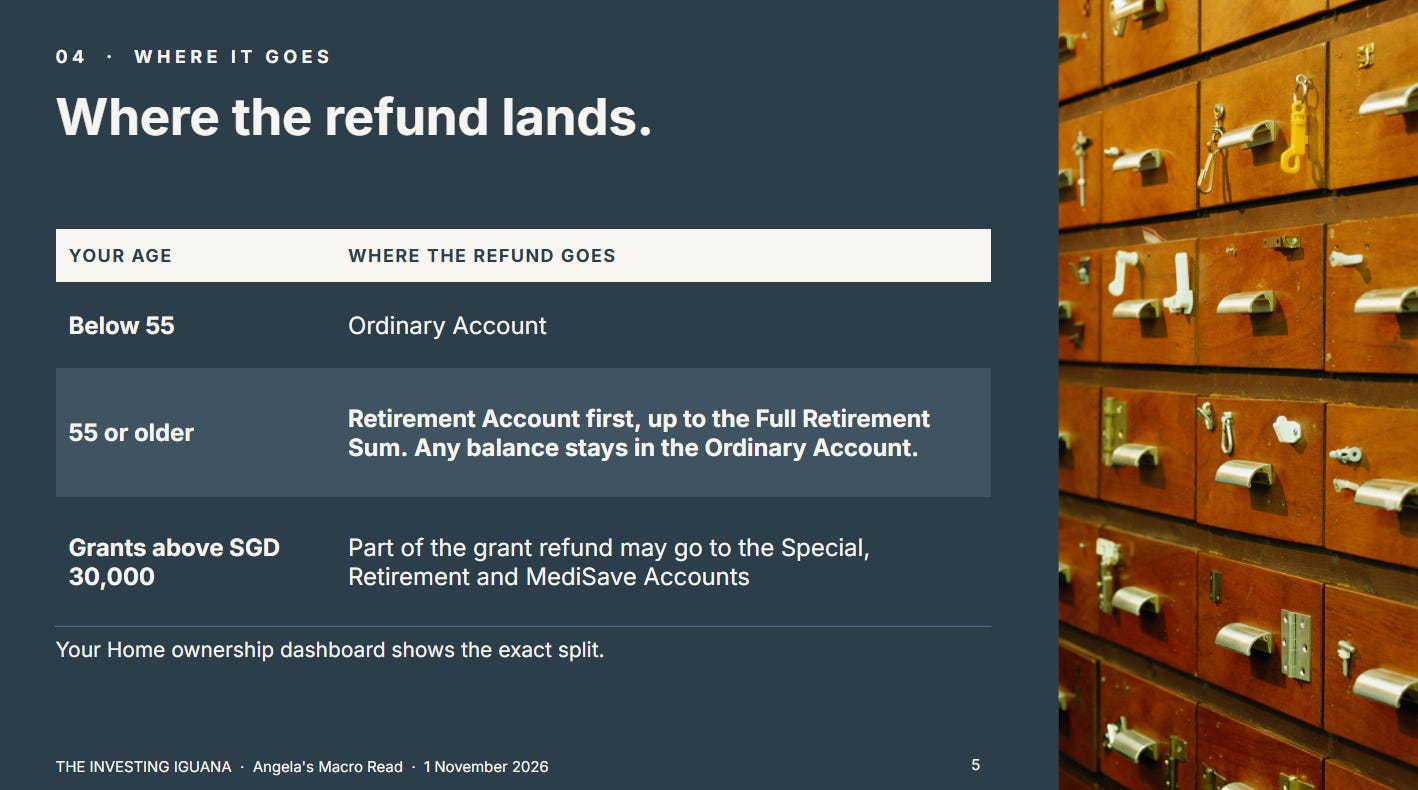
Below age 55, the refund goes to your Ordinary Account. From 55, the CPF pages say the refund first tops up your Retirement Account to your Full Retirement Sum, and any balance stays in your Ordinary Account. Where someone has received more than SGD 30,000 in housing grants, the CPF page says part of the grant refund may be credited to the Special, Retirement and MediSave accounts, and it points members to the “What happens if” section of their Home ownership dashboard for the exact split.
What accrued interest is
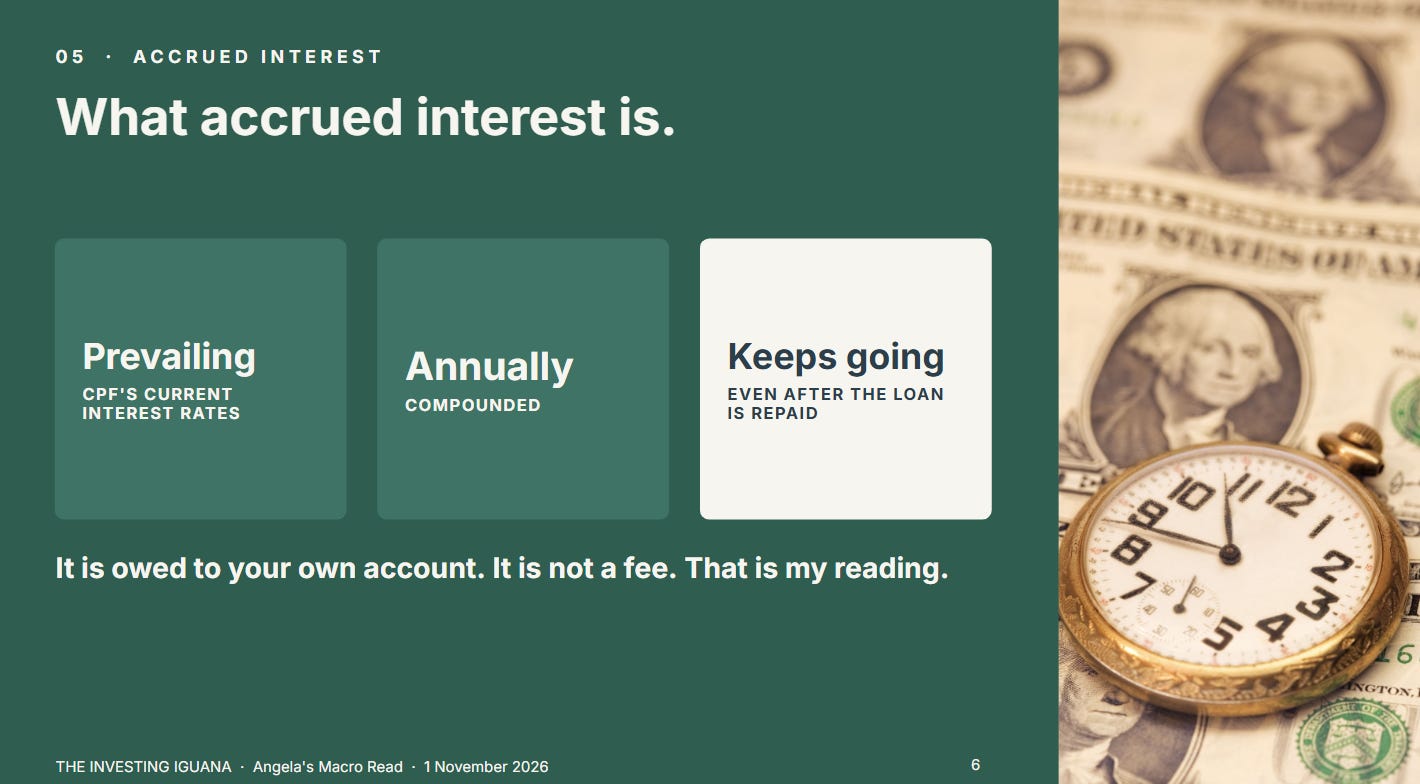
The CPF page on why the accrued interest must be refunded says that refunding both amounts “ensures your retirement savings are fully restored to what they would have been”. The interest is calculated on CPF’s prevailing interest rates, it is compounded annually, and it runs from when you first used the CPF savings for the property until the refund is made. The same page says it continues to accrue even after the housing loan has been fully repaid.
I read two things from that, and no page states them in these words. The accrued interest is a record of what the money would have earned in your own account, and it is owed to your own account. It is not a fee paid to CPF Board or anyone else.
Question 1: What Exactly Goes Back When You Sell?
The order of payments
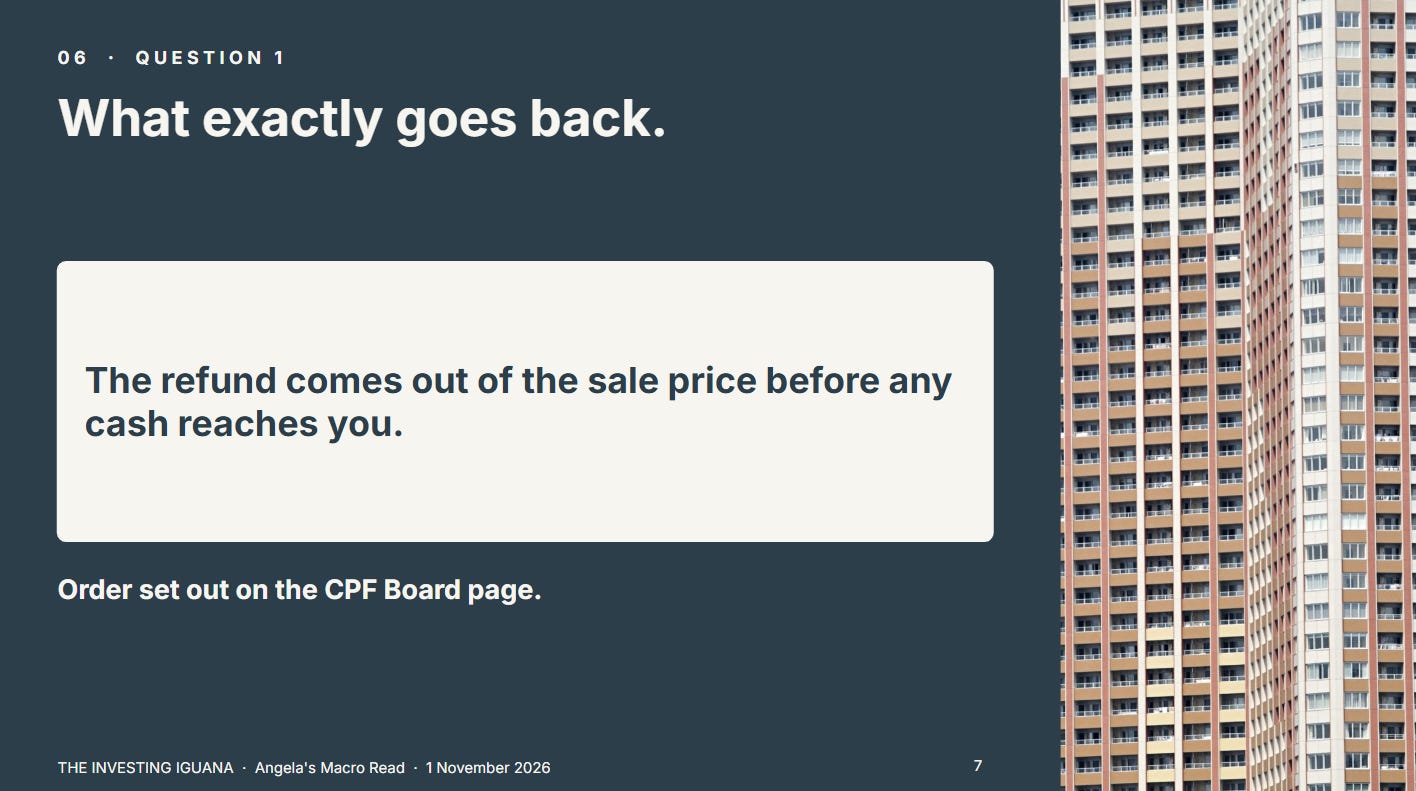
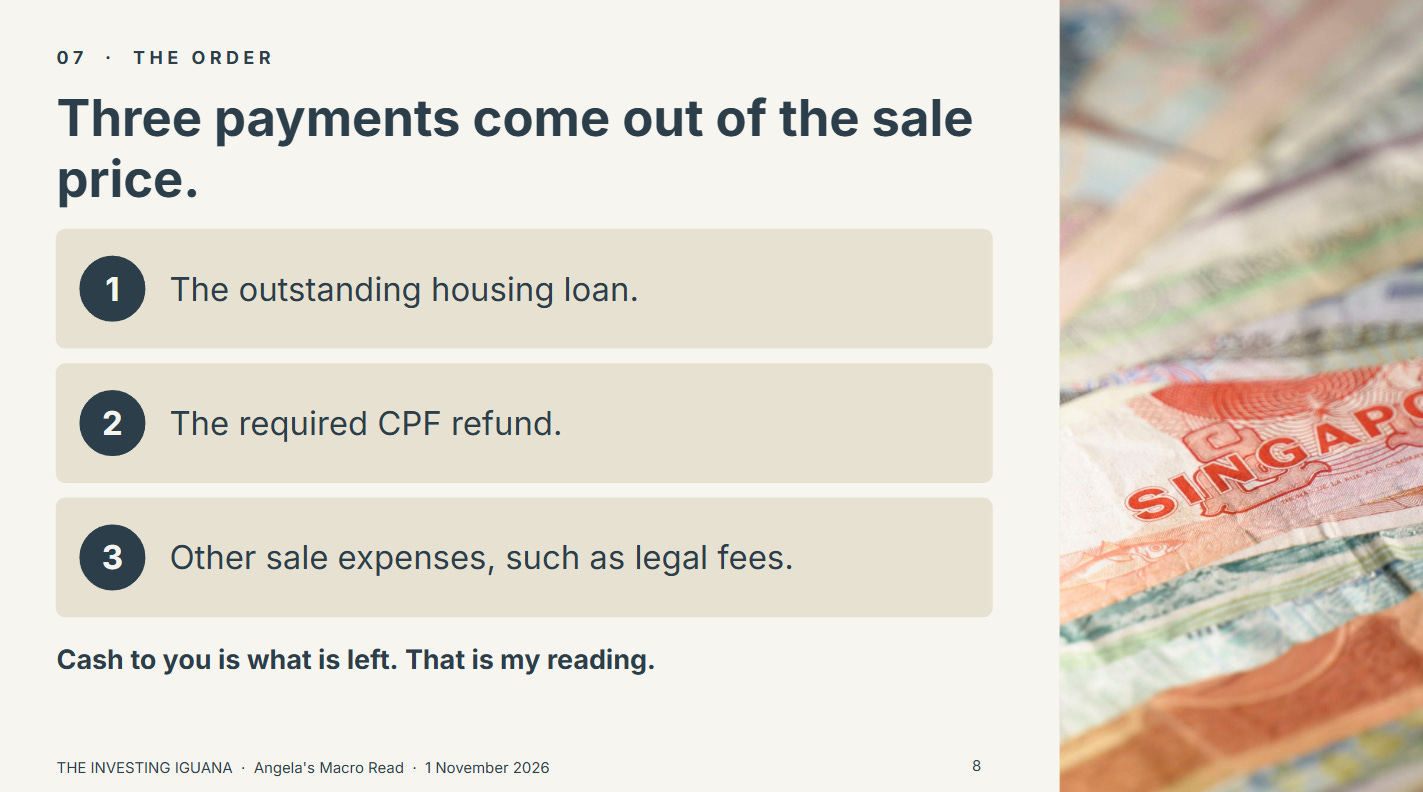
The CPF page on refunds and sales says the selling price will generally be used to pay three things in this order: the outstanding housing loan, the required CPF refund, and other sale expenses such as legal fees. I read the cash you receive as whatever is left after those three, which is my reading and not a CPF statement. The point to take is that the refund comes out ahead of the legal fees, before any cash reaches you.
What happens if the sale price is lower than the refund
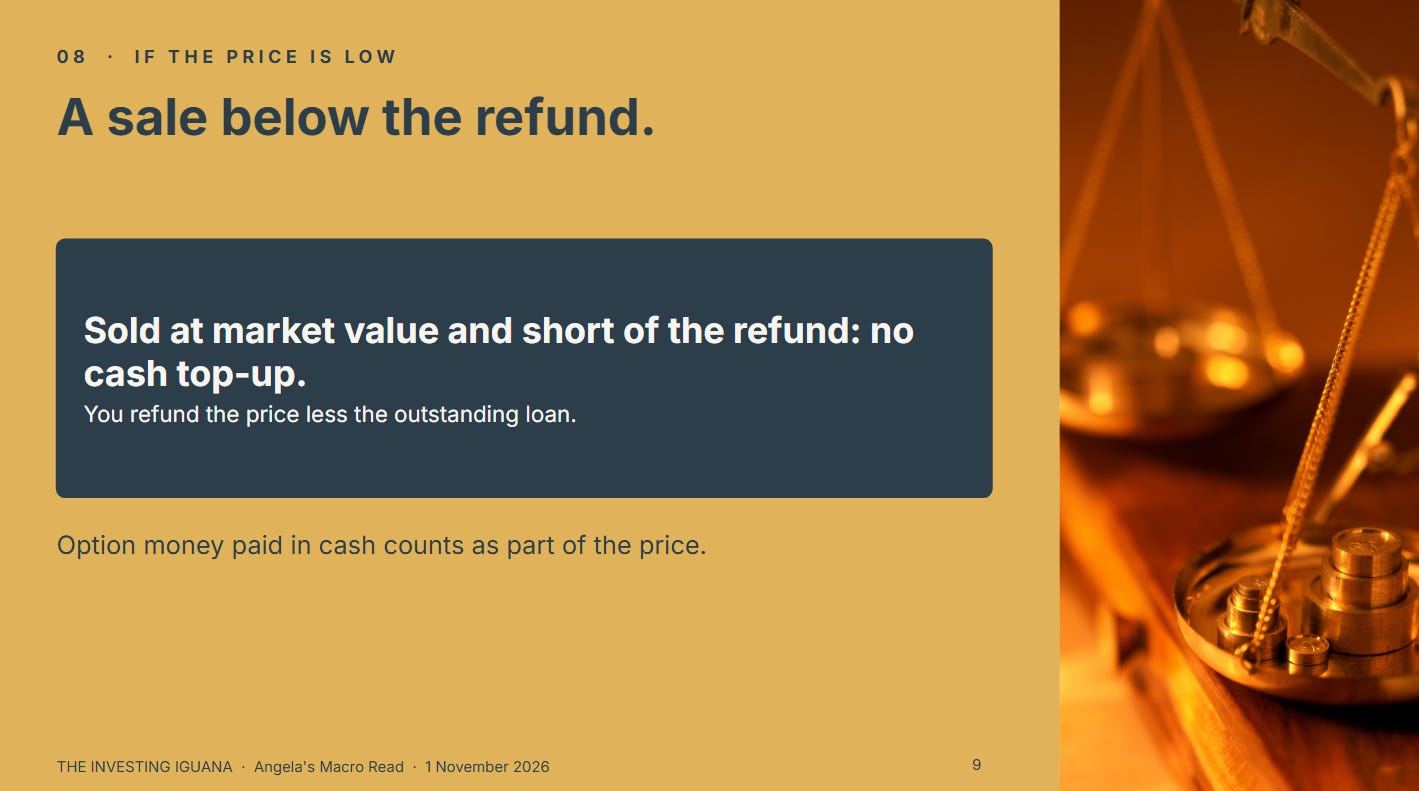
This is the case many owners worry about, and the CPF page is clear on it. If the property is sold at market value and the price, after the loan is repaid, does not cover the required refund, you refund the selling price less the outstanding loan, and you do not need to top up the shortfall in cash. Option money received in cash counts as part of the selling price, and it has to be refunded before the transaction completes.
The objection
The objection I expect is a fair one: if it all goes back to my CPF, why does it feel like a loss when I look at the sale? It feels that way because the cash balance is smaller than the sale price less the loan. That is correct. The cash is smaller by the refund, and the refund has not disappeared. It has moved from your cash proceeds to your own CPF account, and for a member of 55 or older it goes first to the Retirement Account.
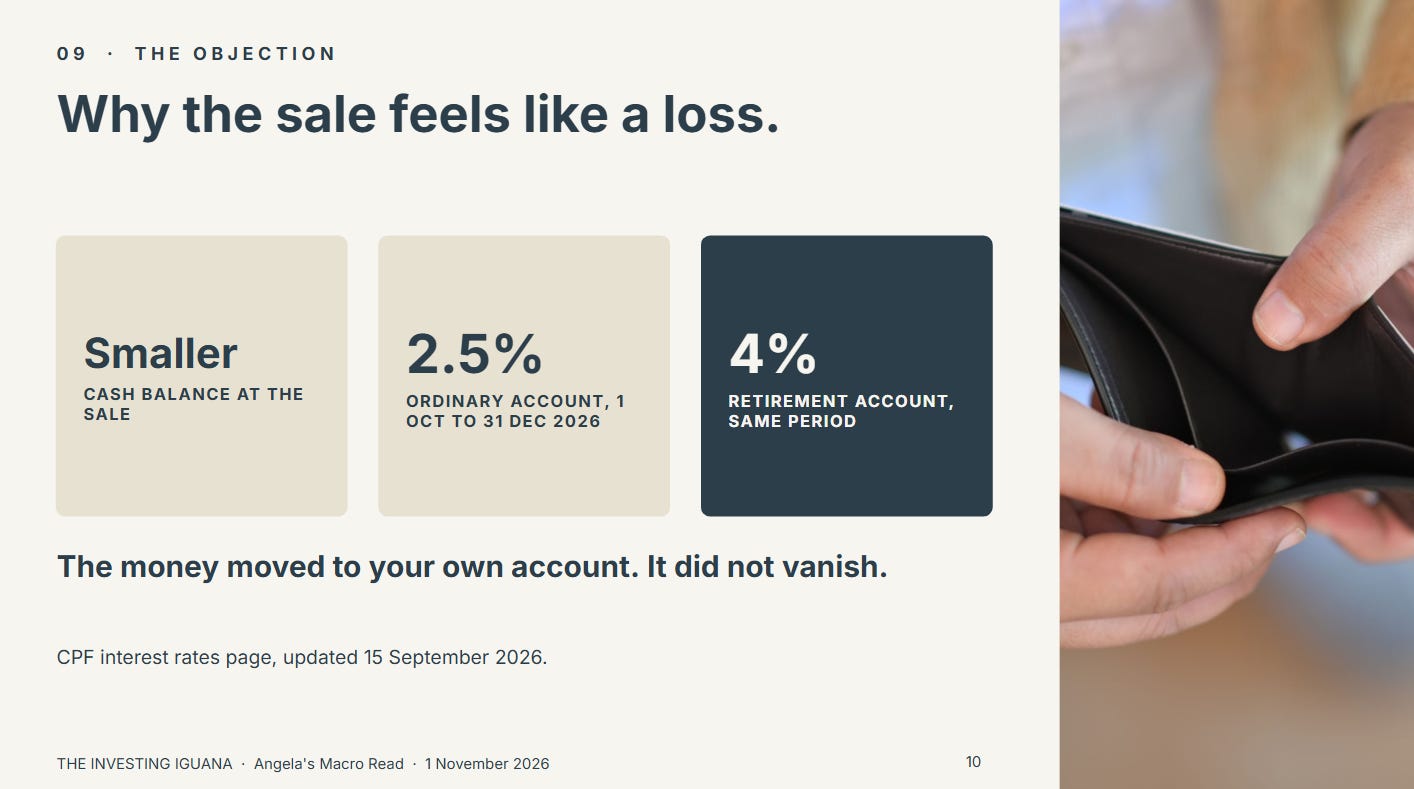
For 1 October to 31 December 2026, the CPF interest rates page (last updated 15 September 2026) shows the Retirement Account credited at 4% a year and the Ordinary Account at 2.5%. That is a difference in where the money sits, and it also affects what you can do with it, because Retirement Account savings are set aside for retirement payouts. I did not find a CPF page that compares the two for a seller, so I will not say which is better for you.
🟠 Angela’s Observation
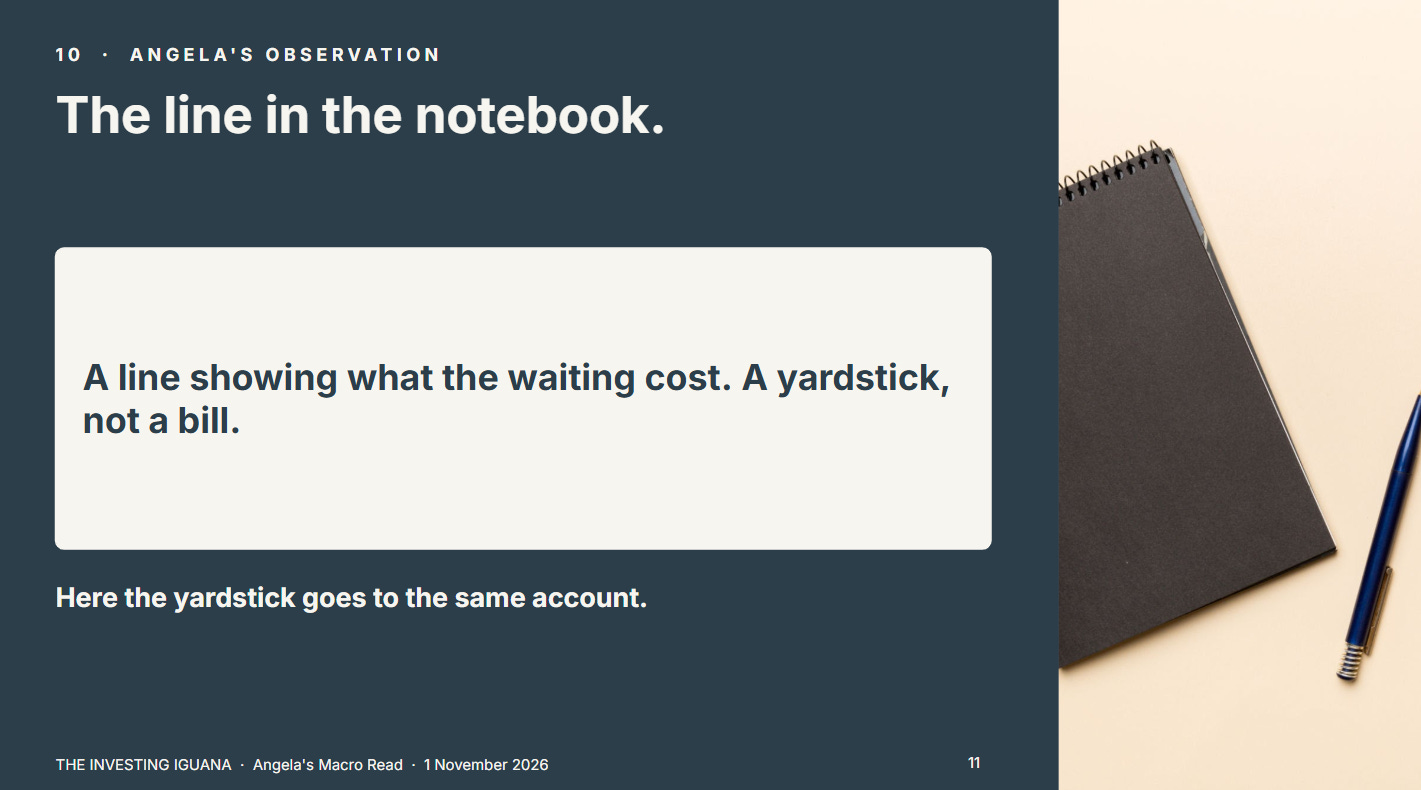
My husband used to lend small amounts to his brother, and he wrote each loan in a small notebook with the date. When the money came back, he added a line with what that amount would have earned in a fixed deposit over the same months. He never asked his brother for it. He said the line was a yardstick and not a bill, and it told him what the waiting had cost or saved. The accrued interest on a CPF refund looks like that notebook line to me, with one difference: the money and the yardstick both go to the same account. What would I want to know about my own notebook before I read the sale proceeds?
Question 2: Is the Accrued Interest a Loss?
Two questions that get mixed together
There are two interest rates in a flat purchase, and they answer different questions. One is the rate on the housing loan. The CPF page on the HDB loan and the bank loan says the HDB loan rate is fixed at 2.6% a year, as at that page’s date of 12 June 2026, and is pegged to the CPF Ordinary Account rate, while bank loans are floating by default, pegged to a benchmark such as SORA, with some banks offering fixed rates for one to three years before they revert to floating. That rate is the price of borrowing, and you pay it whether the instalments come from CPF or from cash.
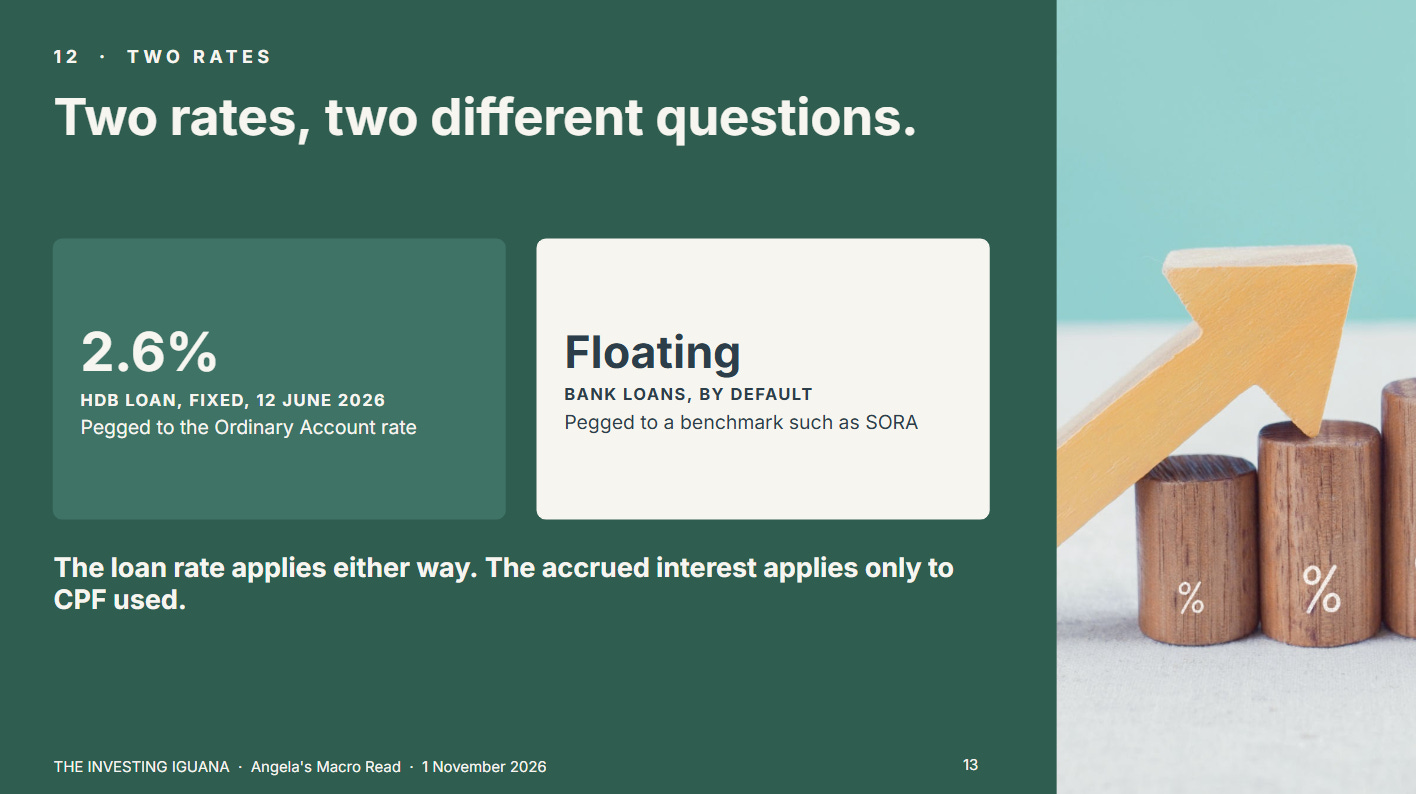
The other rate is the one on the accrued interest, which only exists because CPF money was used. The loan rate applies either way. The accrued interest applies only to the CPF savings you used, so it is the one that matters for the question of whether using CPF cost you anything.
A made-up example
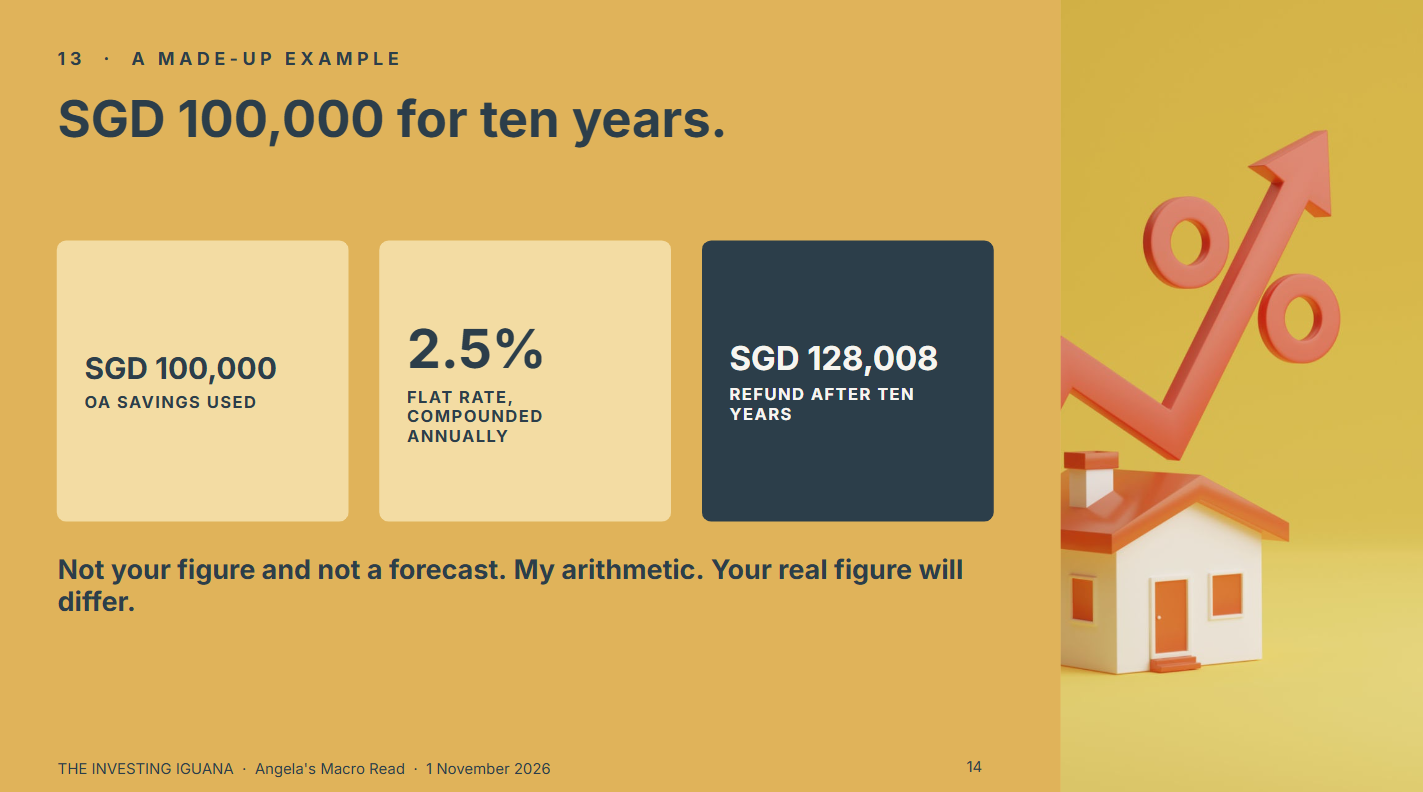
Here is an illustration, and it is not your figure and not a forecast. Say you used SGD 100,000 of Ordinary Account savings for the flat, and you did not touch your cash. Suppose, to keep the arithmetic simple, that accrued interest ran at a flat 2.5% a year, compounded annually, for ten years. The refund would be about SGD 128,008. CPF uses its prevailing rates, which change over time, and I did not find a page that says whether the extra interest on the Ordinary Account is part of the calculation, so the real figure for any flat will differ. The number to use is the one CPF gives you for your own flat.
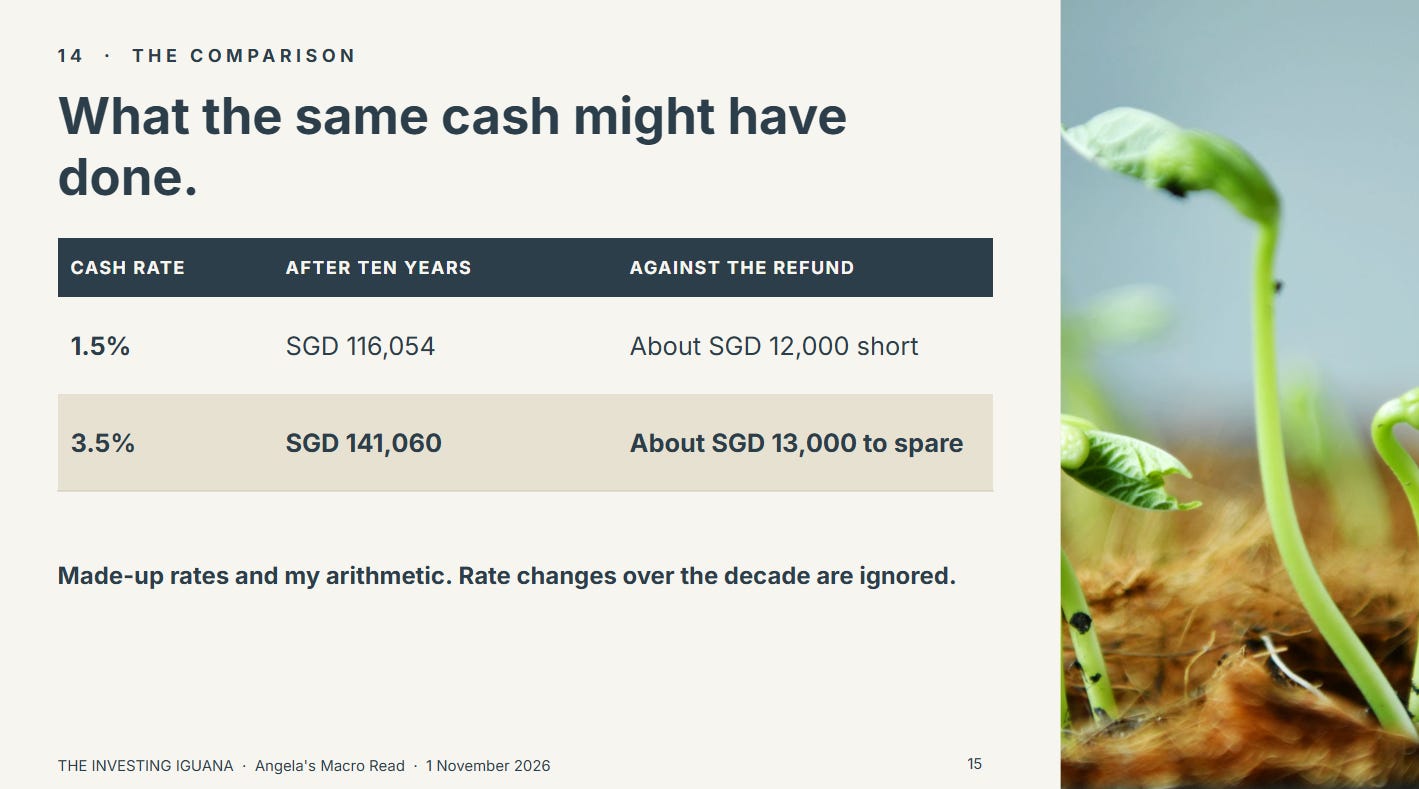
Now compare that with what the same SGD 100,000 of cash might have done if you had kept it for ten years and not used it for the flat. If it earned 1.5% a year, it grew to about SGD 116,054, which is about SGD 12,000 short of the refund. If it earned 3.5% a year, it grew to about SGD 141,060, which covers the refund with about SGD 13,000 to spare. These are my arithmetic on rounded, made-up rates, and they ignore any change in rates over the ten years.
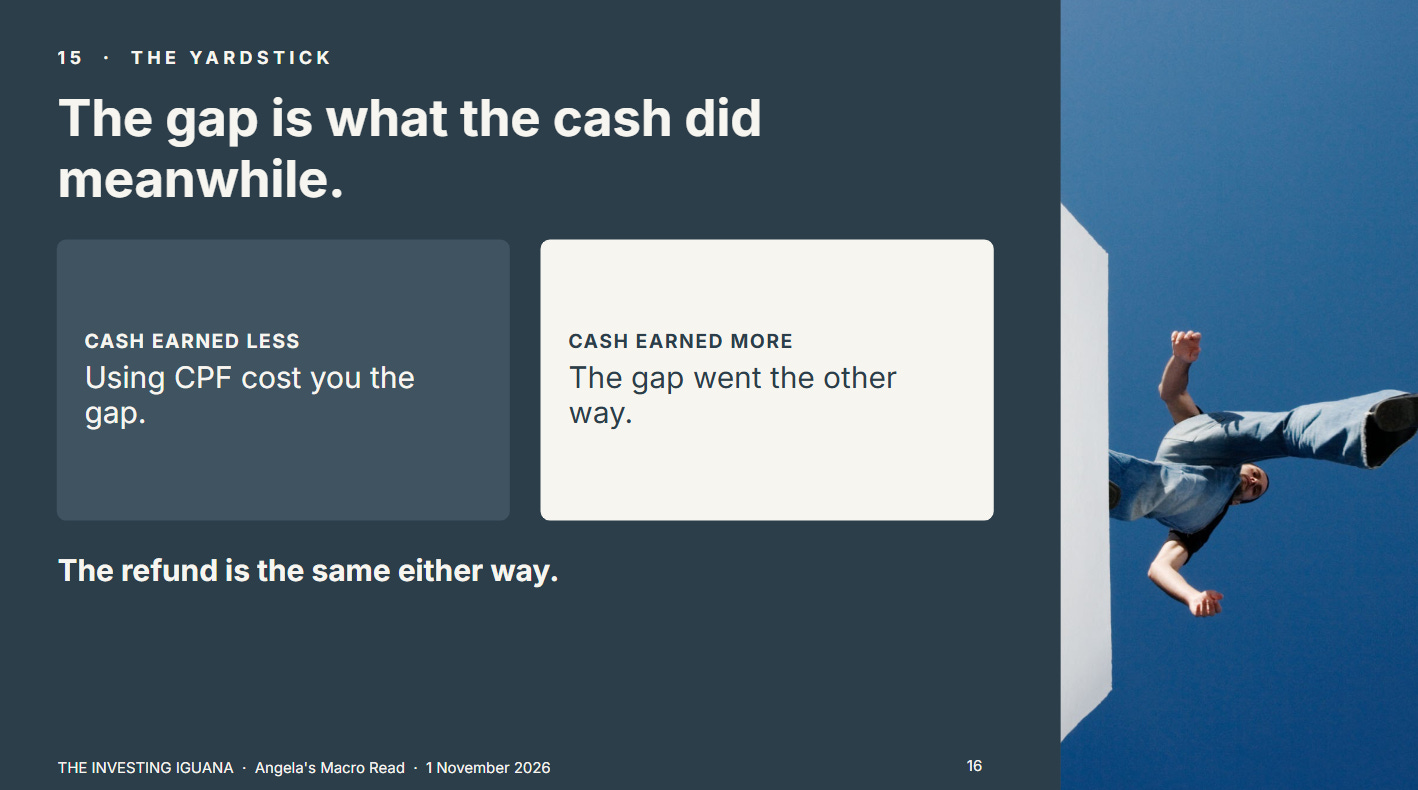
Put plainly, the accrued interest works as a yardstick. If the cash you kept free earned less than your Ordinary Account would have, the use of CPF has cost you the gap. If it earned more, the gap went the other way. What you refund is the same either way, and the difference lies in what the cash did in the meantime. Did you lose money? The honest answer from the sources is that it depends on that comparison, and the CPF pages do not make it for you.
The objection
The objection I expect is that most of us did not keep cash aside to compare with. That is true, and the comparison is still useful, because the cash that stayed in your pocket may have gone to renovation, a child’s education or ordinary living costs. Those do not earn a rate. They are not a loss either. They are a use of the money, and a different one from sitting in an account. The yardstick tells you what the Ordinary Account would have paid. It cannot tell you whether the other use was worth it.
🟠 Angela’s Observation
At the pharmacy counter, a patient would sometimes ask whether they had wasted their money on a medicine that did not seem to help. I learned early that the useful answer was not yes or no. It was a question: compared with what? A medicine can look like a waste next to a cheaper one that worked, and look sensible next to the cost of getting worse. The CPF refund asks the same question, and I think many of us skip it because the number at the sale is so large. Which comparison do I actually have in mind when I say I lost money?
Keep Reading, Free
The next section turns this into three checks you can use before you sell, and it ends with the dates and rates I will be watching. It is free. All it takes is a free subscription to keep reading, and you can cancel it any time. Paid plans exist for the deeper analysis on this publication, and nothing in this piece sits behind them.