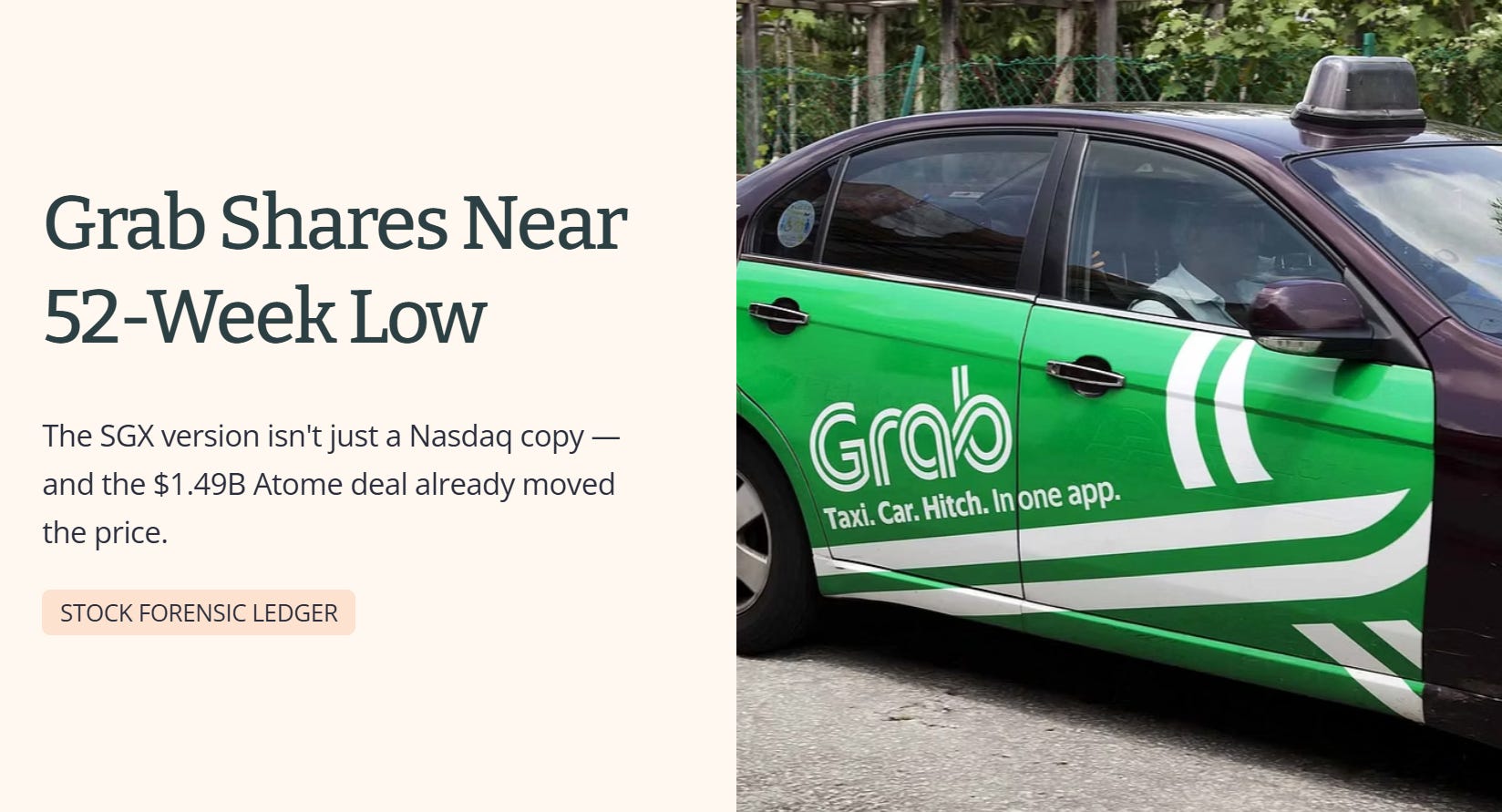
Grab Shares Are Near a 52-Week Low. The SGX Version Isn’t Just a Nasdaq Copy.
The $1.49 billion Atome deal already moved the price. The actual payoff is over a year away.
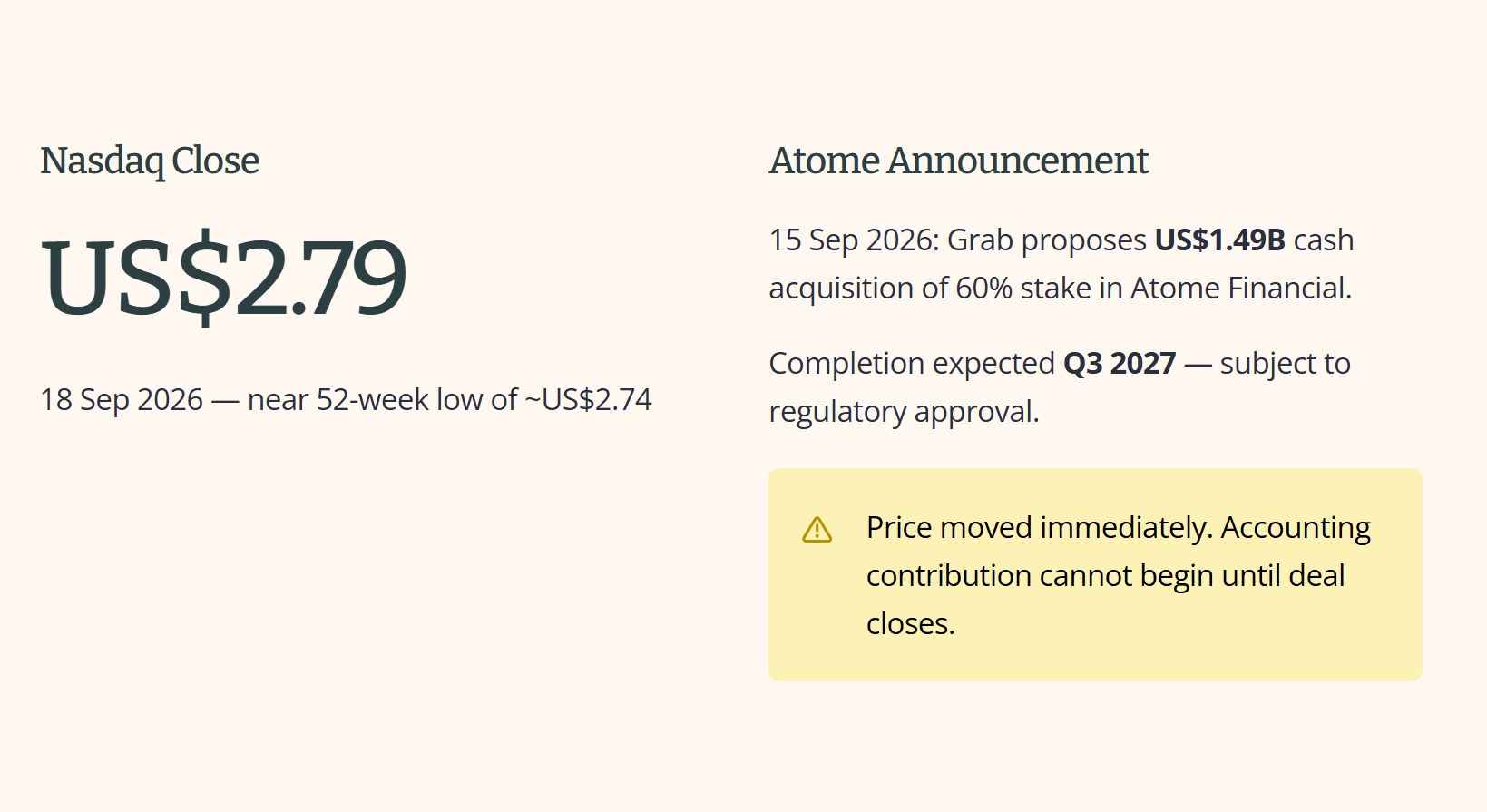
Grab’s Nasdaq-listed shares closed at US$2.79 on 18 September 2026, near their 52-week low of roughly US$2.74. Three days earlier, on 15 September, Grab announced a proposed US$1.49 billion cash acquisition of a 60% stake in Atome Financial, with completion expected by the third quarter of 2027, subject to regulatory approval. The price reaction was immediate.
The accounting and operating contribution from Atome cannot begin until the deal actually closes.
If you’re reading this because you use GrabFood on a Tuesday night and got curious when SGX started listing Grab shares in July, welcome, that curiosity is exactly the right instinct. If you’re reading this because you already hold Grab through a US brokerage and want to know whether the new SGX instrument changes anything, stick around too, the mechanics matter more than you’d expect. I pulled Grab’s own Q2 2026 results and its Atome and buyback announcements directly before writing this, and corrected two of my own numbers against those primary sources along the way, because a stock this widely discussed deserves better than secondhand summaries, mine included.
What Actually Changed on SGX
The Atome Deal, and Why the Timeline Matters
Iggy’s Insights
Where the Zone Verdict Lands
Three Things Working in Grab’s Favor
Financial Health Checklist
Income Profile (substituted for the standard Dividend Trajectory table, since there is no dividend history to trend)
Three Things Worth Watching
What’s Next
The Full Picture on Dilution
Iggy’s Insights
What This Looks Like Next to the Numbers
Iggy’s Elite Read
What Actually Changed on SGX
On 22 July 2026, SGX added Grab to its Singapore Depository Receipt programme, alongside Sea Limited and SpaceX, the first batch of SDRs tracking Nasdaq-listed names rather than the Hong Kong-listed names, Alibaba, Tencent, JD.com, the programme launched with earlier. Grab’s SDR trades on SGX under the ticker UGBD, officially named “Grab US SDR 2to1,” two SDRs represent one Grab Class A ordinary share, and it trades in Singapore dollars, not US dollars, during SGX market hours.
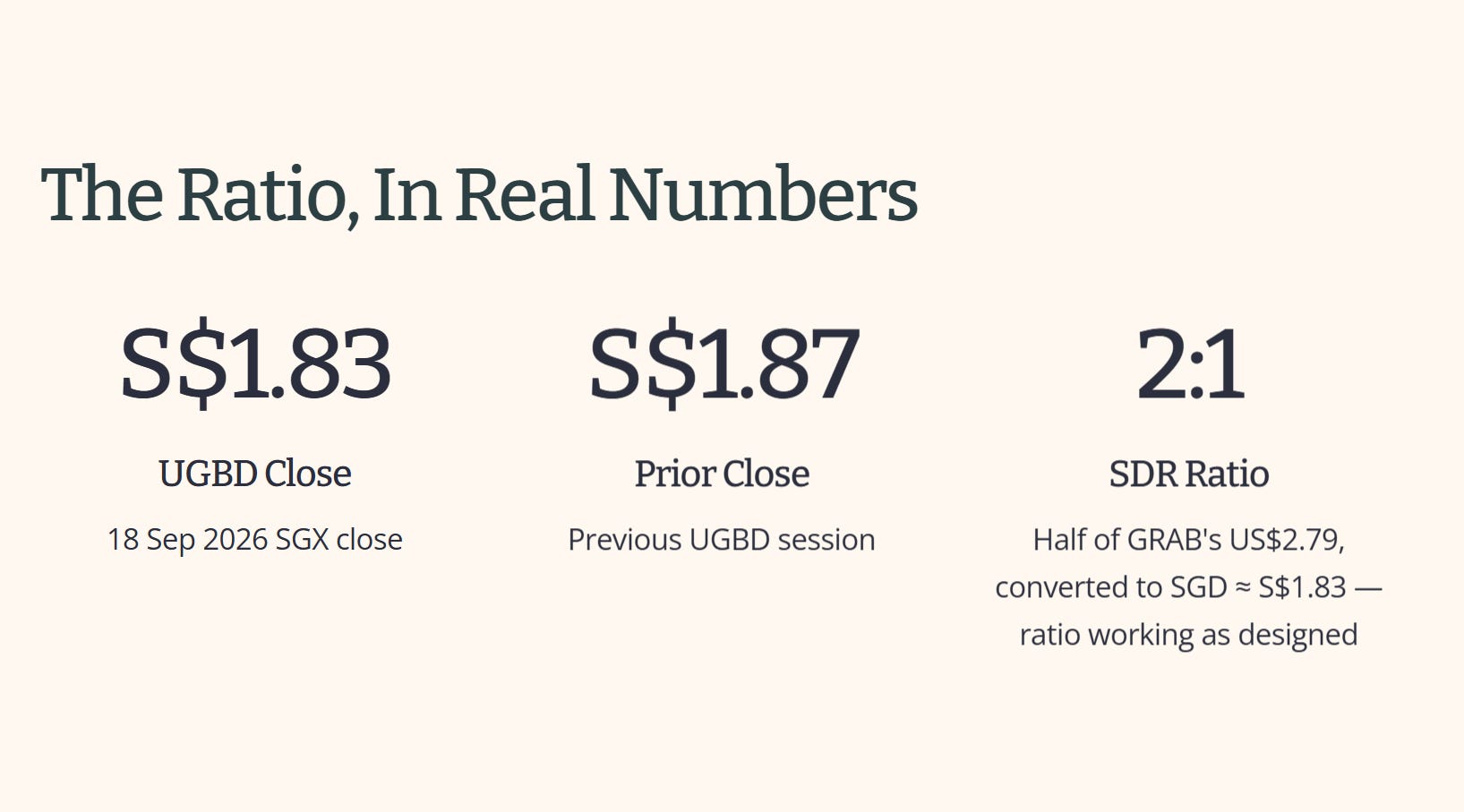
Here’s what that looks like in real numbers rather than a description of the mechanic: UGBD last traded at S$1.830 as of the 18 September close, down from a previous close of S$1.870. Half of Nasdaq GRAB’s US$2.79 close, converted to SGD, lands close to that S$1.830 figure, which is the ratio working as designed. One nuance worth flagging directly: UGBD has only been trading since 22 July, less than two months, so it doesn’t have its own 52-week trading history yet.
The 52-week-low claim in this piece’s headline refers specifically to the Nasdaq-listed share, which does have that history. If you’re holding or watching the SGX instrument, what you have is a two-month-old price series tracking a much older one, not an independently established 52-week range of its own.
The Atome Deal, and Why the Timeline Matters
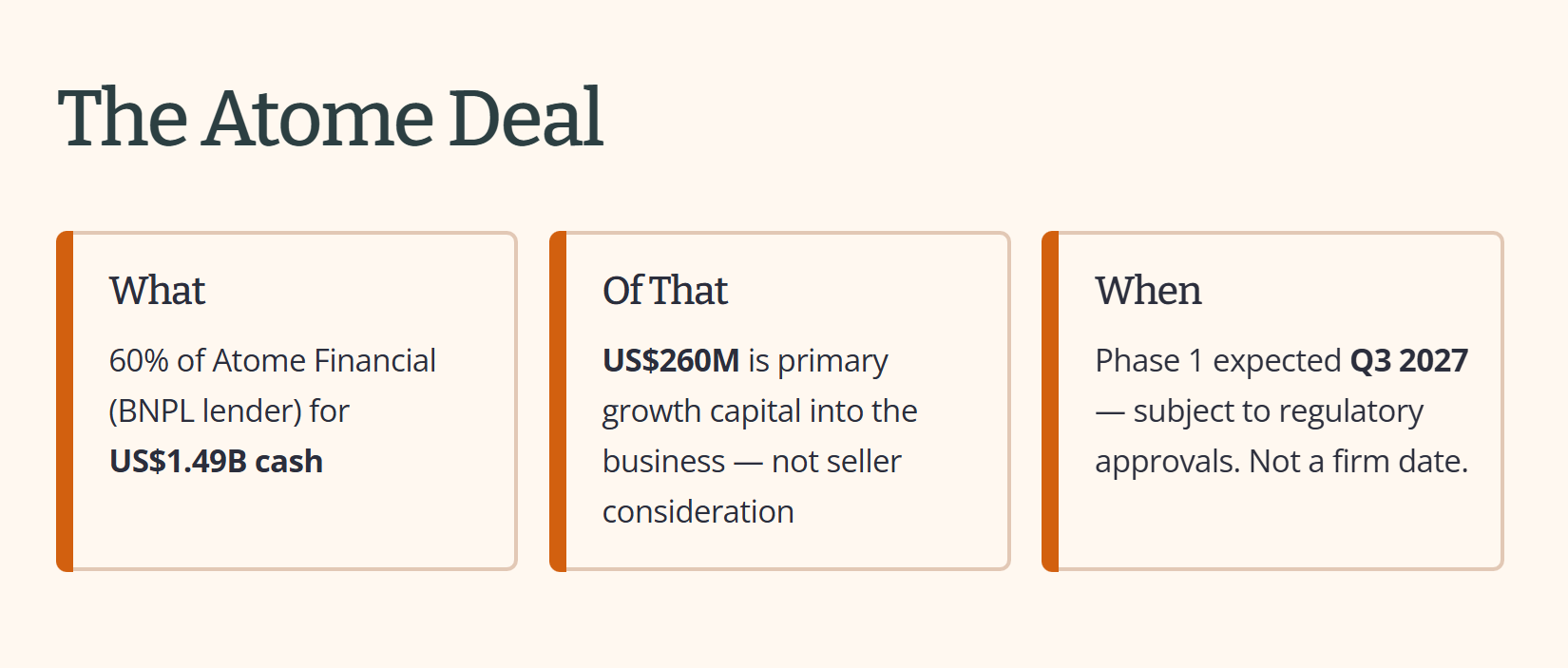
Grab signed definitive agreements on 15 September to acquire 60% of Atome Financial, a buy-now-pay-later lender, for US$1.49 billion cash, of which US$260 million is primary growth capital going into the business itself rather than consideration paid to sellers. Phase 1 is expected to complete in the third quarter of 2027, more than a year from the announcement, subject to regulatory approvals and customary closing conditions, not a firm date.
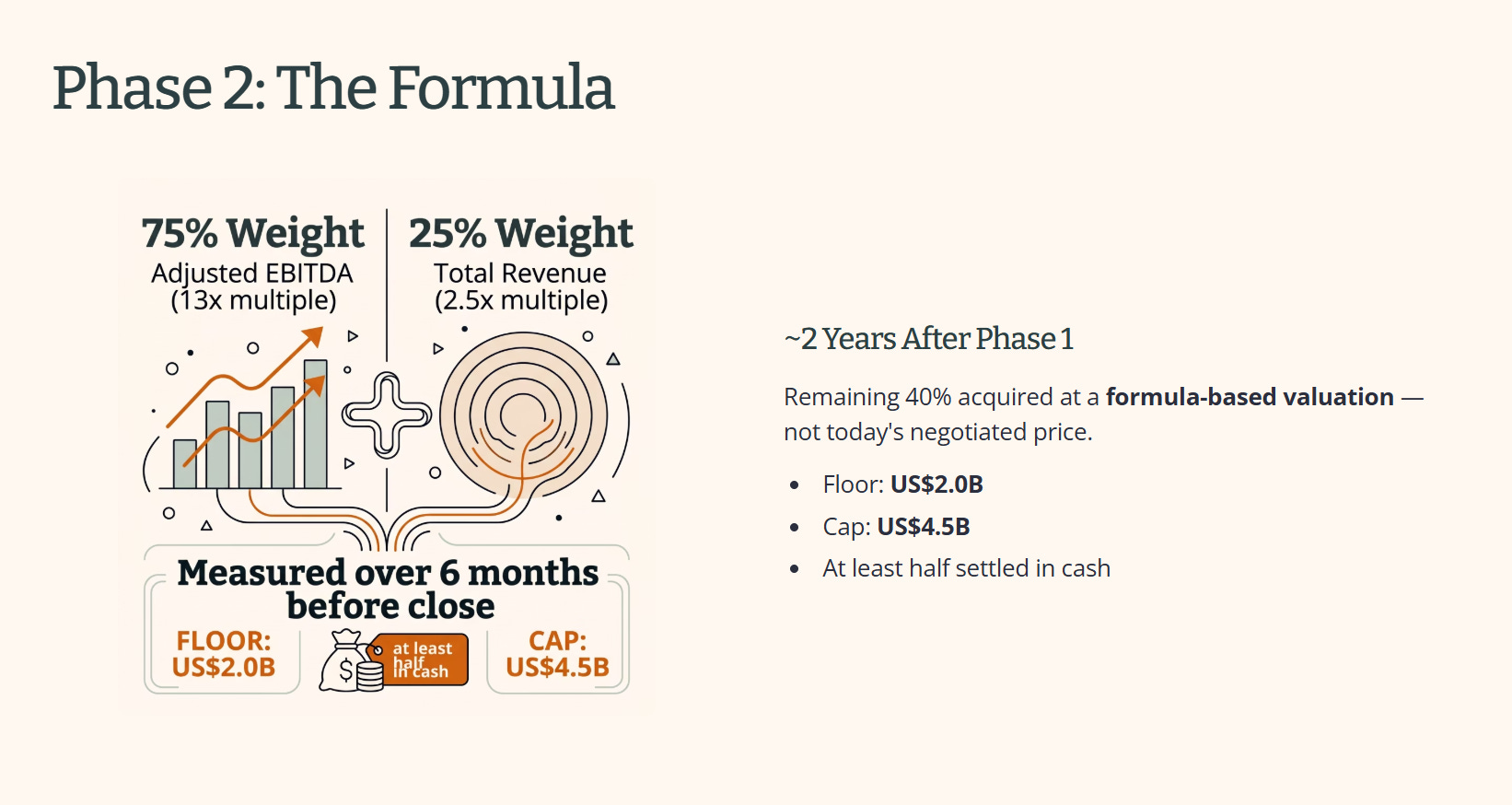
The remaining 40% changes hands roughly two years after Phase 1 completes, at a valuation set by a formula, not today’s negotiated price: 13.0 times annualized adjusted EBITDA weighted 75%, plus 2.5 times annualized revenue weighted 25%, both measured over the six months immediately before Phase 2 closes, with a US$2.0 billion floor, a US$4.5 billion cap, and at least half the consideration settled in cash.
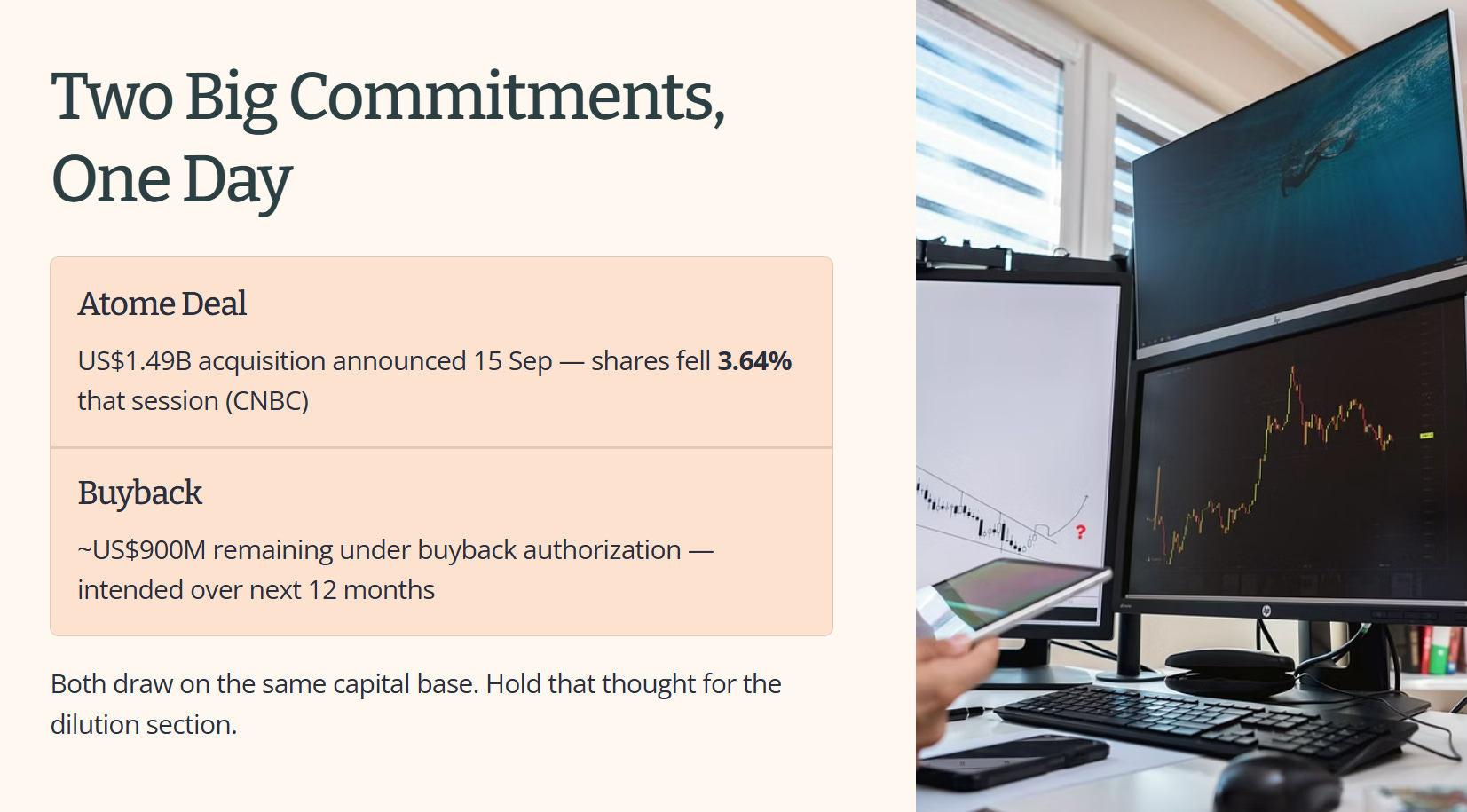
Grab’s Nasdaq shares closed 3.64% lower in the session following the announcement (CNBC). On the same day, 15 September, Grab separately disclosed that roughly US$900 million remained under its share buyback authorization, intended, though not obligated, to be executed over the following 12 months. Two large capital commitments landed on the same day, that’s worth holding onto for the dilution section below.
🟢 Iggy’s Insights
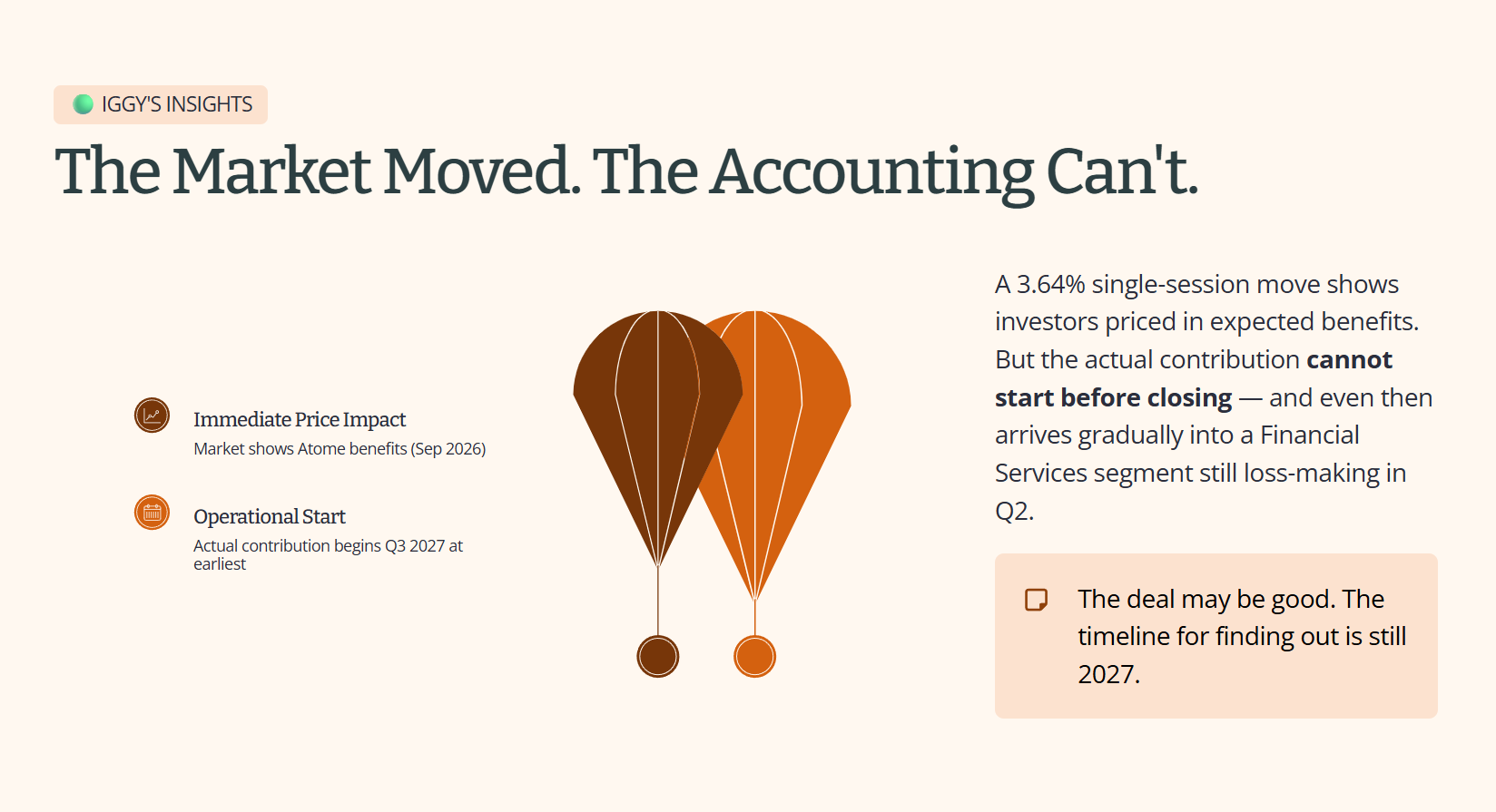
The market moved on the Atome deal within a single session. The accounting can’t. Grab’s US$1.49 billion agreement for 60% of Atome Financial targets Phase 1 completion in Q3 2027, more than a year out, and the deal can’t be consolidated into Grab’s results before then regardless of what the market does with the share price in the meantime.
Investors are free to price in expected benefits well before completion, and a 3.64% single-session move suggests they did. What they can’t do is bring forward the actual operating contribution, which by the deal’s own structure doesn’t start until closing, and even then arrives gradually as Financial Services, still loss-making in Q2, works Atome into a segment that hasn’t turned a profit yet.
The deal may be a good one. The timeline for finding out is still 2027.
That’s the deal on its own terms. Here’s where the forensic screen actually lands on Grab as a business.
Where the Zone Verdict Lands
Iggy’s Forensic Zone: Zone 5, Red Zone (Not an Income Vehicle, No Dividend Policy).
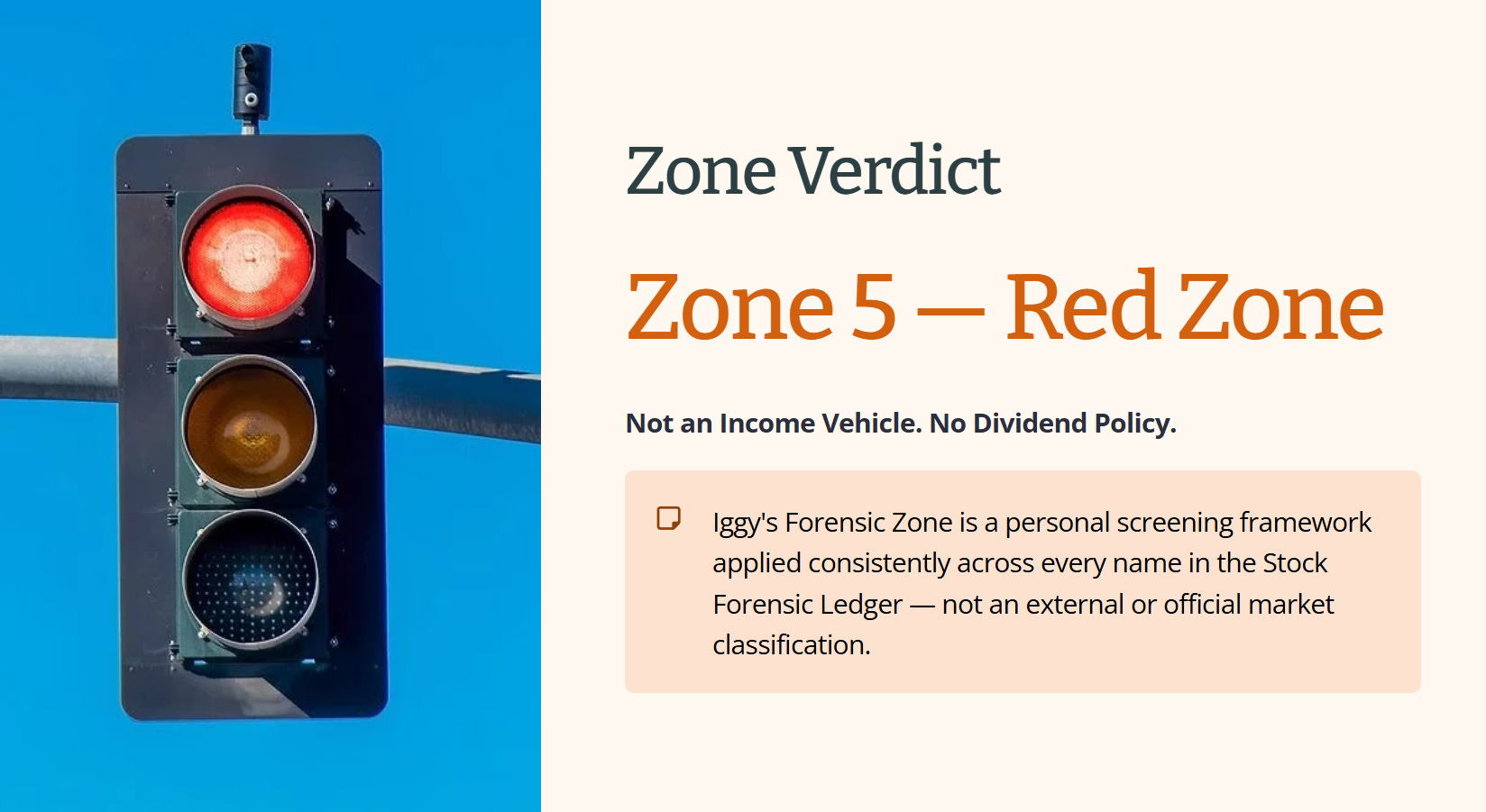
A quick note on what that label is and isn’t: this is my own screening framework, applied the same way across every name in the Stock Forensic Ledger, not an external or official market classification.
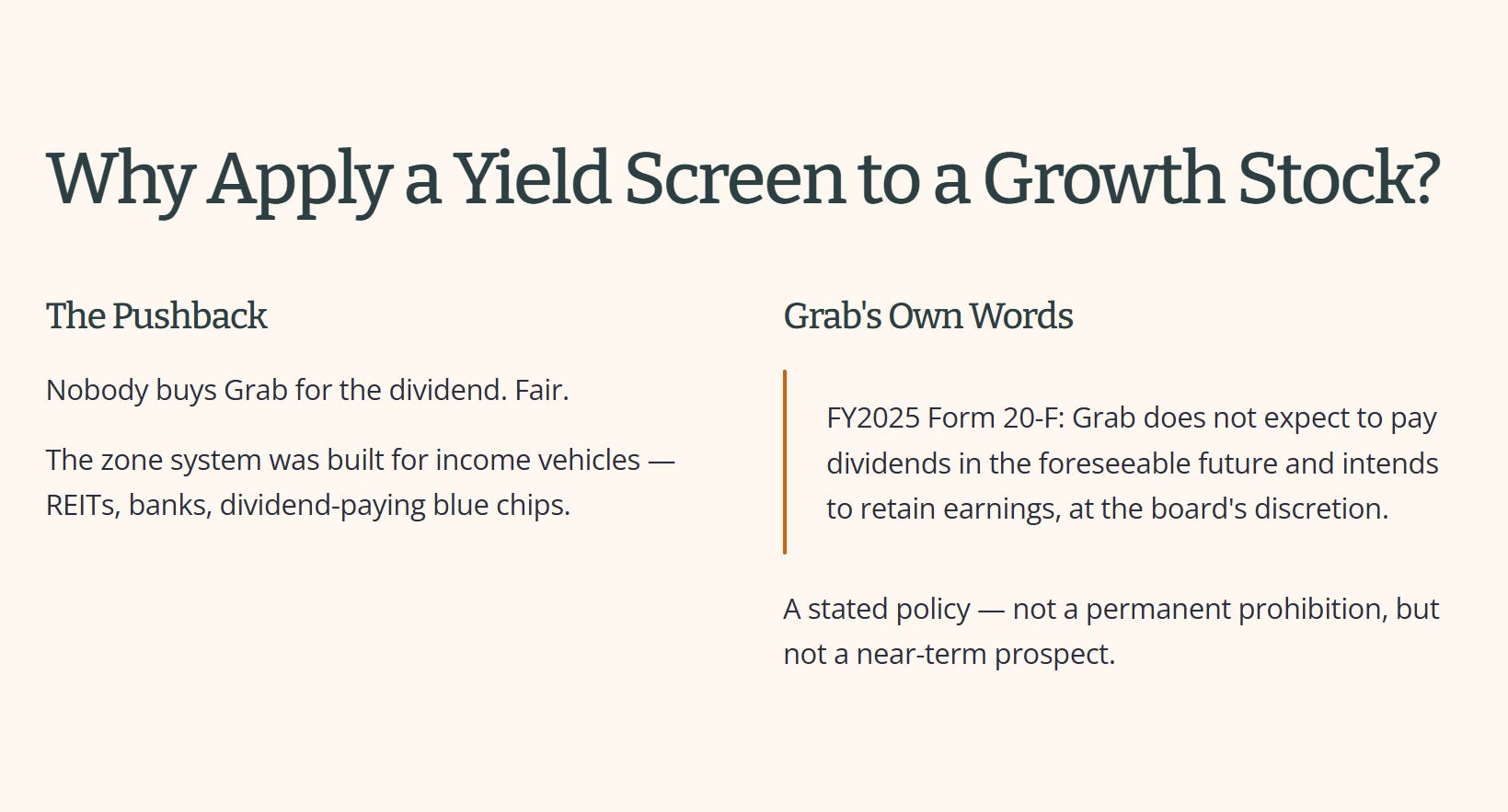
Here’s the obvious pushback: nobody buys Grab for the dividend, so why does a forensic screen built around yield even apply here? Fair question. The zone system was built primarily for income vehicles, REITs, banks, dividend-paying blue chips, where yield is the reason to hold the name in the first place.
Grab was never trying to be that. Its FY2025 Form 20-F states plainly that it does not expect to pay dividends in the foreseeable future and intends to retain earnings, at the board’s discretion, a stated policy, not a permanent prohibition, but not a near-term prospect either.
The Not-an-Income-Vehicle qualifier exists so a growth name doesn’t get force-fit into a hurdle rate it was never built to clear. The zone label isn’t telling you to avoid this stock. It’s telling you not to come to this piece looking for an income read, and to evaluate it on the same terms you’d evaluate any other growth bet instead. That’s what the three gems and three red flags below are for.
Three Things Working in Grab’s Favor
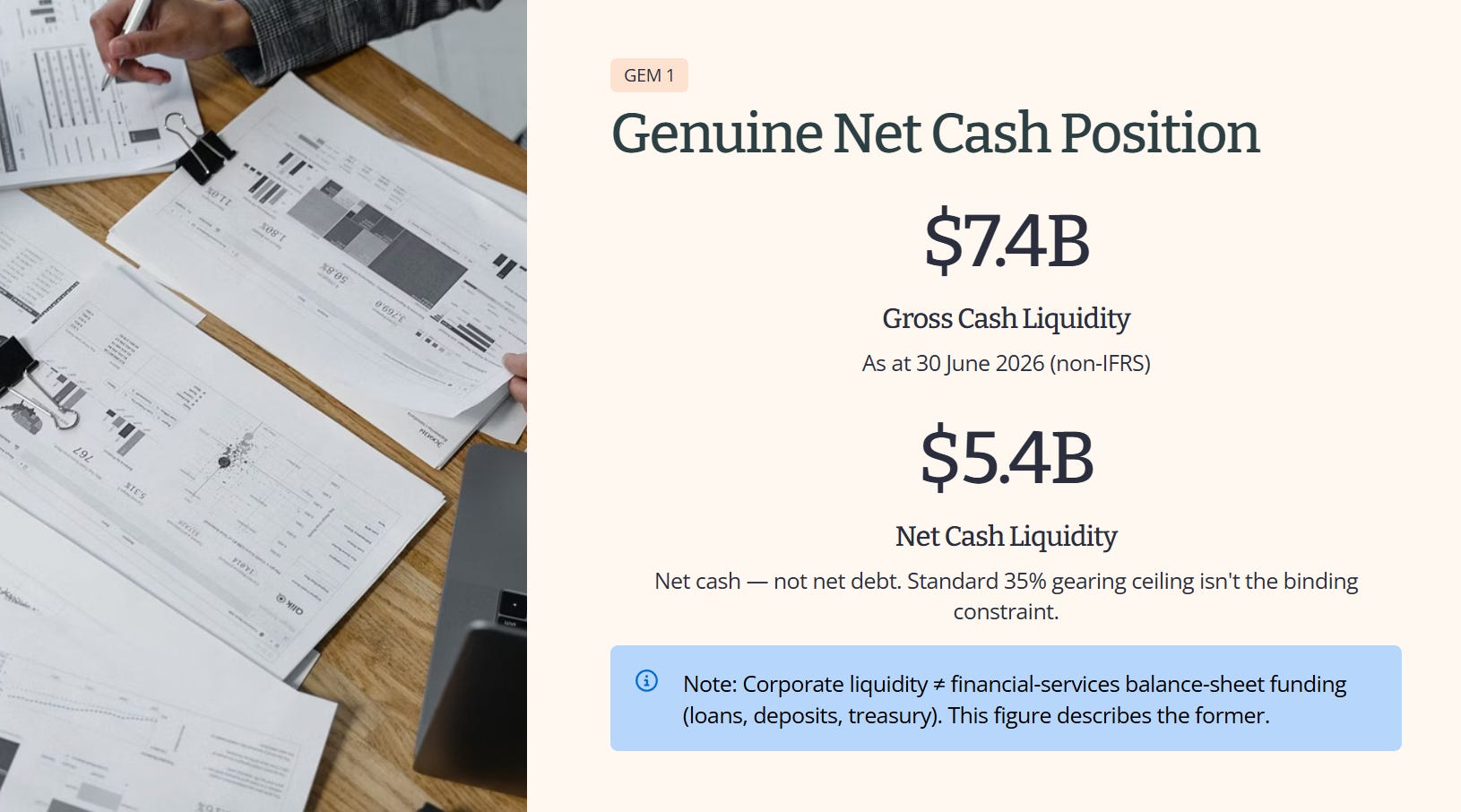
A genuine net cash position. Grab reported gross cash liquidity of US$7.4 billion and net cash liquidity of US$5.4 billion as at 30 June 2026, non-IFRS measures the company itself uses, not a simple cash-minus-debt line from the balance sheet. On that basis, net cash rather than net debt means the standard 35% gearing ceiling isn’t the binding constraint here.
Worth flagging for precision: Grab’s business includes lending and digital banking through GXS, GXBank, and Superbank, so corporate liquidity and financial-services balance-sheet funding, customer loans, deposits, treasury positions, aren’t the same thing, and this figure describes the former.
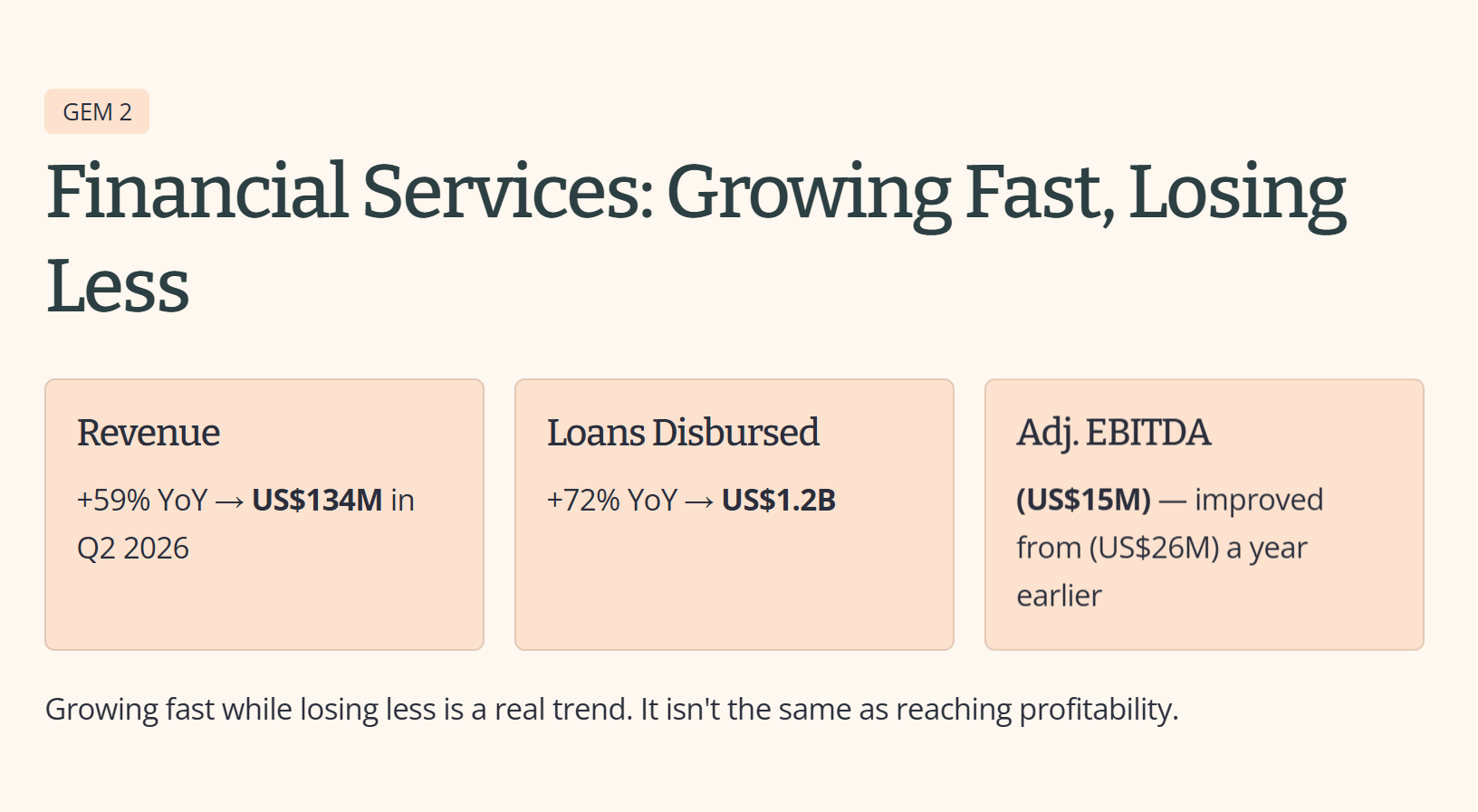
Financial Services is growing fastest, and losing less. The segment that includes lending and Grab’s digital banks grew revenue 59% year on year to US$134 million in Q2 2026, with loans disbursed up 72% to US$1.2 billion. It’s not yet profitable, segment adjusted EBITDA was negative US$15 million, but that’s an US$11 million improvement from negative US$26 million a year earlier. Growing fast while losing less is a real trend. It isn’t the same as reaching profitability, and I’m not aware of a specific management commitment to a 2026 profitability date for this segment.
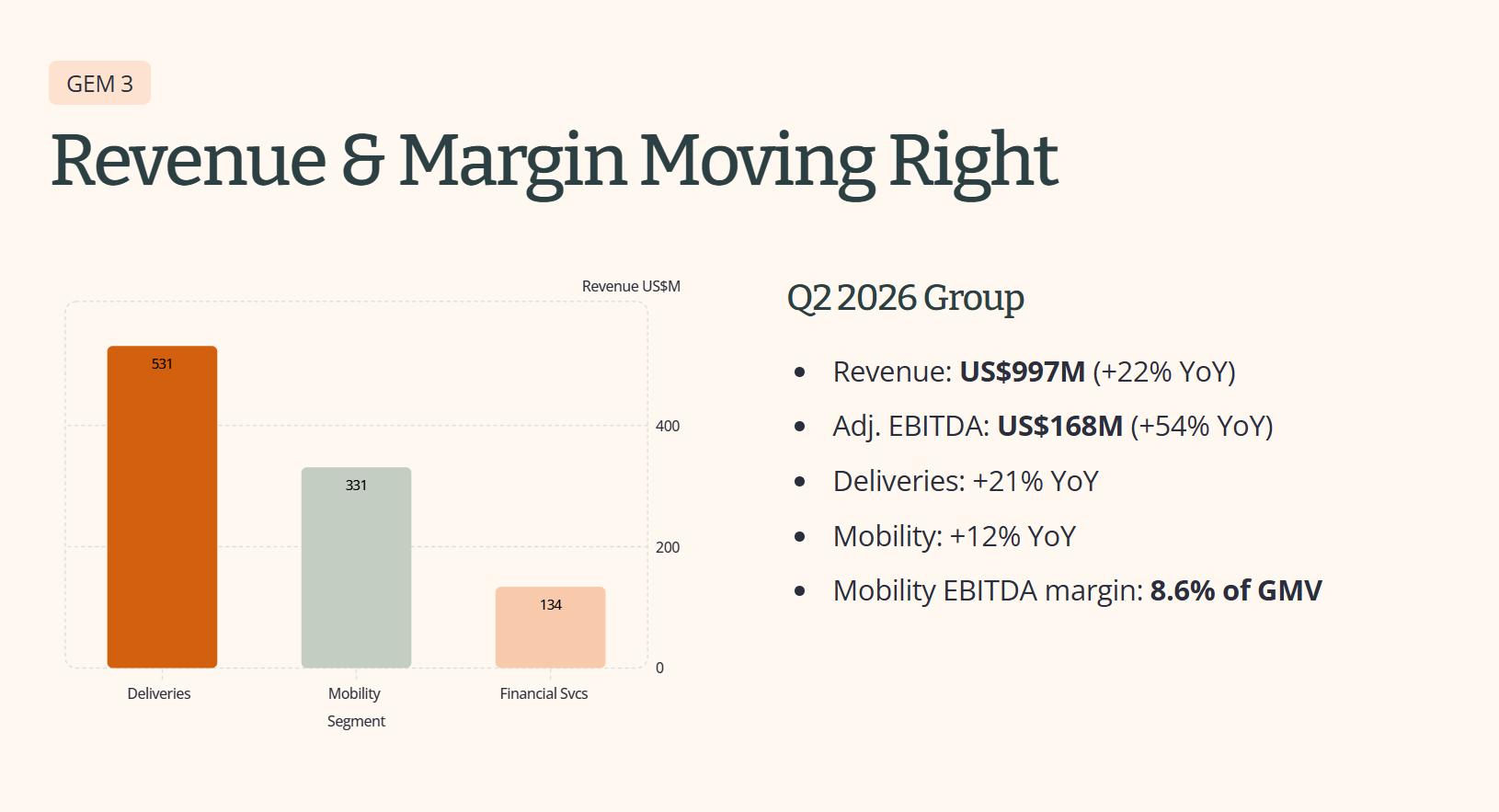
Revenue and margin are both moving the right way. Group revenue hit US$997 million in Q2 2026, up 22% year on year, and adjusted EBITDA rose 54% to US$168 million. Deliveries grew 21% to US$531 million and Mobility grew 12% to US$331 million, with Mobility’s segment adjusted EBITDA margin at 8.6% of GMV, down 9 basis points on higher driver incentives but still a genuinely profitable core business.
Financial Health Checklist
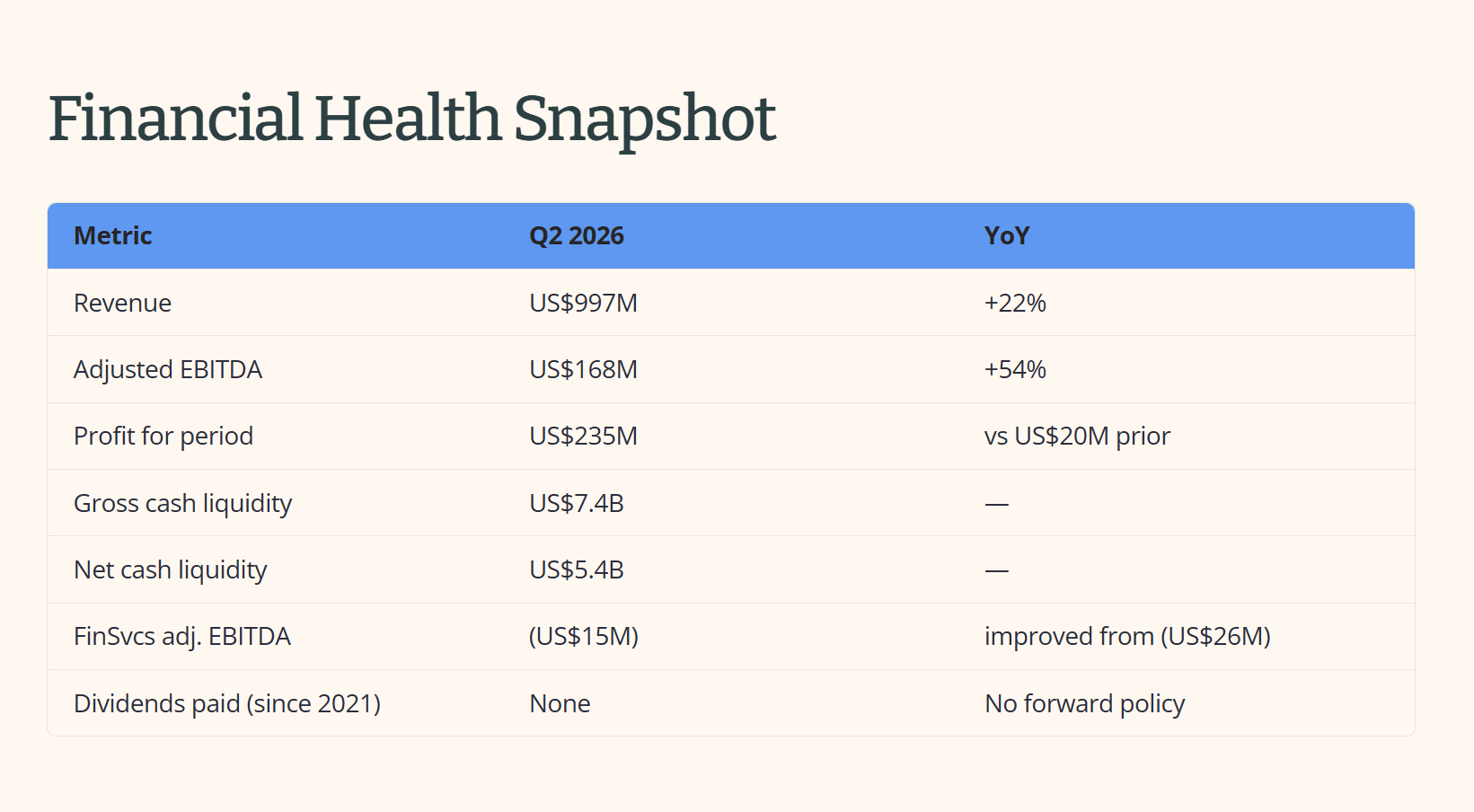
Grab’s FY2025 Form 20-F states it does not expect to pay dividends in the foreseeable future and intends to retain earnings, at the board’s discretion
No One Pays Him To Be Right
Every finance channel says “unbiased.” Most of them also have a sponsor, an affiliate link, or a subscriber count to protect deciding what gets softened. Iggy doesn’t. This channel started as, and still is, a passion project, not an income source.
That’s not a slogan, it’s the actual reason a Zone 4 verdict stays a Zone 4 verdict even when it’s the stock in every uncle’s portfolio.
YouTube/Substack Combo members aren’t paying for faster access to opinions that were always going to be diplomatic anyway. You’re paying for the version of this analysis that exists because it doesn’t need to please anyone: full-length videos, the complete Red Zone watchlist, and institutional-grade cheatsheets built without a single sponsor’s name attached to the verdict.
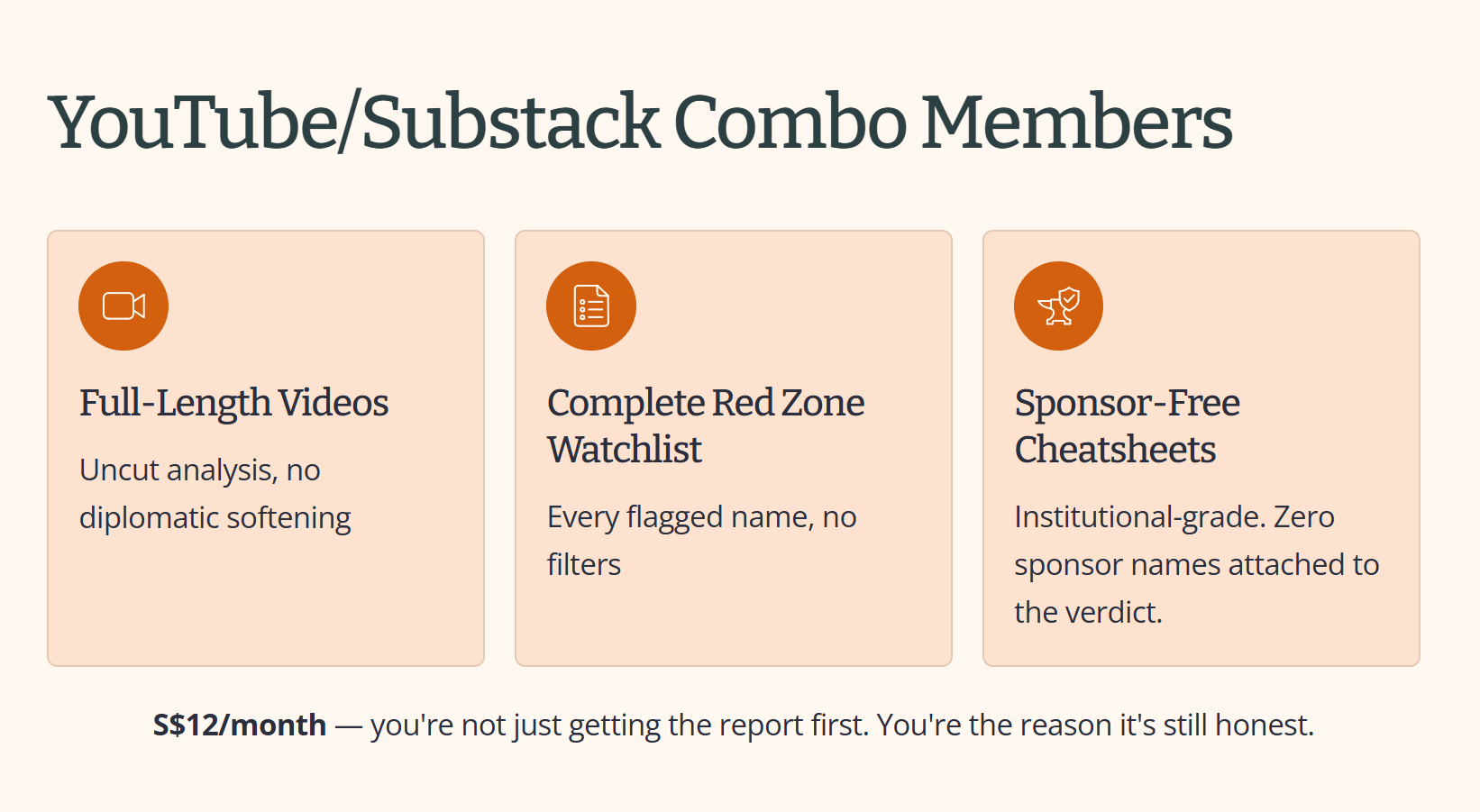
For S$12/month, you’re not just getting the report first. You’re the reason it’s still honest.
Three Things Worth Watching
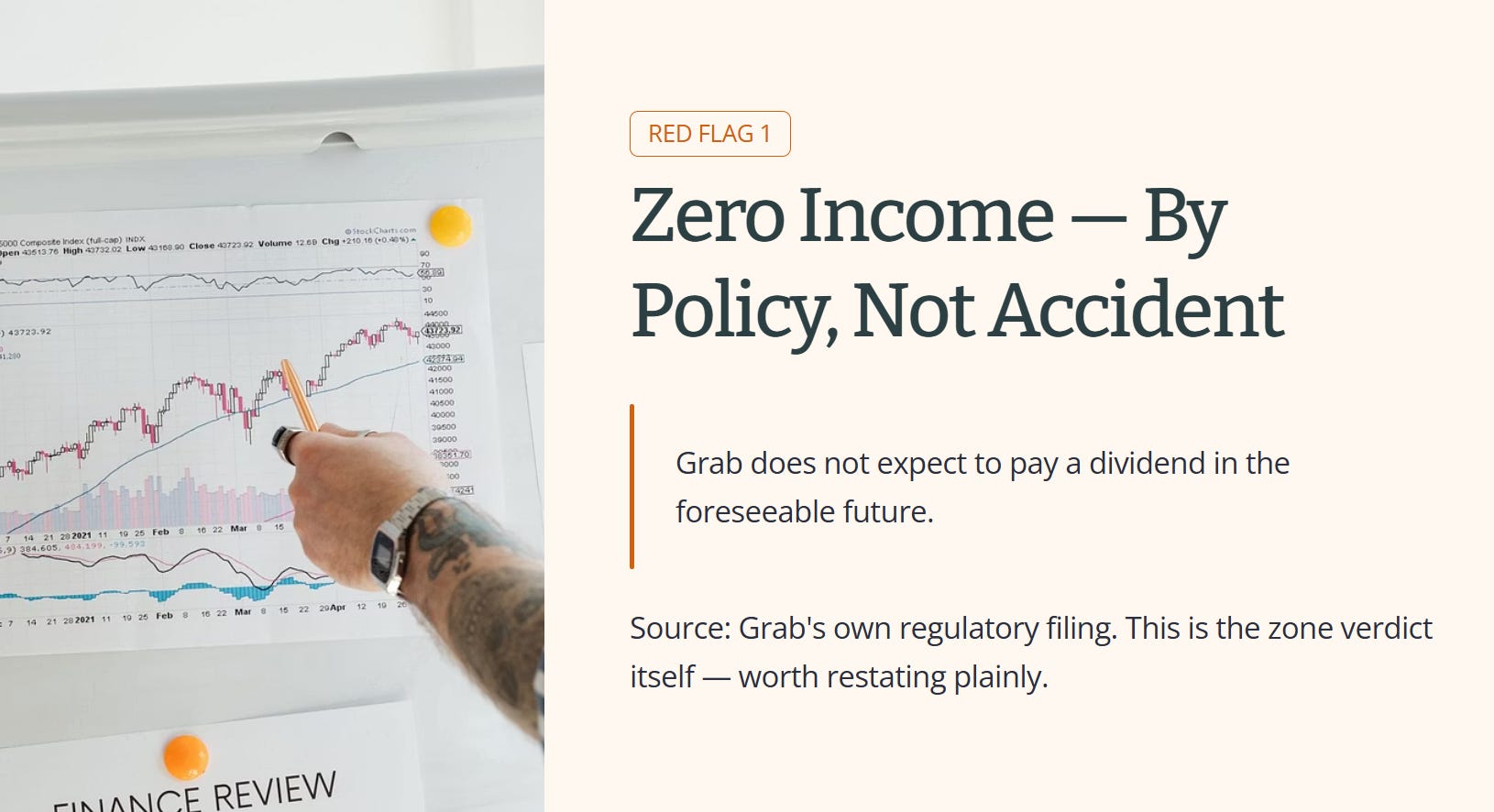
Zero income, by policy, not by accident. This is the zone verdict itself, not a separate flag, but worth restating plainly: Grab has stated in its own regulatory filing that it doesn’t expect to pay a dividend in the foreseeable future.
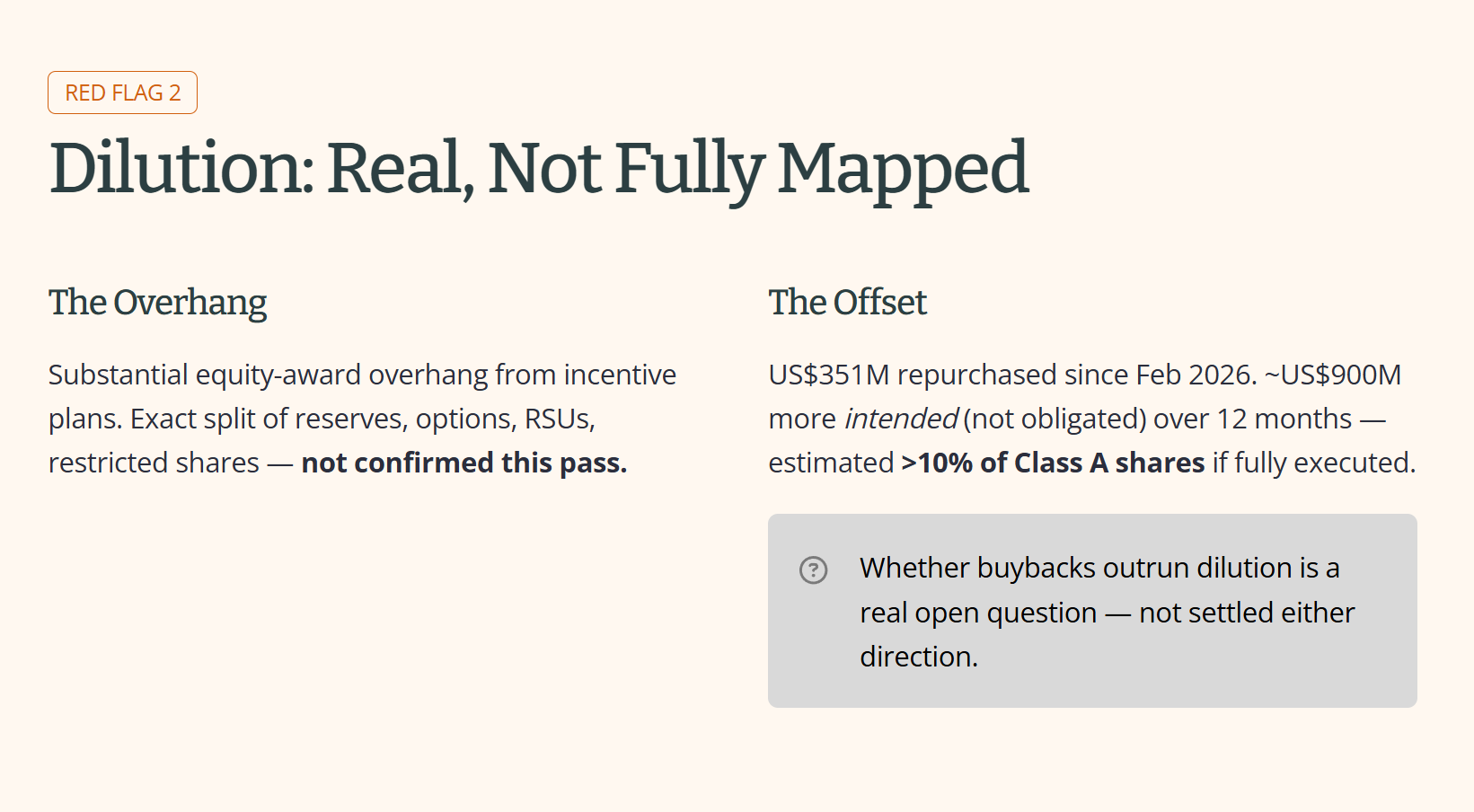
The dilution picture is real, but not yet fully mapped. Grab carries a substantial equity-award overhang from its incentive plans, but the meaningful figure isn’t simply plan capacity authorized, it’s the actual split between reserves, outstanding options, RSUs, restricted shares, and shares already issued, and that breakdown isn’t confirmed this pass.
What is confirmed is the offsetting side: Grab has repurchased US$351 million of shares since February 2026 and disclosed roughly US$900 million more intended, not obligated, over the next 12 months, which the company itself estimates would represent over 10% of Class A shares outstanding if fully executed at current prices. Whether the buybacks outrun the dilution is a real open question, not a settled one either direction.
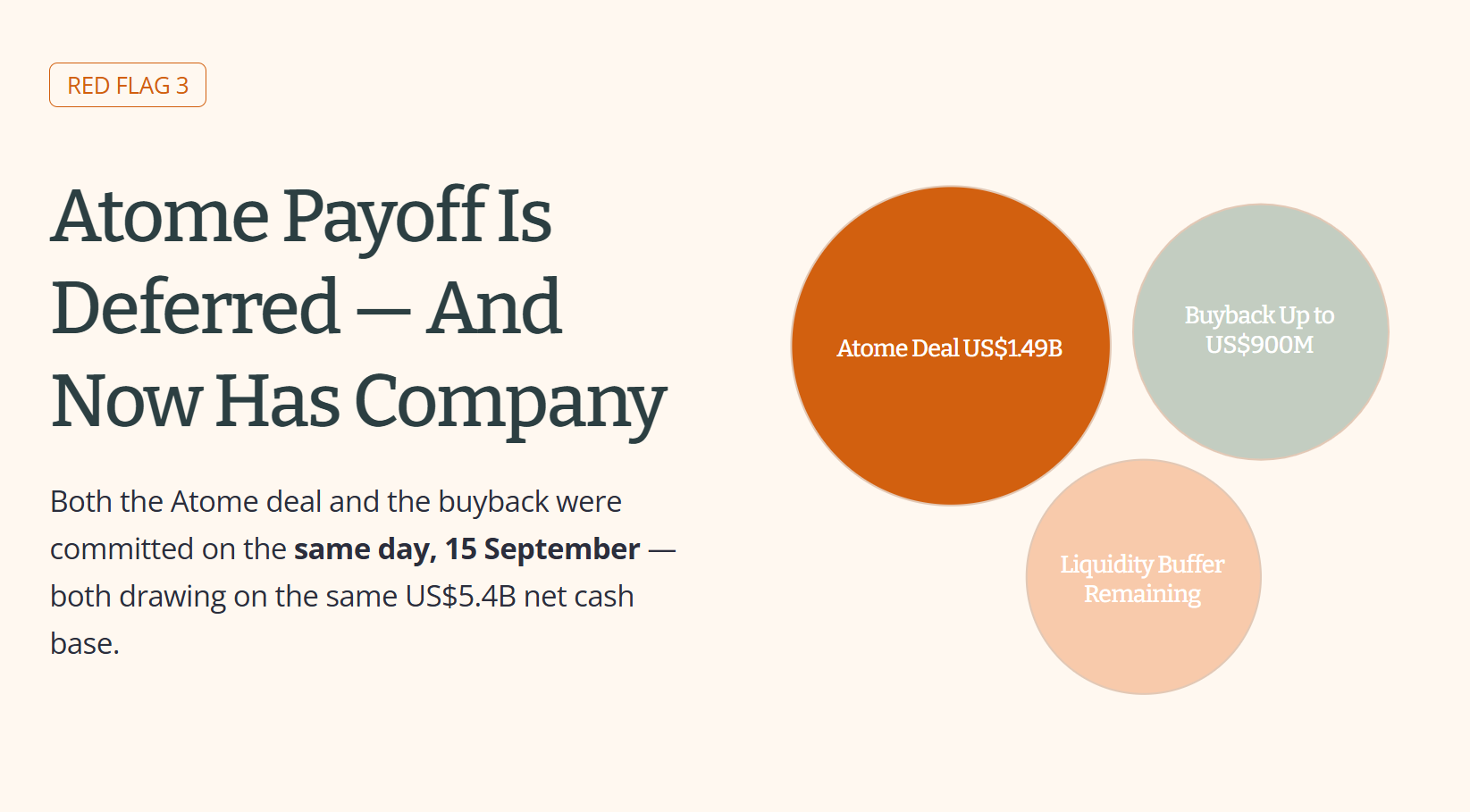
The Atome payoff is genuinely deferred, and now has company. Phase 1 doesn’t close until roughly Q3 2027, and the deal can’t be consolidated into results before then. What’s new since the first version of this piece: Grab committed to both the US$1.49 billion Atome deal and up to US$900 million more in buybacks on the same day, 15 September. Both draw on the same US$5.4 billion net cash liquidity base.
🔒 What’s Next
The buyback and the equity-award overhang above are two sides of the same dilution question. Whether the roughly $900 million still to come actually outpaces what the incentive plans are adding is next.