


Two weeks ago, Meta dropped a $2.6 billion acquisition bomb on Singapore. Most investors barely noticed. That’s a mistake.
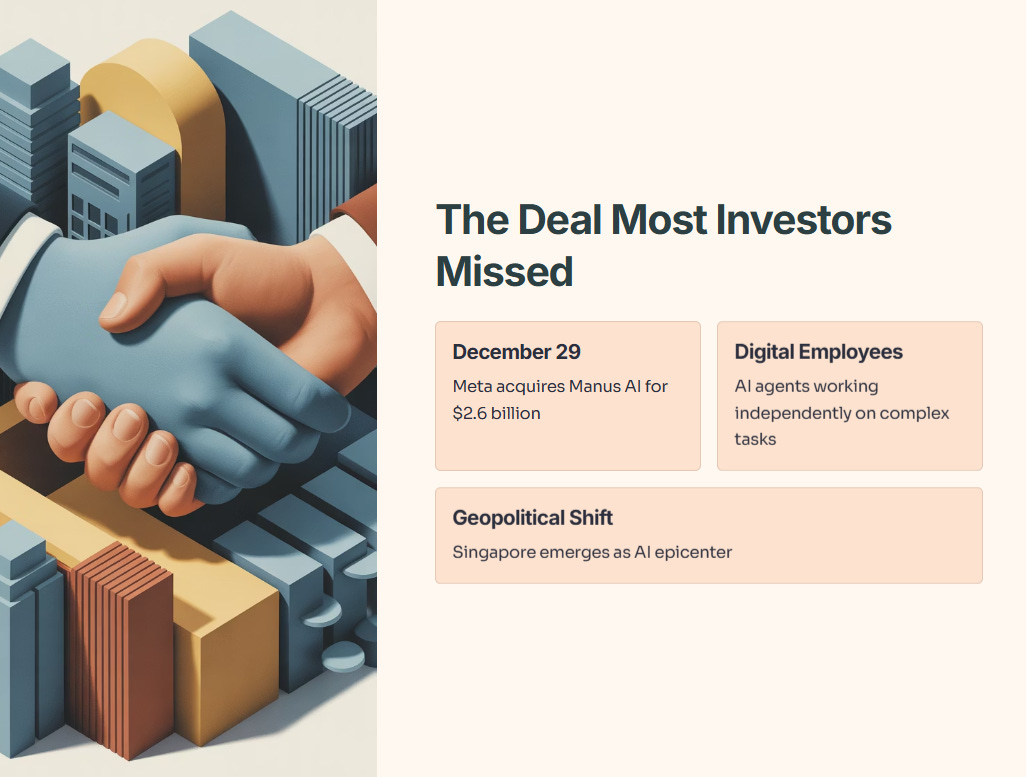
On December 29, Meta Platforms announced it was buying Manus AI, a Singapore-based artificial intelligence startup that builds “digital employees”—AI agents that work independently on complex tasks like research, coding, and data analysis. On the surface, it’s just another Big Tech acquisition. Scratch deeper, and you’ll see something more important: a validation that Singapore is now the epicenter of a geopolitical and technological shift that will reshape your investment landscape for the next decade
If you’re new here, welcome. I’m Iggy, your Singapore-based Private Investor and Market Researcher. Since October 2025, we’ve built a community of over 5,300 investors and produced over 1,300 videos and 400 articles. We are home to a growing “Inner Circle” of over 100 paid members across YouTube and Substack.
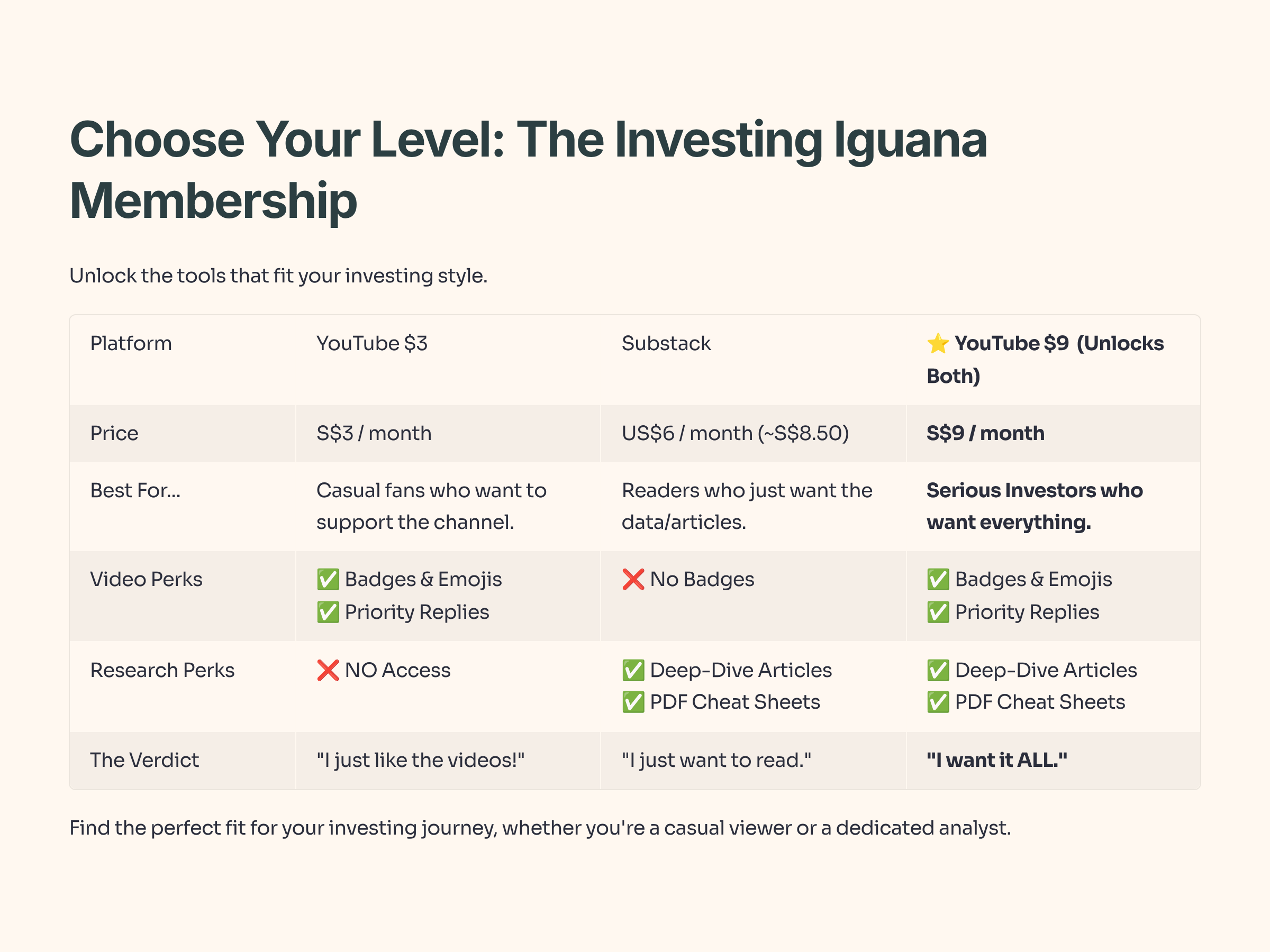
Quick Housekeeping: If you want the best value, the YouTube Premium Membership (S$9/mth) bundles these deep-dive articles with the podcast videos. Substack alone is US$6, so the bundle is the “smart money” move. Now, let’s get to the numbers.
In This Article:

• What Is Manus? (The $125M Revenue Engine)
• The Singapore Story: Geopolitics Meets Capital
• The AI Agents Market: Beyond Chatbots
• Market Impact: The “Pick and Shovel” Strategy
• InvestingPro Reality Check
• The Risks You Must Manage
• Iggy’s Verdict: The Bottom Line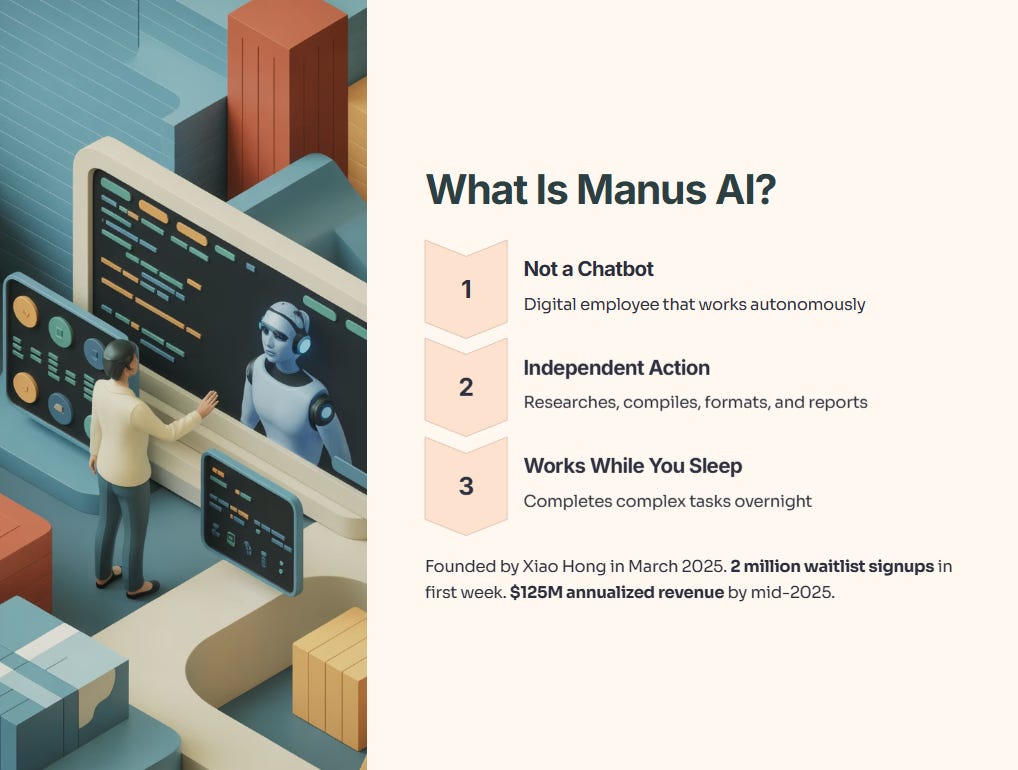
Part 1: What Is Manus, and Why Should You Care?
Manus is not a chatbot. Don’t think of it as ChatGPT’s cousin. Think of it as a digital employee.
When you ask ChatGPT to “research the top 10 AI startups in Southeast Asia,” it gives you a conversational answer. You read it, extract the information, and move on. Manus does the same task differently: it researches autonomously, compiles the data, formats it, sends you a report, and then notifies you when it’s done—often while you sleep.
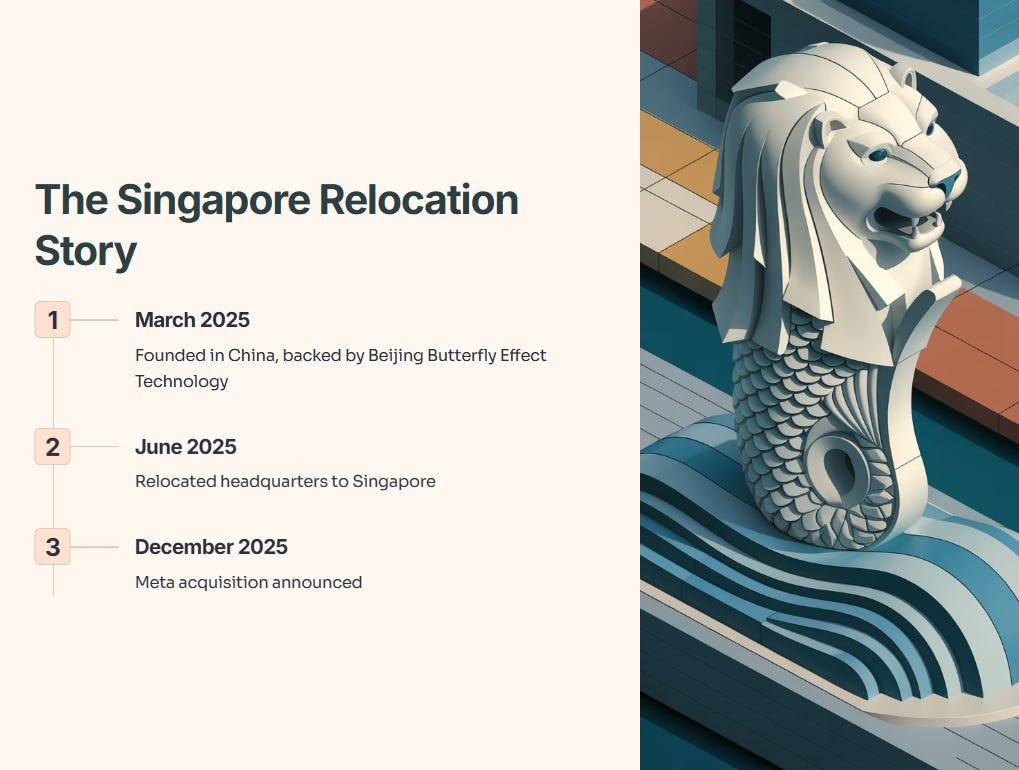
The company was founded by Xiao Hong in March 2025, came out of stealth, and immediately caught fire. Within its first week, over 2 million people joined the waitlist. By mid-2025, Manus had achieved an annualized revenue run rate of $125 million. For context, that’s faster than most SaaS unicorns.
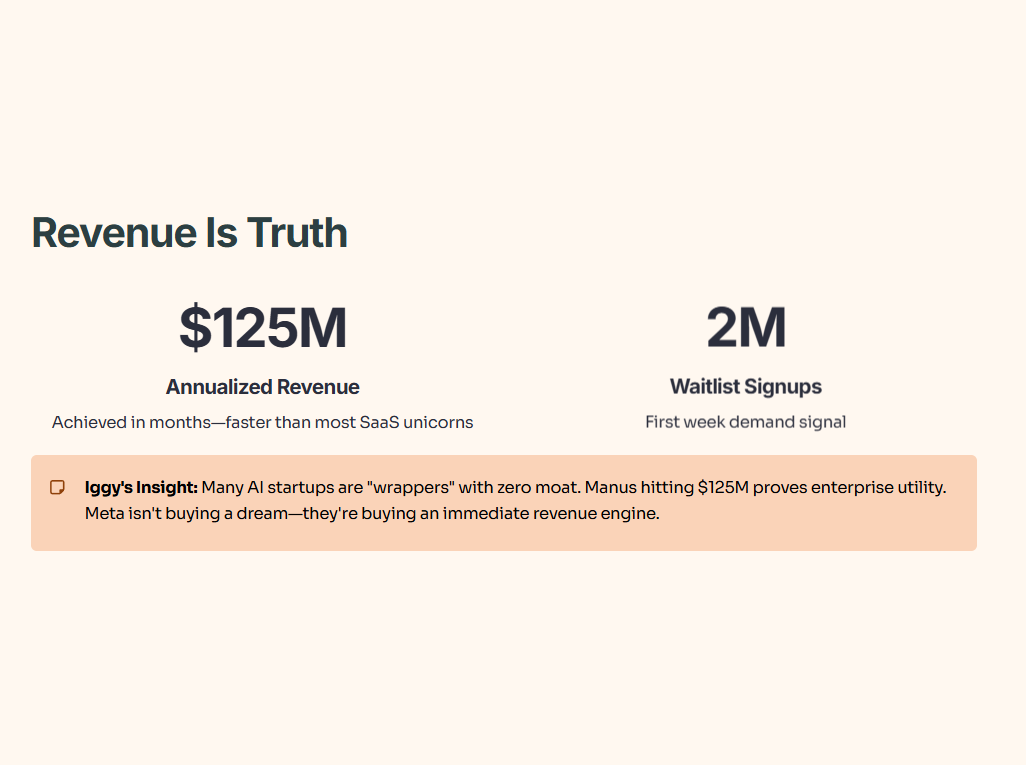
Iggy’s Insight: The market is noisy, but revenue is truth. Many AI startups are “wrappers” with zero moat. Manus hitting a $125M run rate in months proves this isn’t hype—it’s enterprise utility. Meta isn’t buying a dream; they are buying an immediate revenue engine to plug into WhatsApp and Instagram.
Part 2: The Singapore Story—Geopolitics Meets Venture Capital
Here represents the “Second-Order Effect” that most retail investors miss. Manus was founded in China. It was backed by Beijing Butterfly Effect Technology. And in June 2025—just three months after launch—it packed up and relocated its headquarters to Singapore.
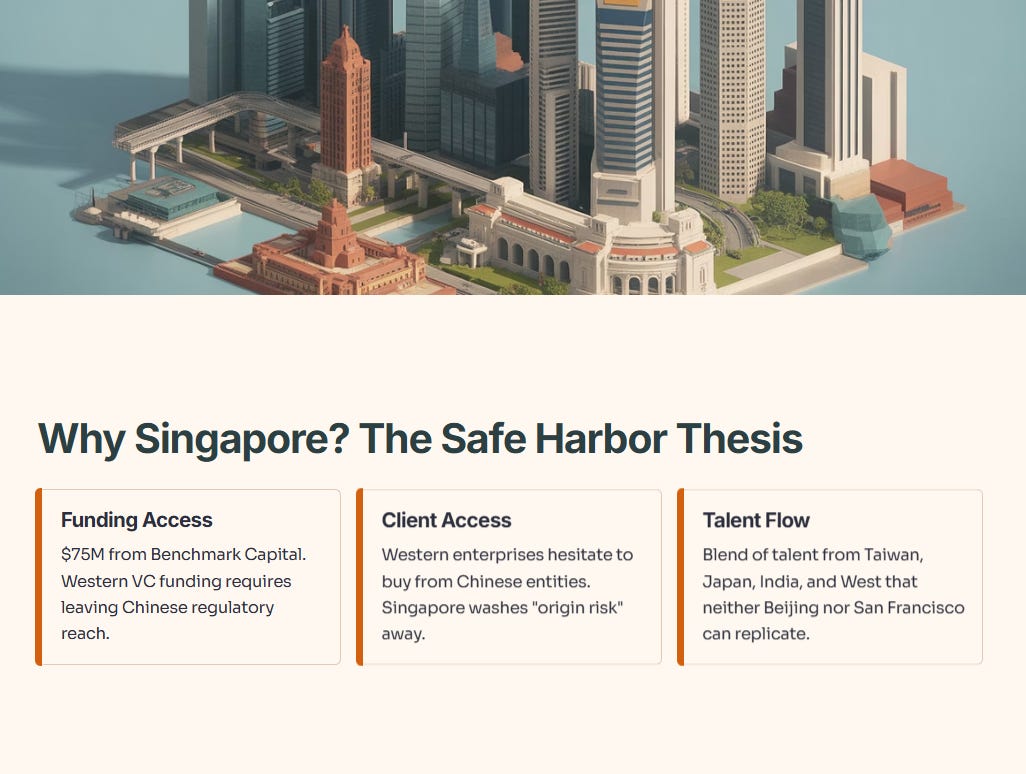
Why? The “Safe Harbor” thesis is playing out in real-time.
Funding Access: In China, application-layer innovations aren’t fashionable for institutional capital right now. Manus needed Western VC funding, and it got it ($75 million from Benchmark Capital), but that required leaving the regulatory reach of the US Treasury Department’s investment restrictions.
Client Access: Western enterprises hesitate to buy deep-tech software directly from Chinese entities. Singapore washes that “origin risk” away.
Talent Flow: Singapore allows for a blend of talent from Taiwan, Japan, India, and the West that neither Beijing nor San Francisco can easily replicate.
The Data: Singapore as the Unicorn Stable
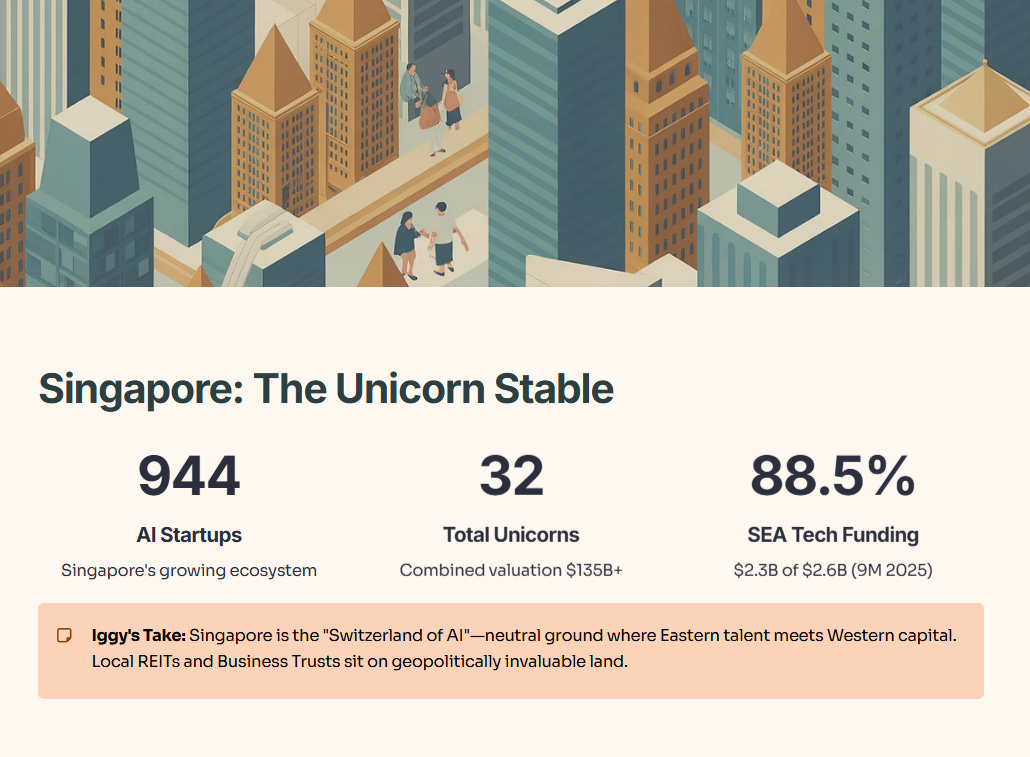
Iggy’s Take: This confirms my long-standing thesis: Singapore is the “Switzerland of AI.” We are the neutral ground where Eastern talent meets Western capital. For your portfolio, this means local real estate and infrastructure trusts (REITs/Business Trusts) are sitting on land that is becoming geopolitically invaluable.
Part 3: The AI Agents Market—The Real Story
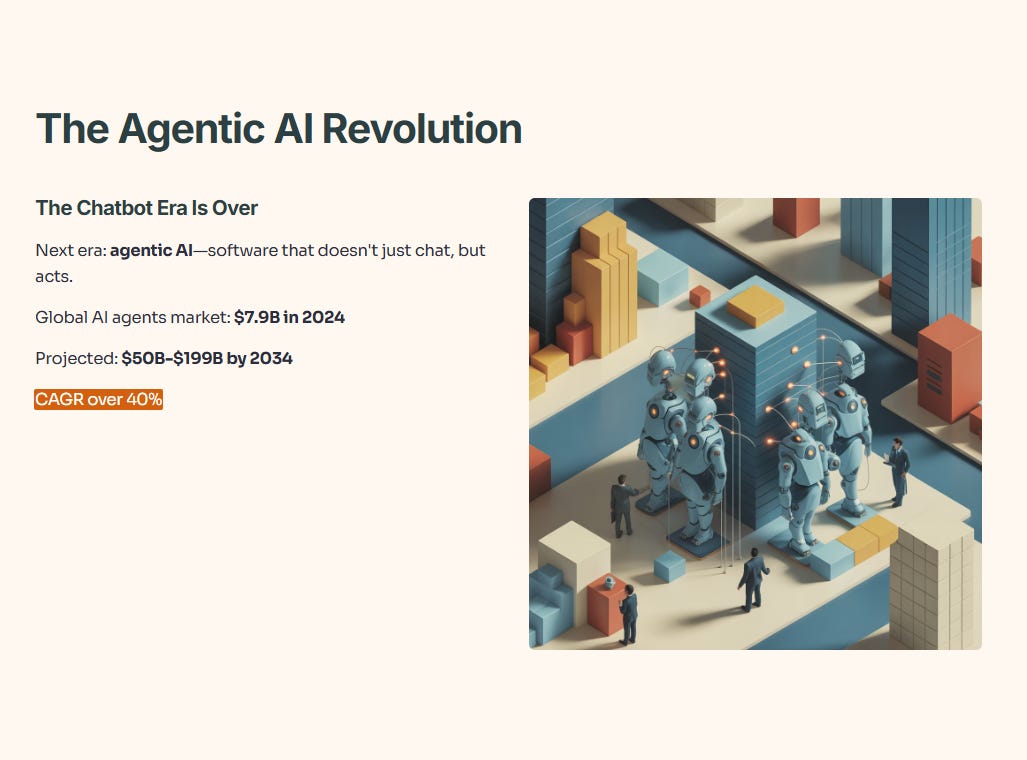
Let me be direct: the chatbot era is over. Everyone has a chatbot. The next era is agentic AI—software that doesn’t just chat, but acts.
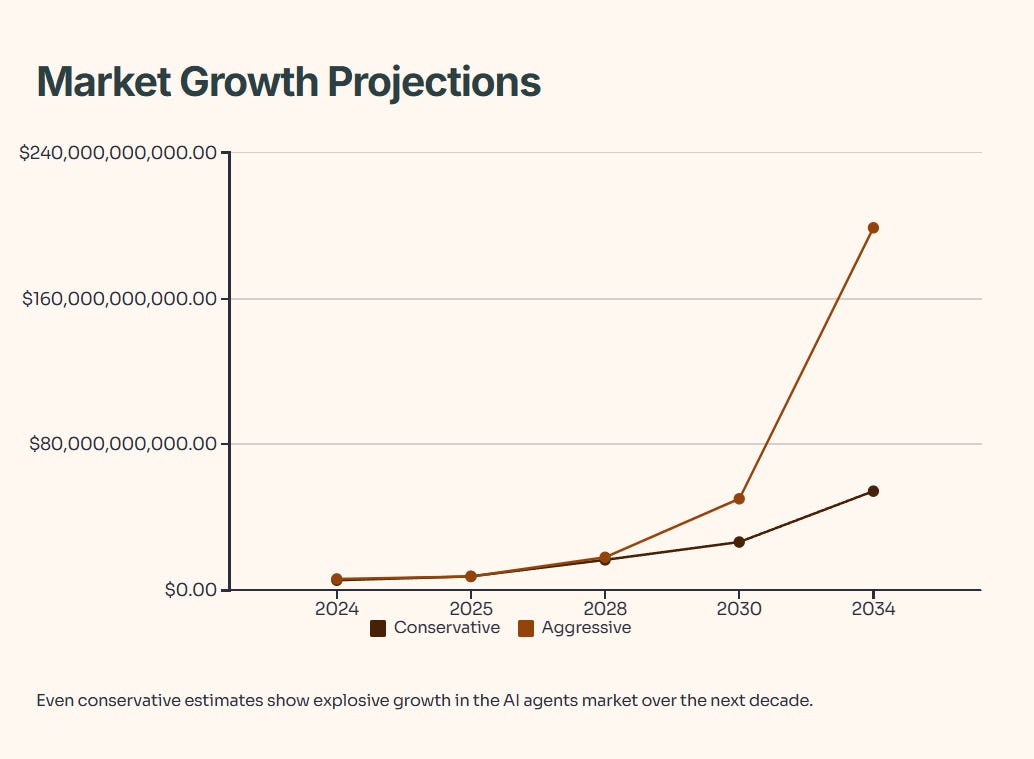
The global AI agents market was worth roughly $7.9 billion in 2024. Analysts project it will grow to between $50 billion and $199 billion by 2034. Even using conservative estimates, we are looking at a Compound Annual Growth Rate (CAGR) of over 40%.
Market Growth Projections (Conservative vs. Aggressive)
Part 4: What This Means for Singapore’s Stock Market
Most of my audience is focused on CPF and SRS optimization. You aren’t day-trading AI startups. So, how do you play this safely?
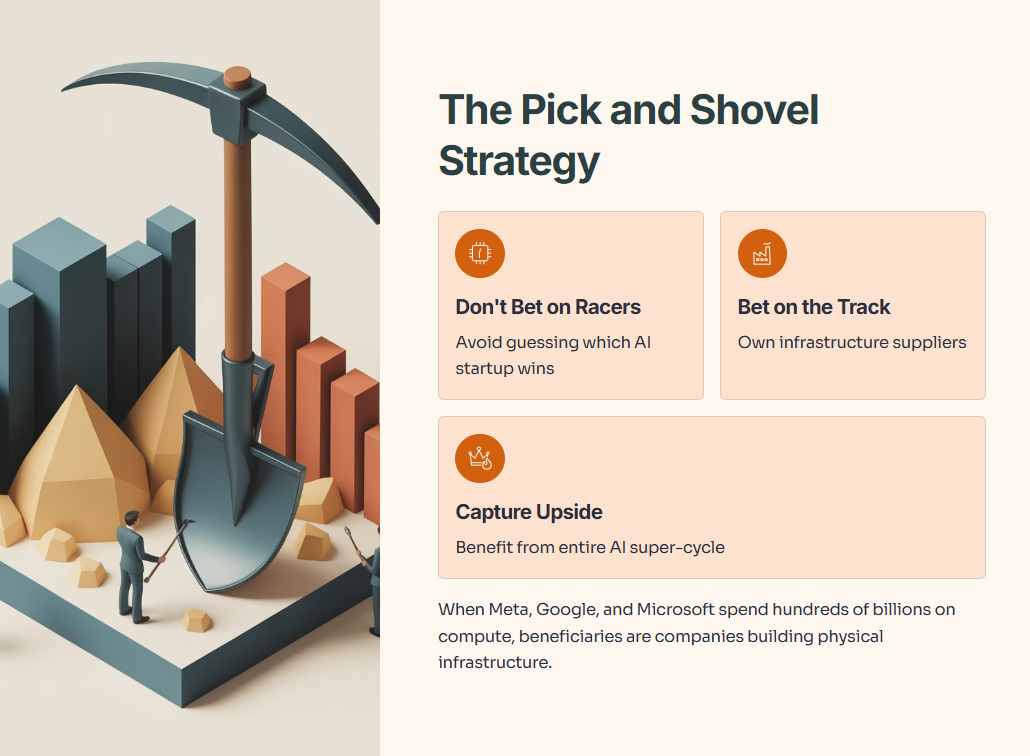
The “Pick and Shovel” Strategy
When Meta, Google, and Microsoft spend hundreds of billions on compute, the beneficiaries are the companies building the physical infrastructure. In Singapore, this filters down to the manufacturing and testing of semiconductors, and the energy required to run them.
Here are the specific SGX-listed entities that stand to benefit from the “Manus Effect”:
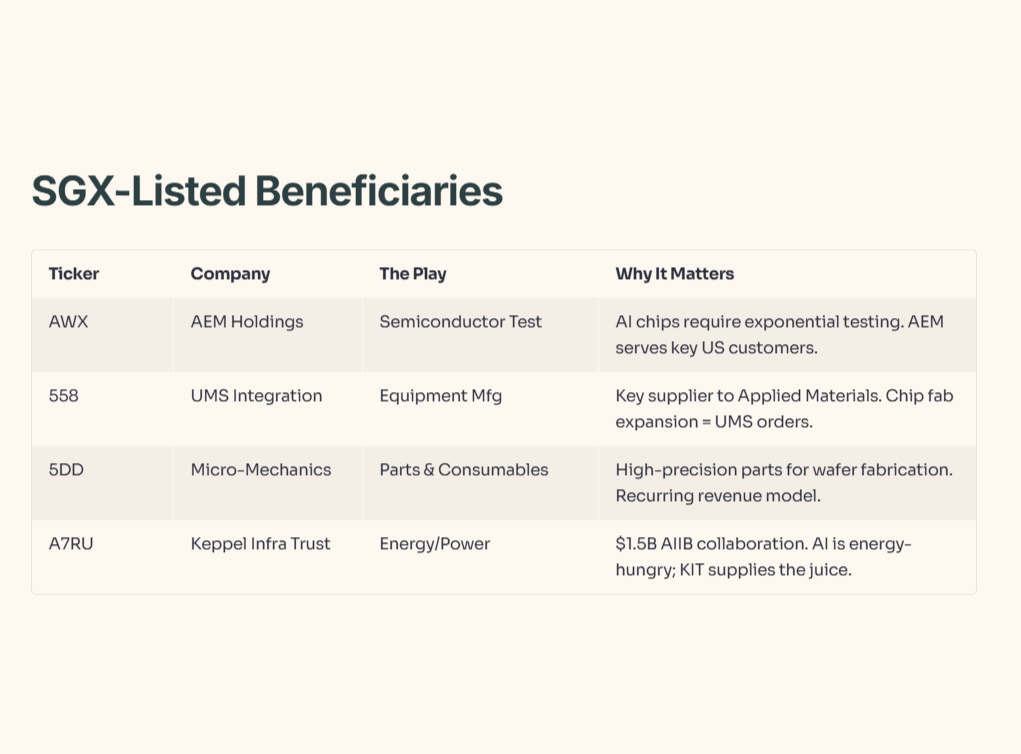
Iggy’s Insight: I prefer the infrastructure play over the tech play. AEM and UMS are cyclical, yes, but they pay dividends and have tangible assets. You don’t have to guess which AI agent will win (Manus vs. OpenAI). You just have to know that all of them need more chips and more power. That is a higher probability bet for a retirement portfolio.
Part 5: The Valuation Check—Using InvestingPro
When evaluating whether to add Singapore infrastructure stocks to your portfolio, valuation is critical. Are these companies expensive? Fair? Cheap?
