My friend in HCMC told me her bank pays 8% on fixed deposits. My first thought? She’d been scammed. Turns out the rate’s real, but for Singapore investors, four pillars—currency conversion, dong depreciation, thin deposit insurance, and physical presence rules—chip away at that headline number until it’s a very different story.
Key takeaways:
MB Bank offers up to 8.4% on 12-month VND deposits, but foreign currency deposits earn 0% by law
Vietnamese dong has weakened 1% to 3.5% yearly against USD, SGD likely similar
Vietnam’s deposit insurance covers ~125 million dong (about S$6,000), versus S$100,000 in Singapore
Foreigners must be physically present in Vietnam with 6+ month residency proof to open VND deposits
After currency risk, the real expected return is closer to 5% to 6% in SGD terms

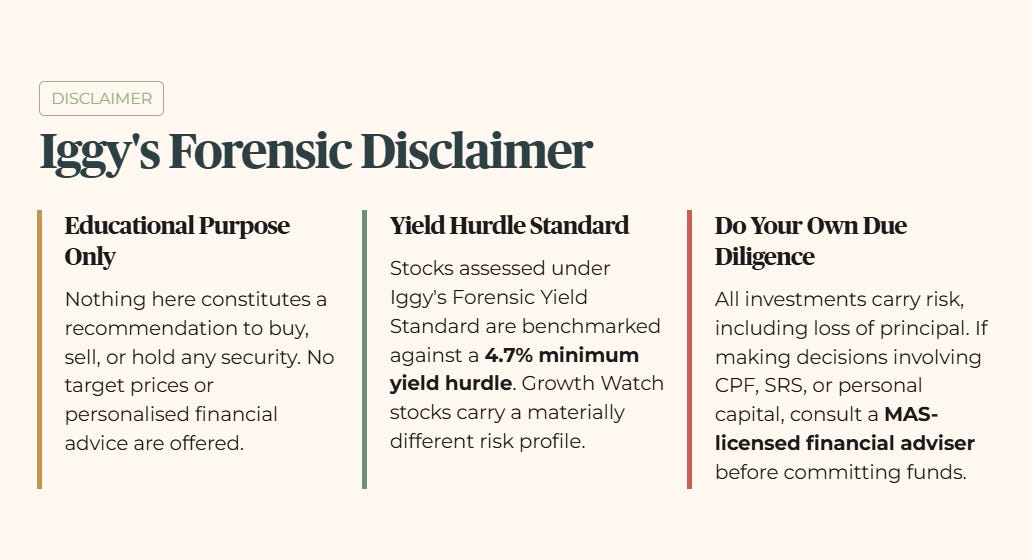
Iggy’s Forensic Disclaimer
This content is produced for educational and informational purposes only. I am not a financial advisor — I am a retail investor who applies forensic analysis to my own portfolio and shares that process publicly. Nothing here constitutes a recommendation to buy, sell, or hold any security, and no specific target prices or personalised financial advice are offered. Stocks assessed under Iggy’s Forensic Yield Standard are benchmarked against a 4.7% minimum yield hurdle; stocks flagged as Growth Watch fall below this threshold but demonstrate clean balance sheet metrics and an identifiable growth catalyst — these carry a materially different risk profile and are not suitable as yield replacements for income-dependent investors. All data is sourced from public filings and verified sources; where data is unverified it is explicitly flagged. All investments carry risk, including the potential loss of principal, and past performance is not indicative of future results. If you are making investment decisions involving CPF, SRS, or personal capital, please conduct your own due diligence or consult a MAS-licensed financial adviser before committing funds.