



If you looked at your portfolio last week, you probably felt that familiar tightening in your chest.
Red arrows everywhere. WhatsApp groups lighting up with panic. “Is UOB safe?” “Is SIA crashing?”
When a blue-chip stock crashes, the retail crowd usually does one of two things: they panic sell everything, or they “average down” blindly into a falling knife. Both are dangerous.
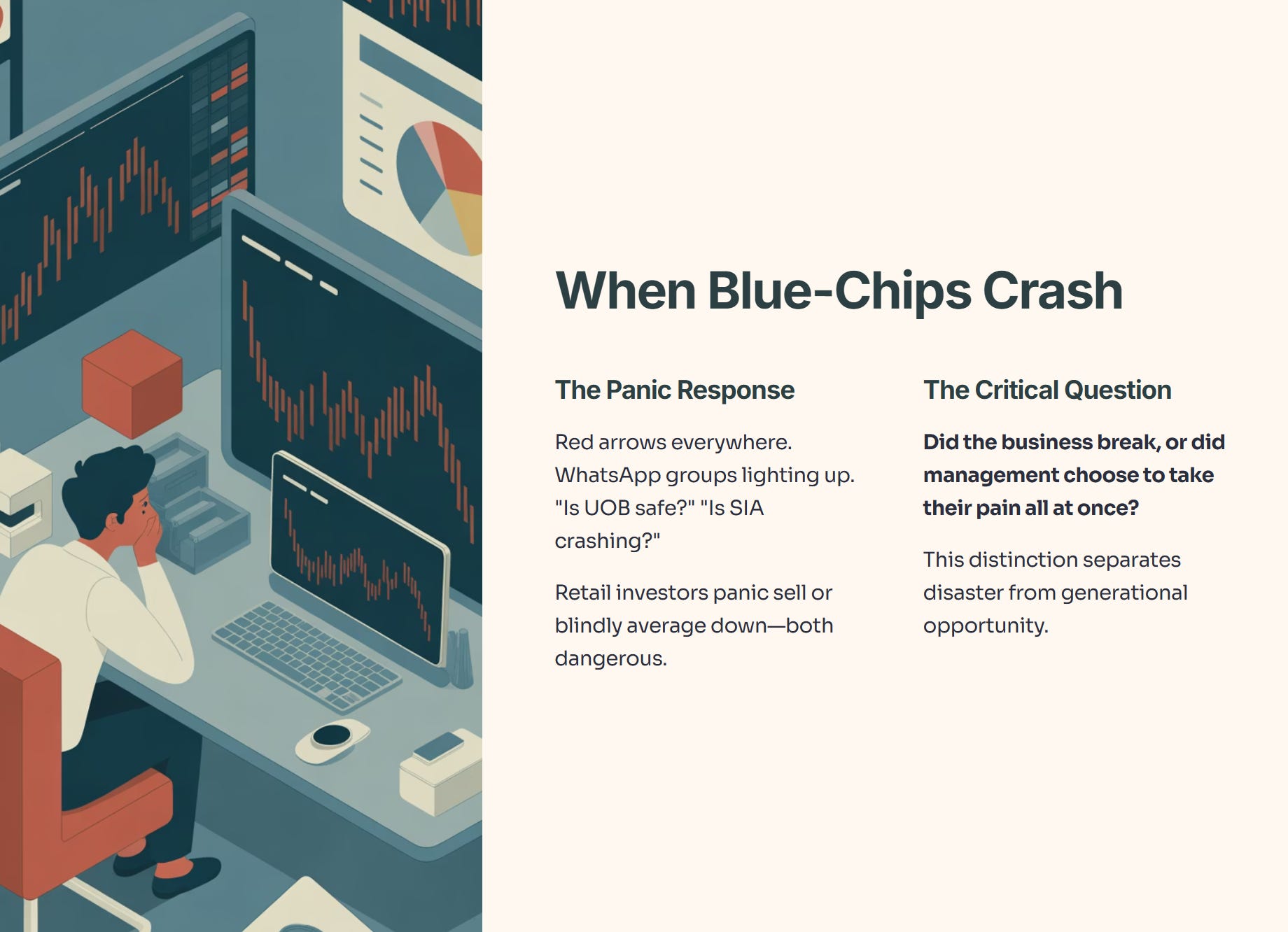
The difference between a disaster and a generation-defining opportunity often comes down to one simple question: Did the business break, or did management just choose to take their pain all at once?
If you’re new here, welcome—The Investing Iguana just hit 1.3 million reads and 65,000 likes. Since October, we’ve helped over 300 Premium members navigate the volatile 2025 market with calm, data-driven analysis. If you want deeper context and a sharper edge in Singapore’s markets, you’re right where you need to be.
Today, we are going to perform a forensic audit on two of Singapore’s most loved stocks. I will show you how to distinguish a “Kitchen Sink” quarter from a “Structural Decline,” and give you a 3-step stress test to use on your own portfolio.
In This Article:

• The “Kitchen Sink” Quarter: What It Is and Why Smart Investors Love It
• Case Study A: UOB—The “Good” Crash (Kitchen Sink Diagnosis)
• Case Study B: SIA—The “Bad” Crash (Structural Decay Diagnosis)
• The 3-Step Stress Test: How to Spot the Difference Yourself
• Iggy’s Final Verdict