



Most dividend hunters chase the fattest yields. That looks smart on paper, but it often backfires in practice. High yields can mean falling earnings, asset sales, or debt-fueled payouts. The goal is not the highest yield today. The goal is a payout that can last and grow across cycles.
This is where a disciplined framework wins. Using Iggy’s 7-point dividend durability system, the latest ex-dividend names split cleanly into two camps: durable payers that compound, and yield traps that erode capital. Below is the refined guide, tuned for Singapore investors using CPF/SRS and building an income stack that can handle rate cuts, currency swings, and slow growth. Let’s find out which Dividend stocks (for SEP) we should buy, and which ones we should definitely avoid!
The Dividend Quality Crisis Singapore Investors Face
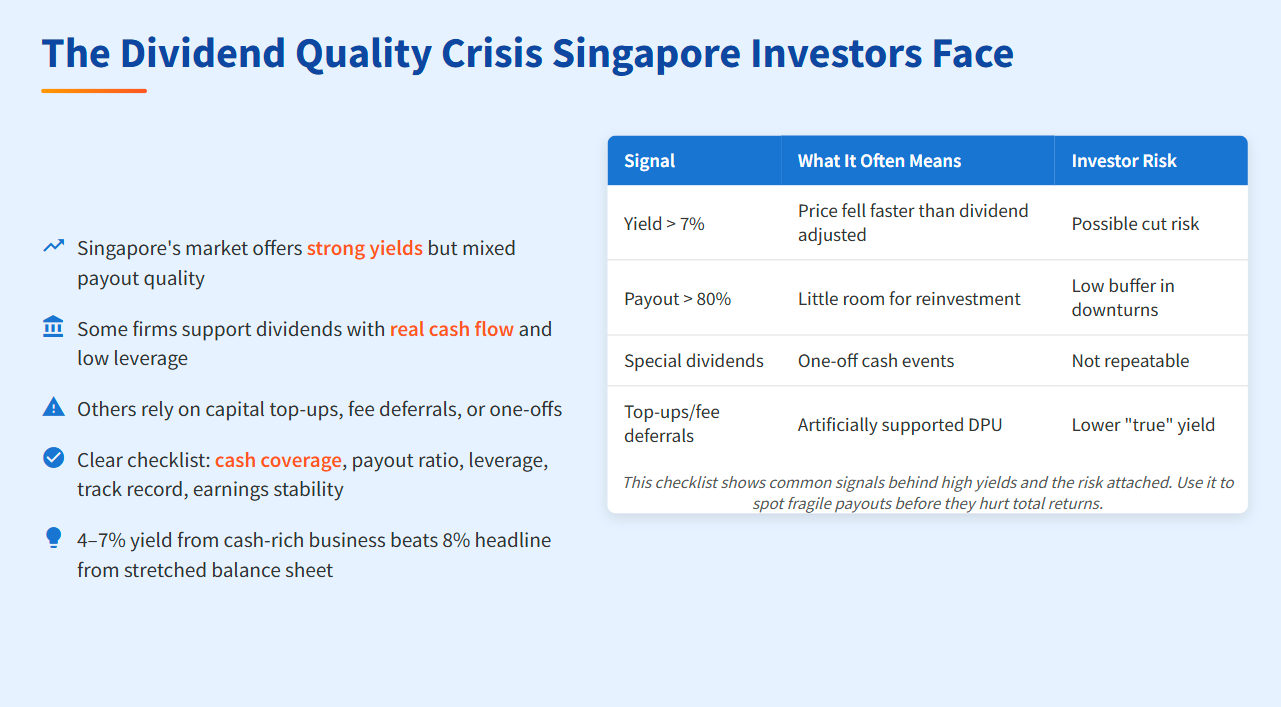
Singapore’s market still offers strong yields. Yet, payout quality is mixed. Some firms support dividends with real cash flow and low leverage. Others rely on capital top-ups, fee deferrals, or one-offs. This can fool screeners and tempt investors. The fix is a clear checklist: cash coverage, payout ratio, leverage, track record, and earnings stability.
Investors should anchor to one idea: a 4–7% yield from a cash-rich, conservatively run business beats an 8% headline from a stretched balance sheet. That brighter green yield on a broker app is not always the best income.
Iggy’s 7-Point Dividend Durability Framework
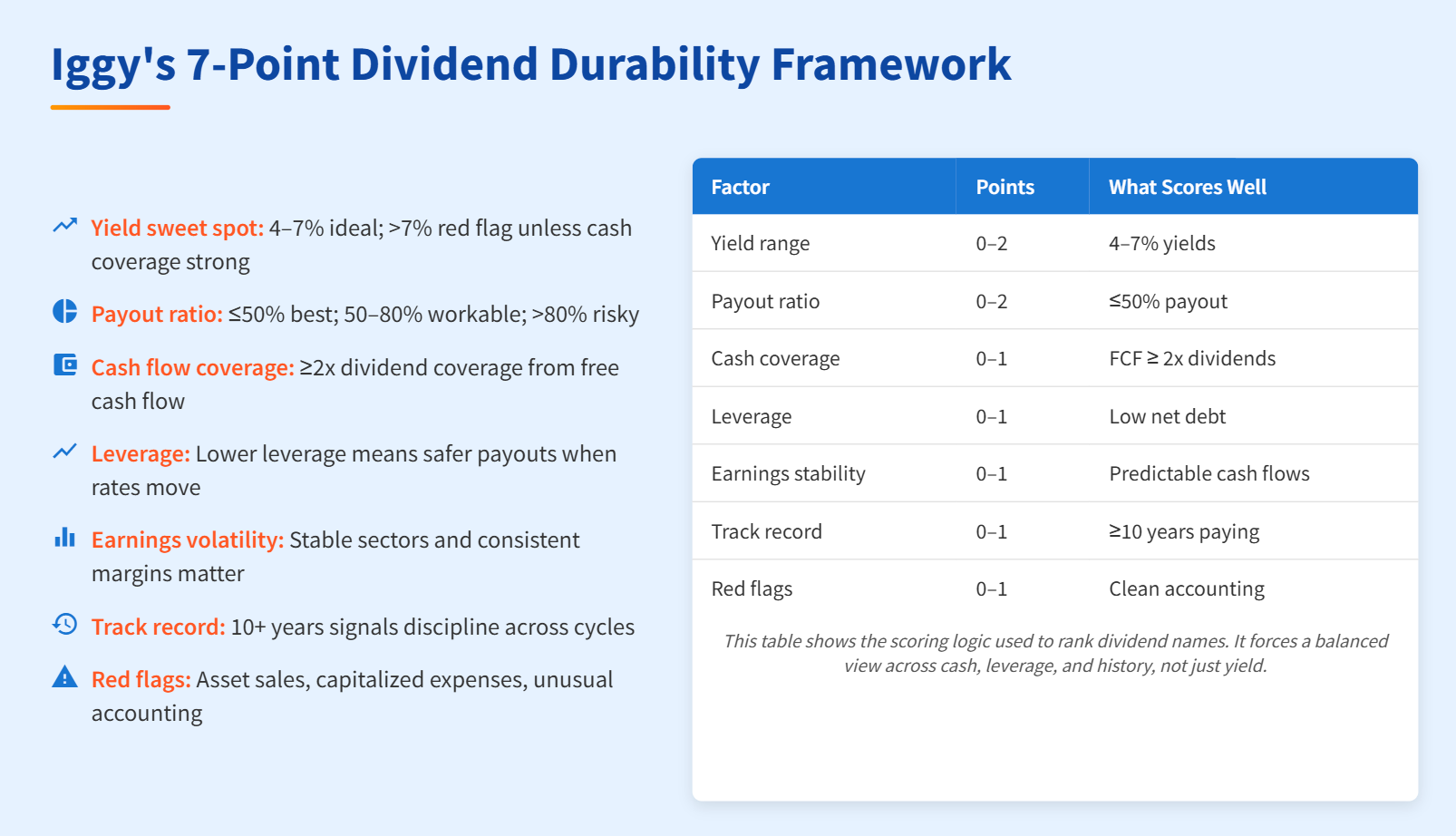
The framework is simple, strict, and repeatable:
Yield sweet spot: 4–7% is ideal; >7% is a red flag unless cash coverage is very strong.
Payout ratio: ≤50% is best; 50–80% is workable; >80% is risky.
Cash flow coverage: Aim for at least 2x dividend coverage from free cash flow.
Leverage: Lower leverage means safer payouts when rates move.
Earnings volatility: Stable sectors and consistent margins matter.
Track record: 10+ years signals discipline across cycles.
Red flags: Asset sales, capitalized expenses, or unusual accounting to “support” DPS.
Note: Iggy’s 7-Point Dividend Durability Framework is a checklist to spot dividends that can last through market cycles. The key is balance: a yield between 4–7% is attractive but still safe, while payout ratios below 50% give room for reinvestment (up to 80% is workable, beyond that is risky). Strong companies back dividends with at least 2x coverage from free cash flow, and keep debt levels low so rising interest rates don’t choke payouts. Stability matters, so firms in consistent sectors with steady margins score higher. A solid 10+ year dividend track record proves discipline. Finally, investors must watch for red flags like selling assets, capitalizing expenses, or using creative accounting just to maintain dividends.
