



Why every Singaporean investor should understand the complex web of cross-border fund flows, regulatory blind spots, and the critical importance of due diligence in protecting our financial hub's reputation.
The investing world just got a lot more complicated for Singaporeans. While we pride ourselves on having one of Asia's most regulated and transparent financial hubs, a recent exposé reveals how easily complex international networks can operate within our system. The story of Capital Asia Investments (CAI) isn't just about one fund manager – it's a wake-up call about the sophisticated ways regional political and business networks are reshaping Southeast Asian markets, often with minimal transparency for everyday investors like us.
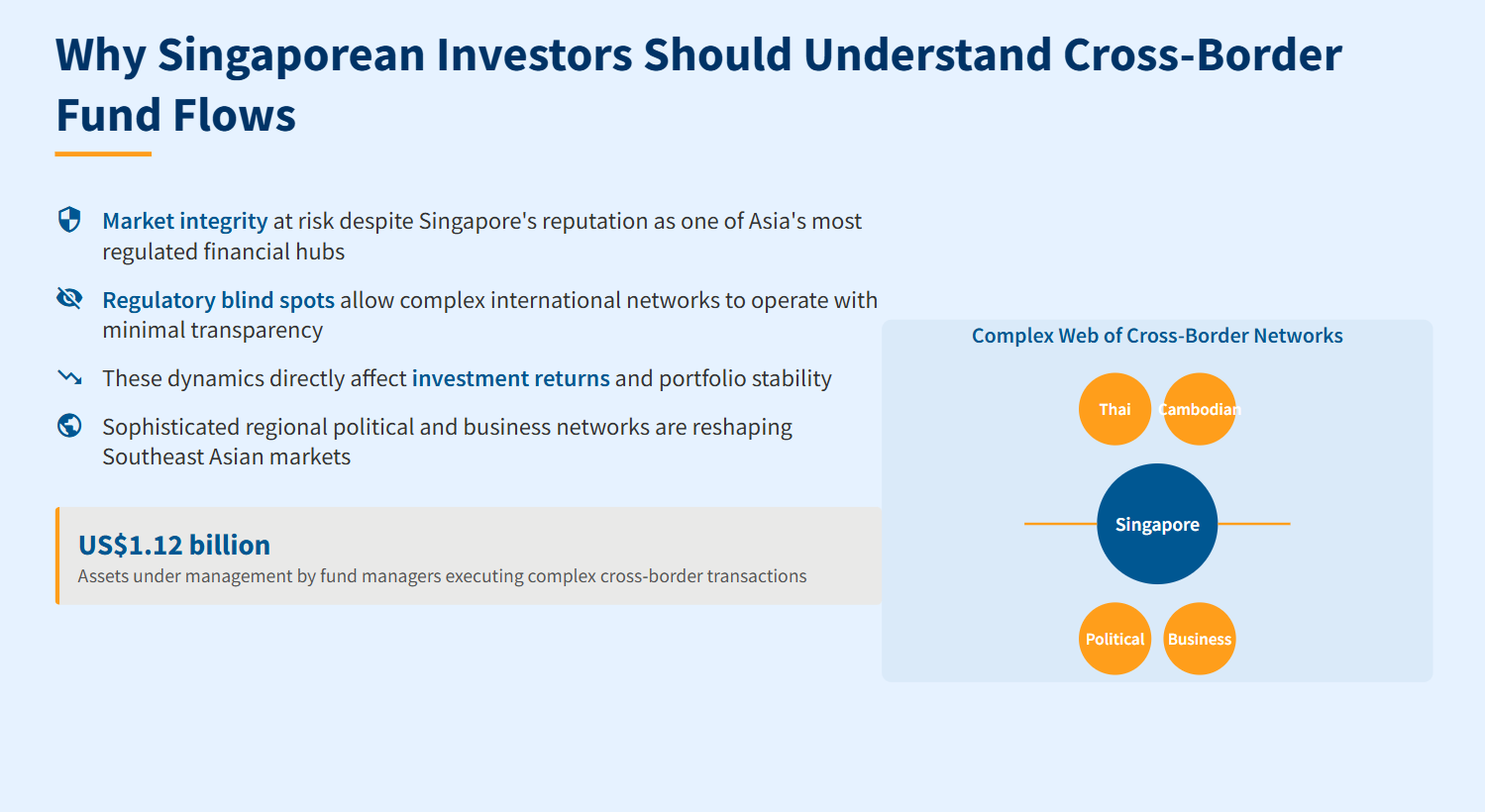
As retail investors in Singapore, we need to understand these dynamics because they directly affect market integrity, regulatory oversight, and ultimately our investment returns. When fund managers with US$1.12 billion in assets under management can execute S$658 million worth of complex cross-border transactions involving politically connected figures, it raises fundamental questions about what we really know about the funds and markets we invest in.
This isn't just academic curiosity. These networks are actively reshaping ownership of major Thai blue-chip companies – the same firms that appear in many of our regional ETFs, unit trusts, and direct stock portfolios. Understanding how these deals work, who's behind them, and what red flags to watch for has become essential knowledge for any serious Singaporean investor.
The CAI Network: Mapping the Players
Capital Asia Investments operates from Robinson Road – the same financial district where many of us have walked past gleaming fund management offices without a second thought. But CAI's story reveals layers of complexity that would make even seasoned investors pause.
The firm is led by Eugene Tang, 47, and George Tan, 55, who co-founded CAI in June 2017 shortly after Tang's previous employer, One Asia Investment Partners (OAIP), had its license revoked by MAS for mismanagement. That timing alone should raise eyebrows – starting a new fund management company just months after your previous firm was shut down by regulators for poor oversight.
But the real intrigue lies in CAI's web of connections across Cambodia and Thailand. The fund manager has been executing massive share trades involving politically connected figures, including Cambodian tycoon Yim Leak, whose family ties to former premier Hun Sen place him at the center of Cambodia's political elite.
The network becomes even more complex when you consider Thailand's incoming Deputy Finance Minister Vorapak Tanyawong, who co-founded Finansa Investment – a CAI-linked entity that has become the largest shareholder in Thai financial services firm Finansia X. This isn't just business networking – it's a sophisticated web that spans political, financial, and regulatory boundaries.
Table: Key Players in the Capital Asia Investments Network
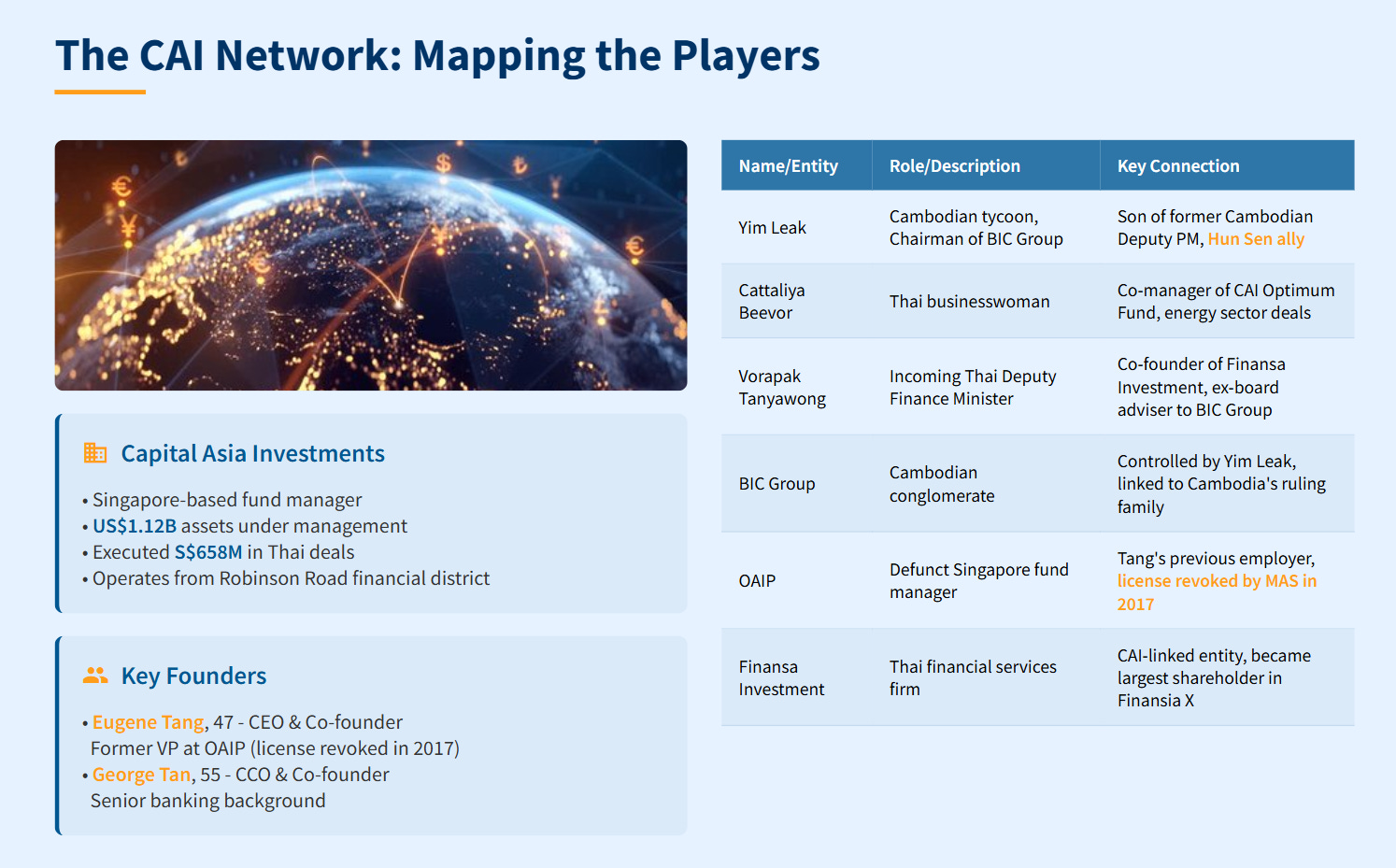
This table shows the main individuals and organizations involved in the CAI network, summarizing their roles and principal business or political connections. It highlights the complexity and depth of their relationships, which are crucial for investors to understand. The interconnectedness of finance and politics, especially across borders, is a key theme.
