



SingPost’s Profit Jumped 55% This Quarter. Here’s What’s Actually Driving It.
Cost cuts, a shophouse sale, and a quiet parcel win: what’s actually behind the number, and what the filing still doesn’t fix.
One reader has held SingPost since before the Australia sale, still checking the dividend every year out of habit. Another is looking at today’s price and wondering if a stock this beaten-down is worth a fresh look. Both are asking about the same quarter, and the honest answer isn’t quite the same for each of them.
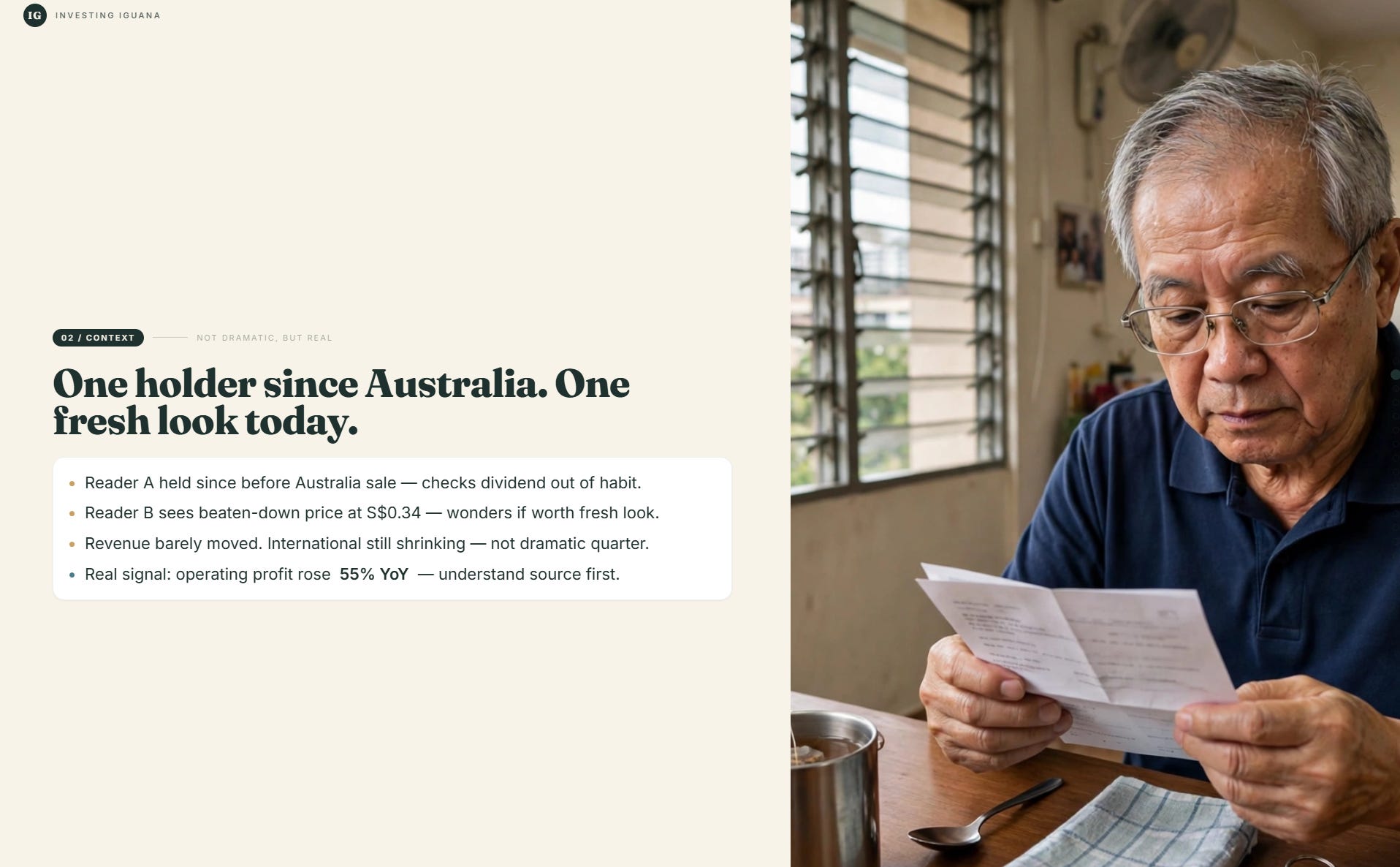
I’ll be upfront: this isn’t a dramatic quarter. Revenue barely moved, and the international side is still shrinking. But there’s a real number worth sitting with: operating profit rose 55% year on year. It’s worth understanding exactly where that came from before deciding what it means for you.

The headline number, and where it actually came from
Domestic parcels are growing. Everything else is shrinking.
Where the cash actually came from
🟠 Angela’s Observation
The Post Office Network is quietly becoming something else
🔒 What’s Next
SingPost Centre is full. A refresh might change that math.
The Window Is Already Open
The Window Closes Fast.
The dividend and yield picture
🟠 Angela’s Observation
What I’m Watching Next
Iggy’s Forensic Disclaimer
The headline number, and where it actually came from
SingPost’s business update for the first quarter ended 30 June 2026 shows revenue of S$93.4 million, down a marginal 0.9% from S$94.2 million a year earlier. Operating profit, though, came in at S$4.1 million, up 55.2% from S$2.6 million. Operating margin improved from 2.8% to 4.4%.
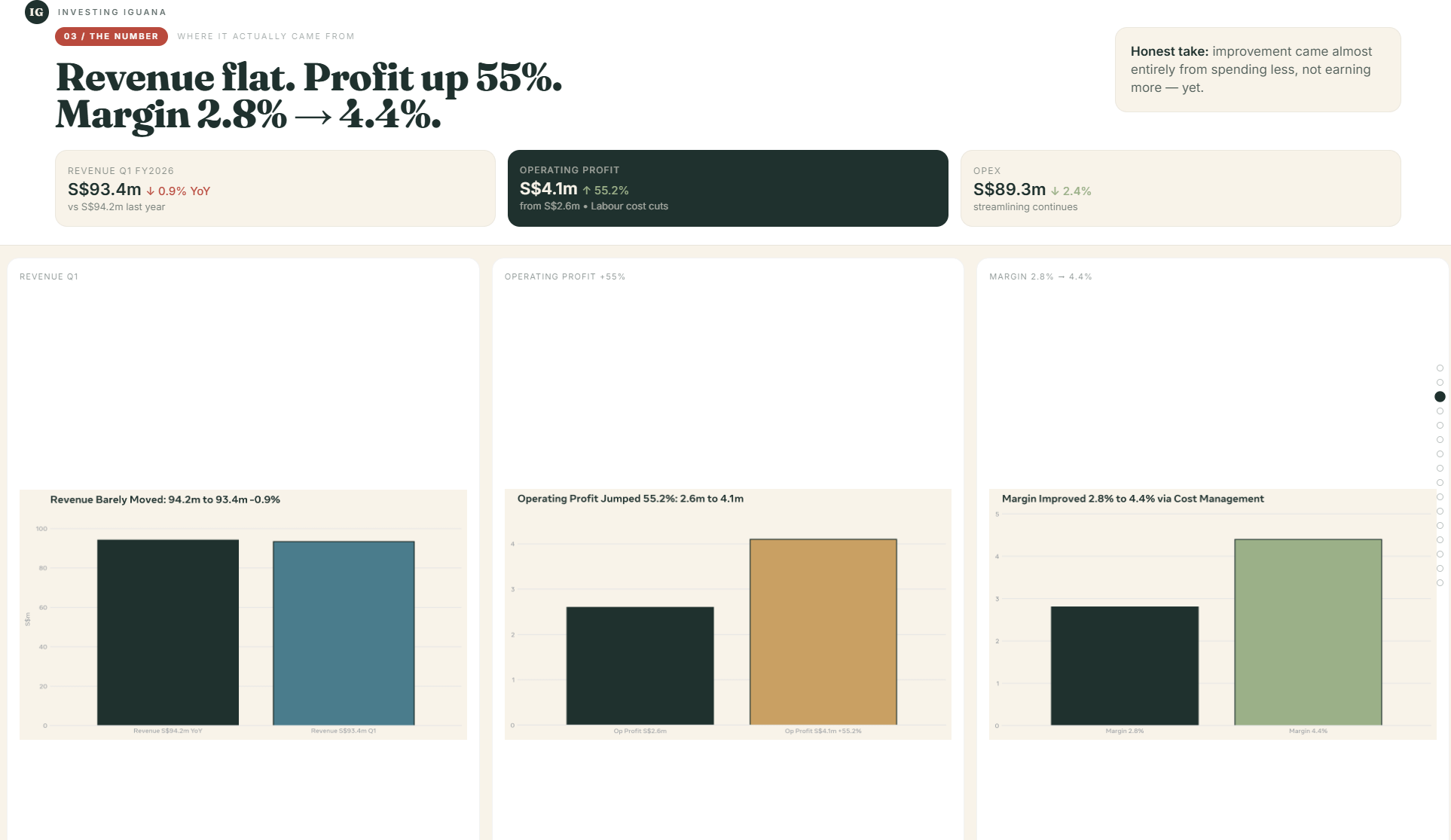
That’s a real improvement, but it’s worth naming honestly: it came almost entirely from cost management, not from the business growing. Operating expenses fell 2.4% to S$89.3 million, driven mainly by lower labour costs as the company continues to streamline. Revenue was essentially flat. So this is a story about spending less, not earning more, at least so far.
Domestic parcels are growing. Everything else is shrinking.
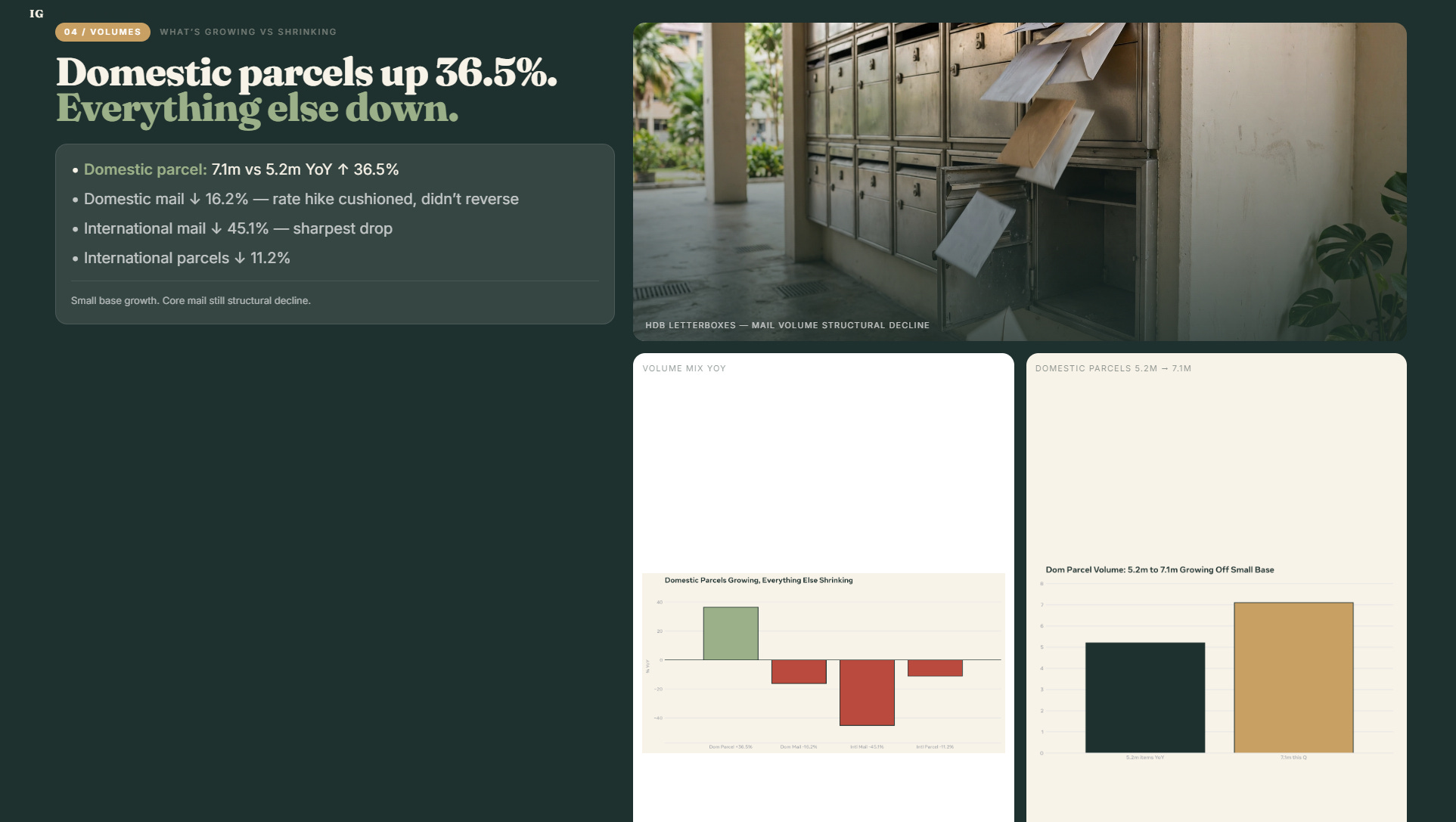
The operating statistics in the same filing tell a sharper story than the headline numbers do. Domestic parcel volume rose 36.5% year on year. Domestic mail fell 16.2%. International mail dropped 45.1%. International parcels fell 11.2%.
Put plainly: the one part of this business that’s actually growing is domestic parcels, and it’s growing off a small base, 7.1 million items this quarter versus 5.2 million a year ago. Everything else, mail at home and both mail and parcels overseas, is still shrinking. The postage rate increase from January helped cushion the domestic mail decline, but it didn’t reverse it.
Where the cash actually came from
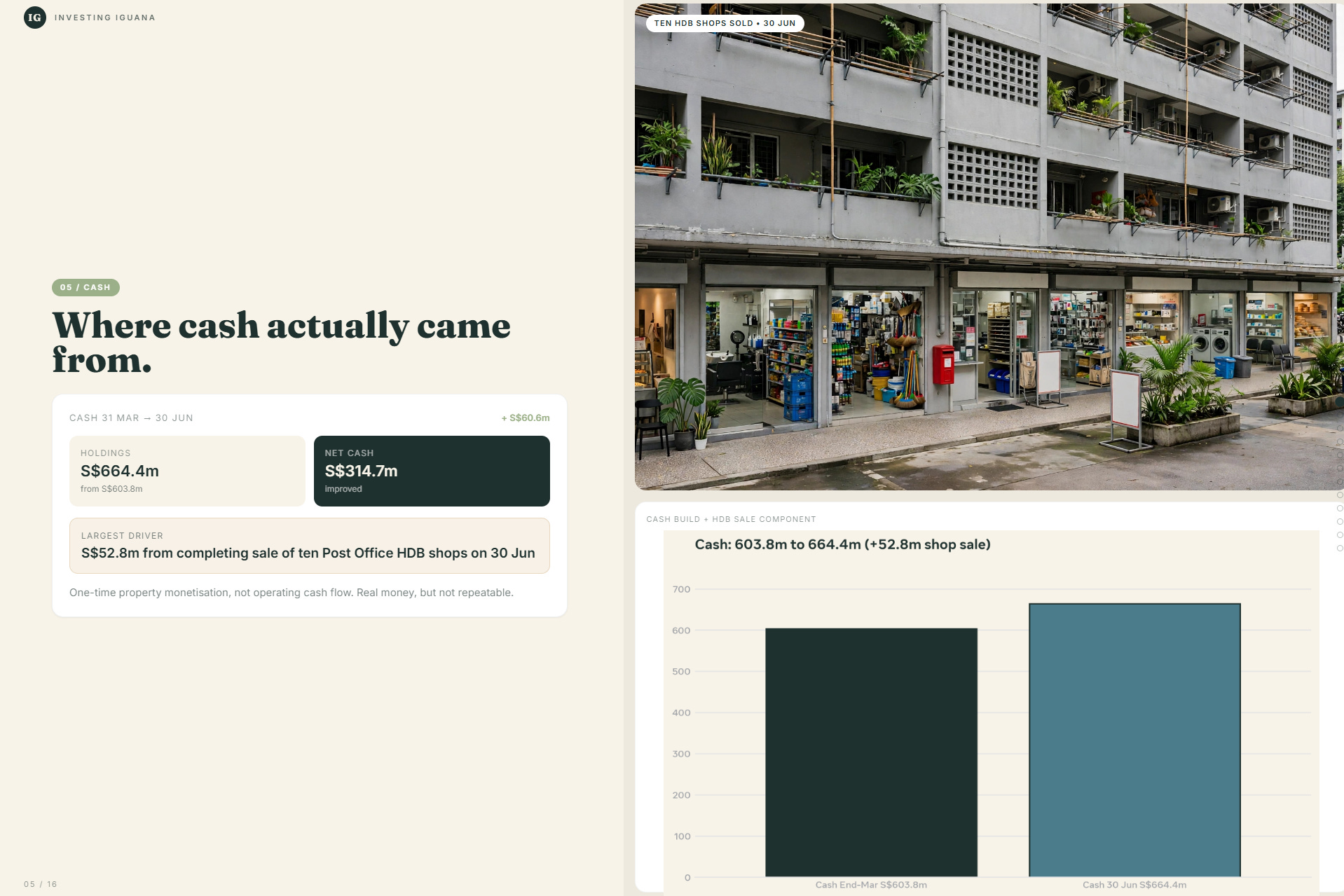
Cash holdings rose to S$664.4 million as at 30 June, from S$603.8 million at end-March, and the company’s net cash position improved to S$314.7 million. A large part of that increase, S$52.8 million, came from completing the sale of ten Post Office HDB shops on 30 June.
🟠 Angela’s Observation
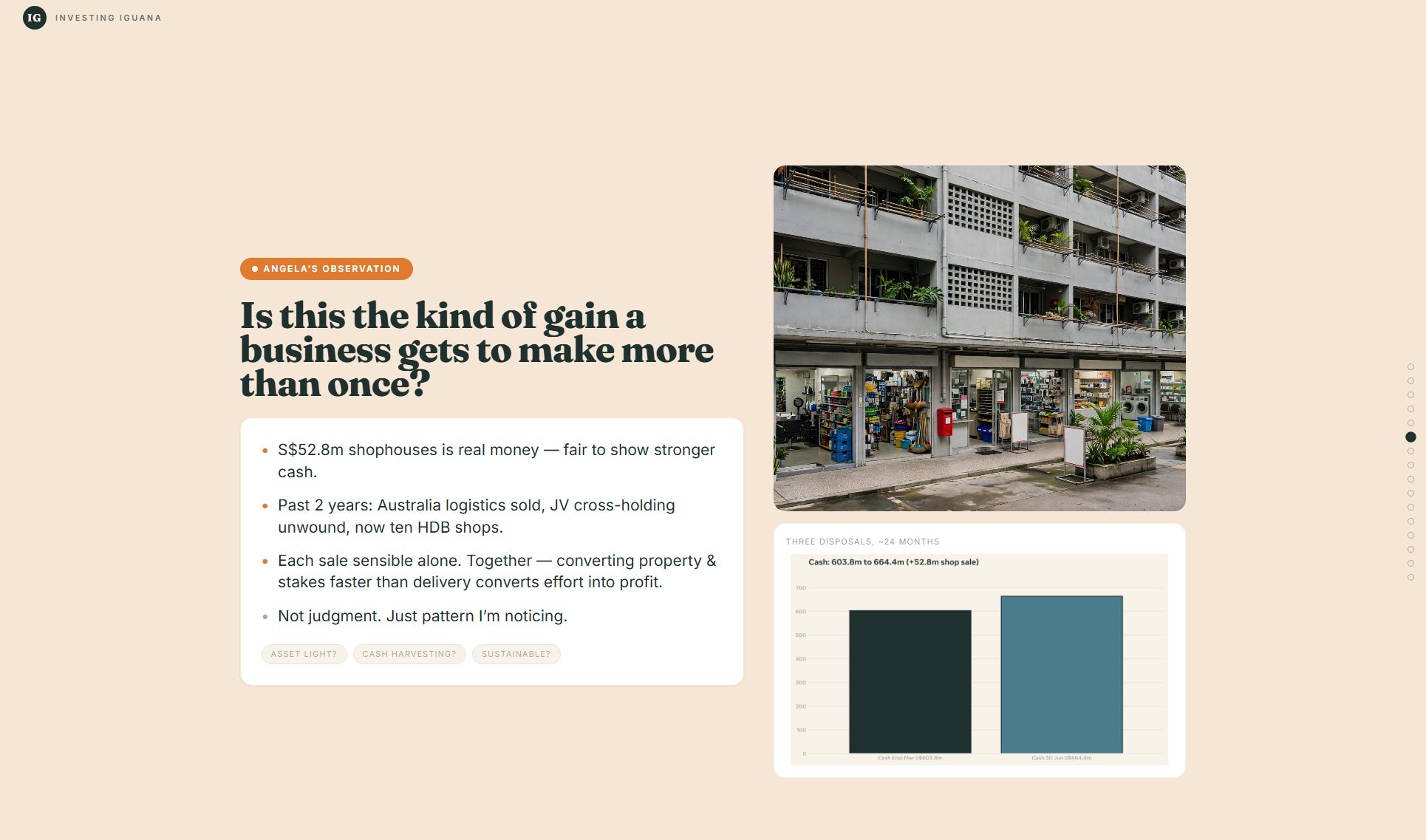
The S$52.8 million from selling ten post office shophouses is real money, and it’s fair for it to show up as a stronger cash position. But I keep coming back to a simple question: is this the kind of gain a business gets to make more than once? SingPost has now sold its Australia logistics business, unwound a cross-holding stake in a logistics joint venture, and sold these ten HDB shops, all within about two years.
Each sale looked sensible on its own. Together, they start to look like a company converting property and stakes into cash faster than its actual delivery and logistics operations are converting effort into profit. That’s not a judgment, it’s just the pattern I’m noticing.
The Post Office Network is quietly becoming something else
One detail easy to miss in this filing: from April 2026, SingPost’s Post Office Network started providing transaction support services for Singtel’s Special Discounted Shares. If you’ve ever wondered how a corporate rights or discounted share exercise actually gets processed on the ground, this is part of the answer, and it’s now a real, if modest, revenue line for SingPost.
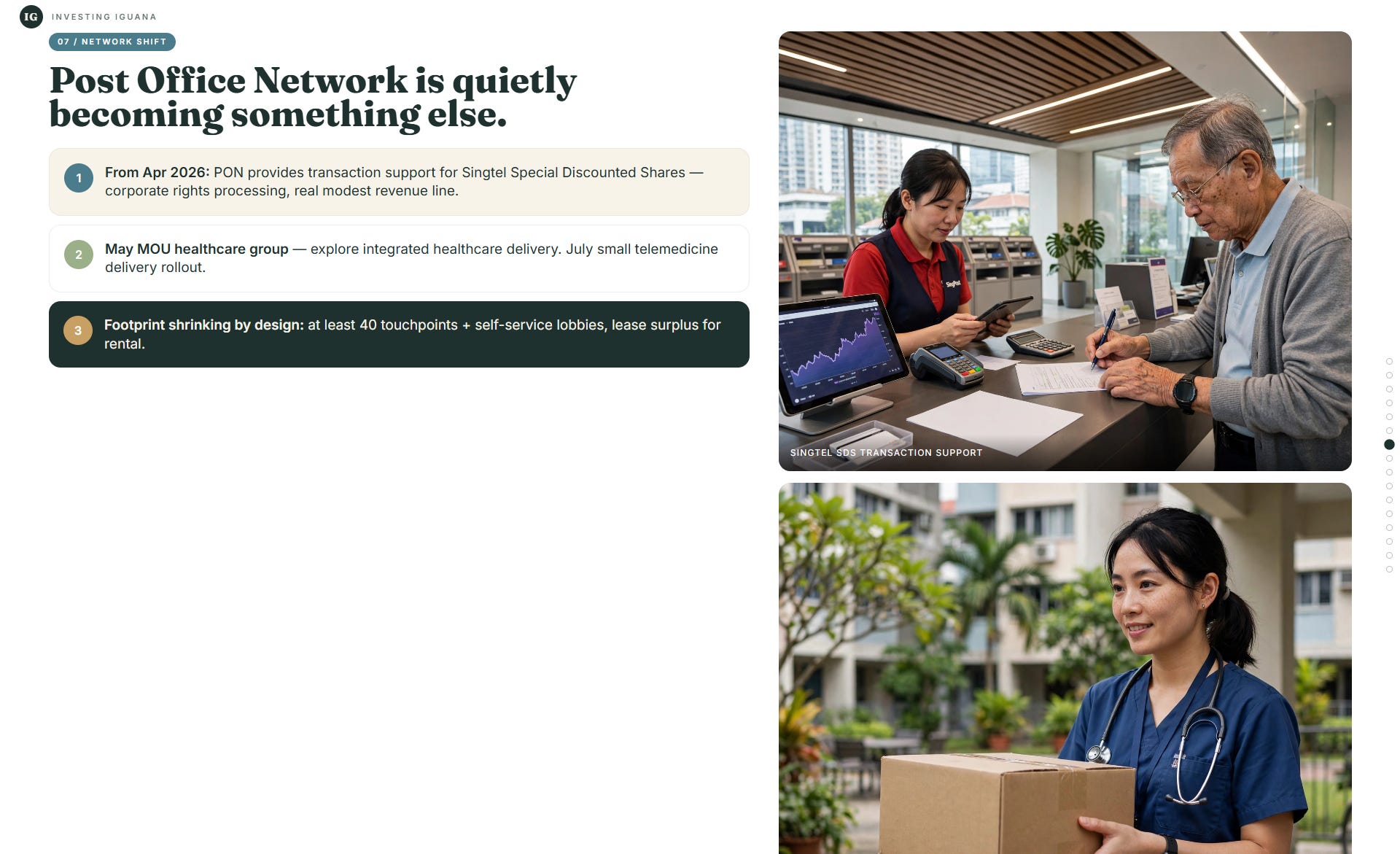
The company is also leaning into new territory, an MOU with a healthcare group signed in May to explore integrated healthcare delivery, and a small-scale tele-medicine delivery rollout in July. Meanwhile the physical footprint keeps shrinking by design, with SingPost aiming to hold at least 40 touchpoints nationwide, supplemented by self-service lobbies, while leasing out surplus branch space for extra rental income.
🔒 What’s Next
The cash position looks strong on paper. The dividend breakdown in the next section shows how much of SingPost’s actual shareholder return still depends on selling things it already owns.
