


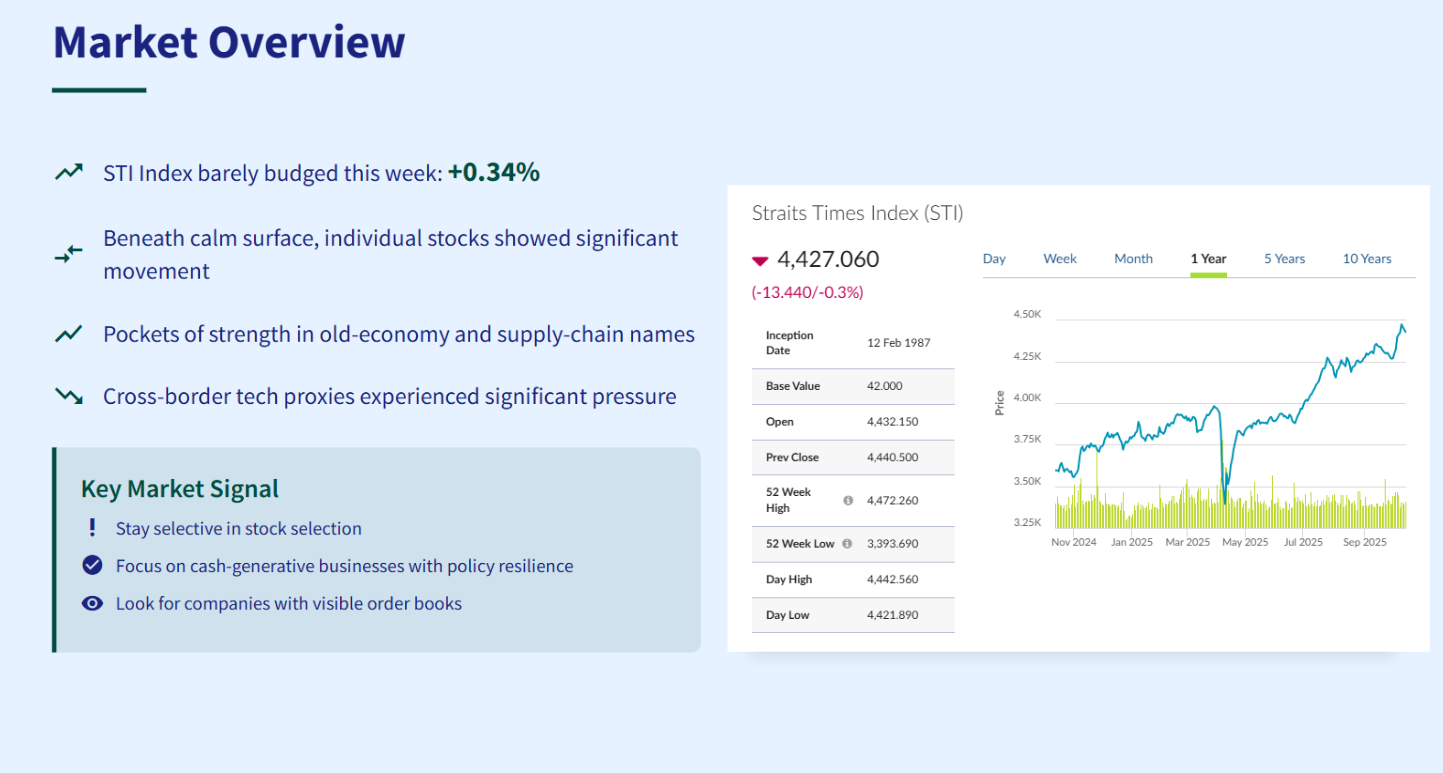
The Singapore market may look calm on the surface, but every week brings a new set of surprises lurking beneath the STI’s steady numbers. This week was no different. While the index nudged up a modest 0.34%, sharp rallies in key stocks and steep falls in others told a much livelier story below. In today’s breakdown, I’ll take you through the top five gainers and losers on the SGX for the week ending 10 October. We’ll dig into what pushed these stocks to new highs—or sent them tumbling—and what these shifts mean for your portfolio, your CPF, and your next investment decision. Whether you’re a seasoned investor or just starting out, understanding these big movers is key to building long-term wealth right here in Singapore. Let’s jump in.
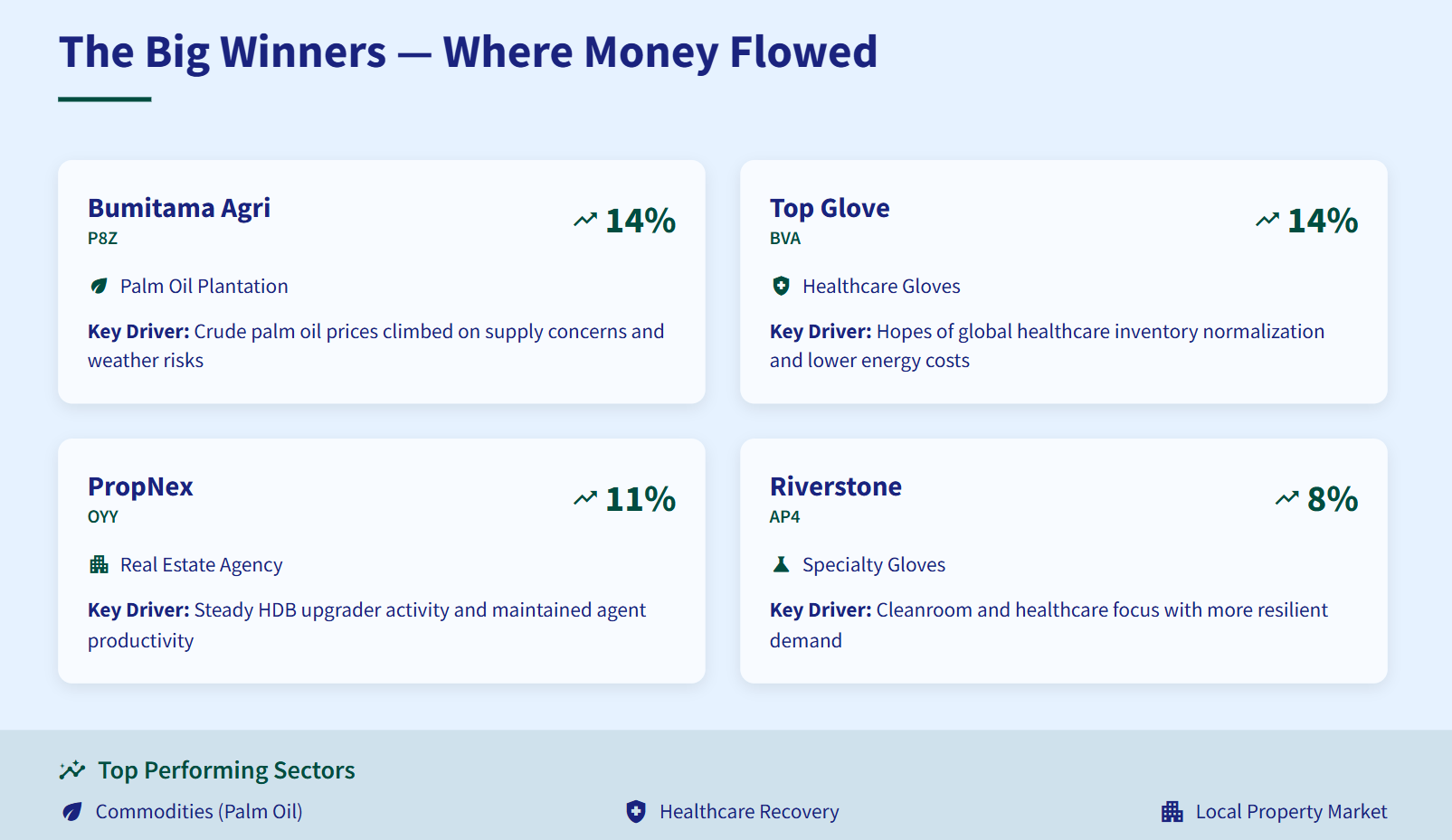
The Big Winners — Where Money Flowed
Bumitama Agri (P8Z) — Up 14%
Bumitama Agri rode the palm oil wave to a stellar 14% weekly gain as crude palm oil prices climbed on supply concerns and weather risks across key producing regions. The Indonesian planter, with operations spanning over 180,000 hectares across Kalimantan and Sumatra, benefits directly from higher CPO prices through improved margins on fresh fruit bunches. Weather patterns indicating potential El Niño conditions have traders worried about yield impacts, while global inventory levels remain relatively tight compared to historical averages. The company’s integrated operations, including palm oil mills and refineries, provide additional leverage to the commodity price cycle. Higher energy costs that plagued margins earlier this year have also stabilized, giving planters more breathing room. The stock’s move reflects classic commodity leverage where upstream producers feel price changes immediately in their profit margins.
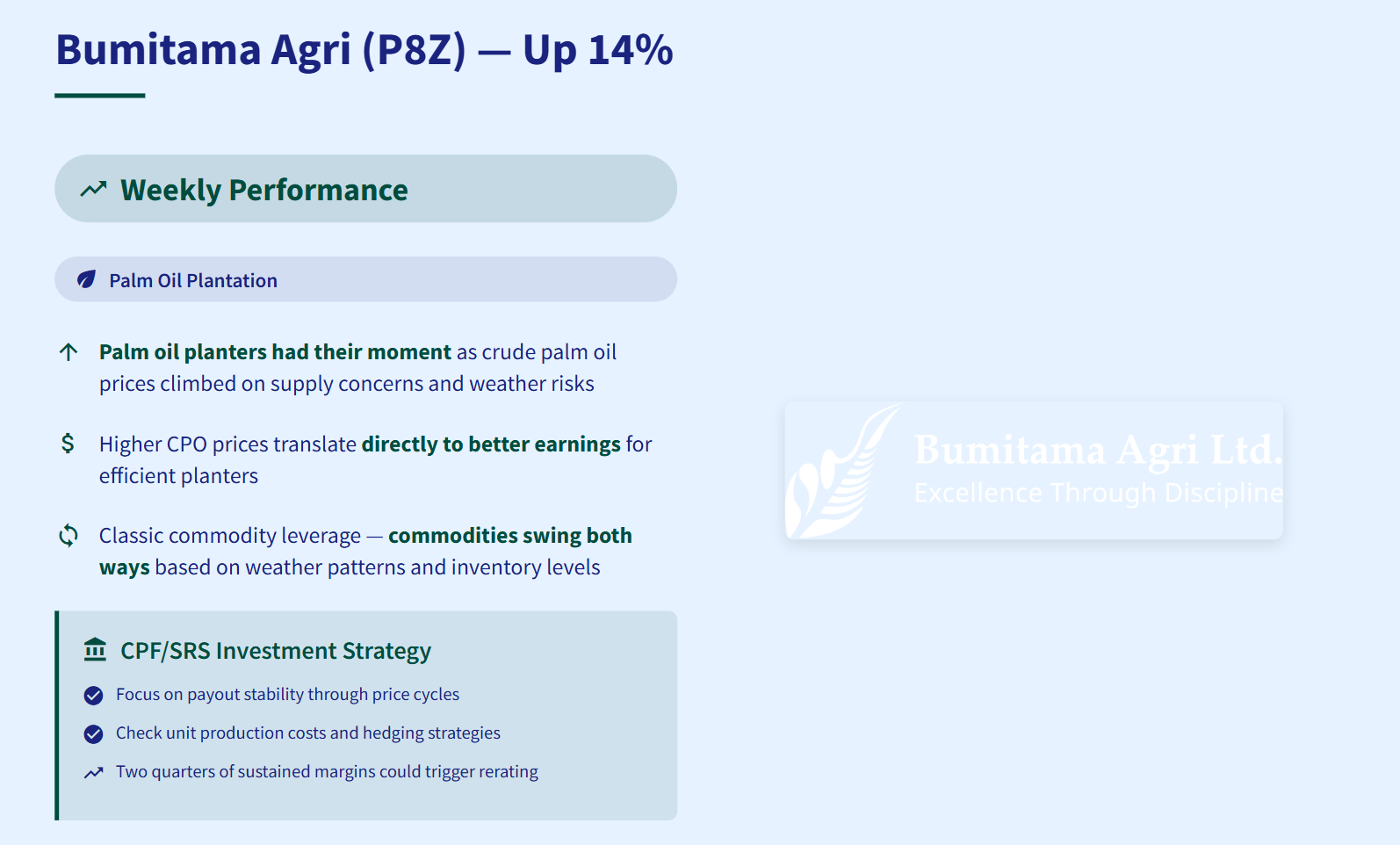
Iggy’s take: This is textbook cyclical investing - when supply tightens, efficient planters with low production costs win big. Bumitama’s advantage lies in its relatively young palm trees (average age around 10-12 years) and mechanization efforts that keep harvesting costs competitive. But here’s the reality check: palm oil is a mean-reverting commodity. These price spikes often trigger increased planting activity that floods supply 3-4 years later. For CPF investors seeking steady dividends, focus on their payout ratio sustainability through commodity cycles. I’d rather buy Bumitama on commodity weakness when margins are compressed but fundamentals remain intact, not after a 14% weekly surge when everyone’s suddenly bullish on palm oil.
