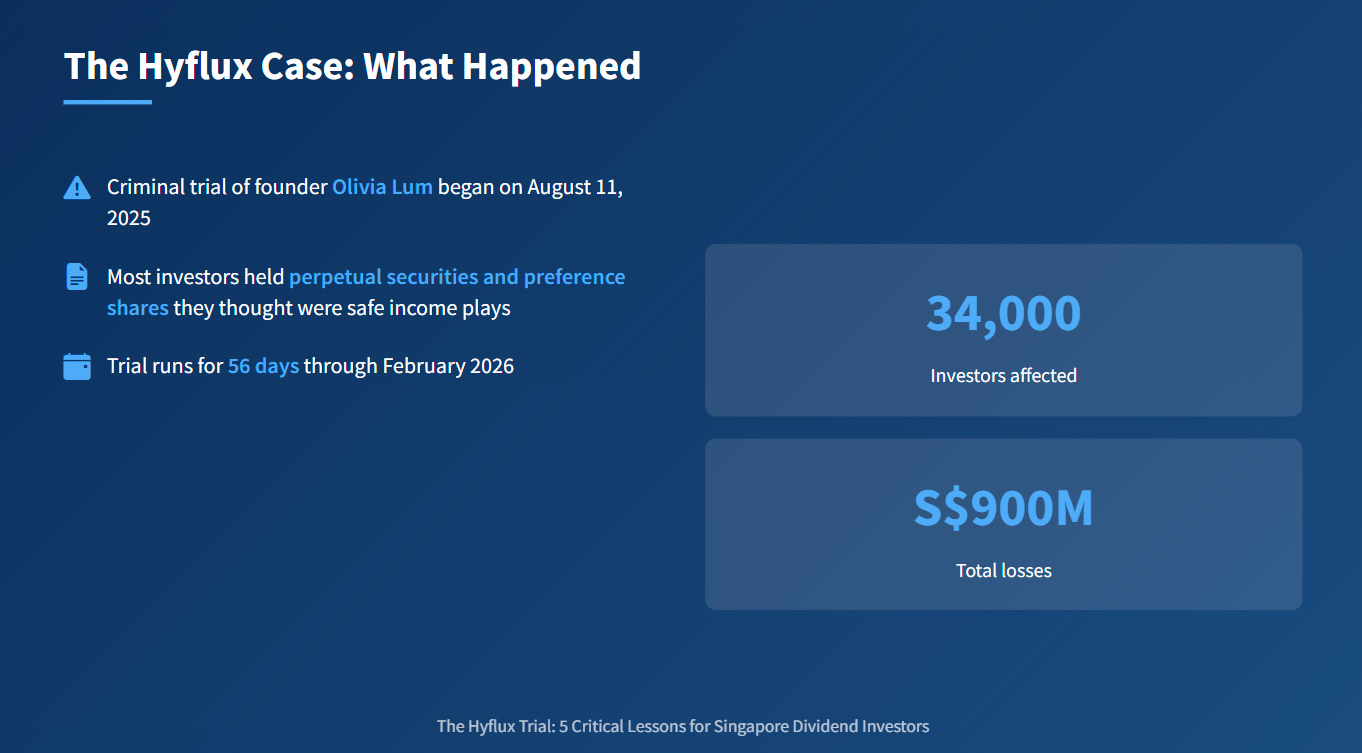
The criminal trial of Hyflux founder Olivia Lum began on August 11, 2025. But this isn't just another corporate scandal story. This is a masterclass in disclosure risk, business model failure, and capital structure traps that every Singapore dividend investor needs to understand.
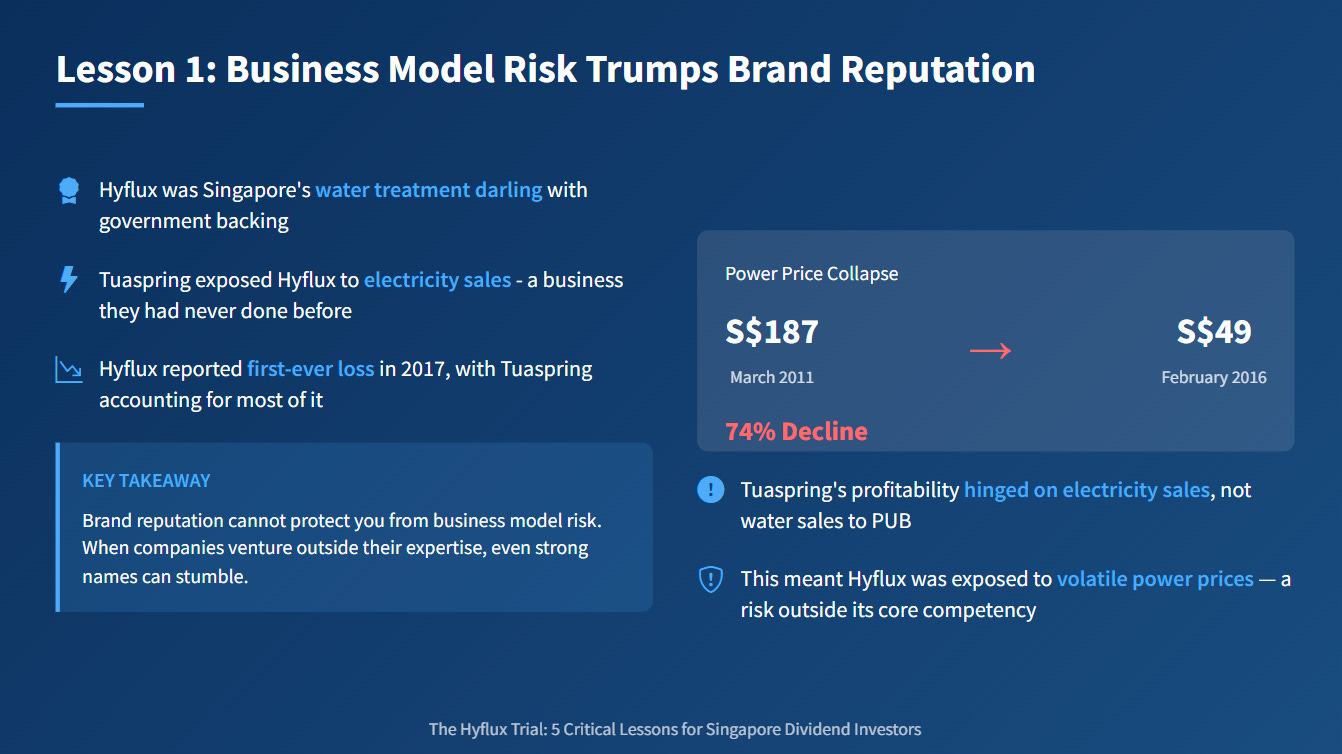
About 34,000 investors lost S$900 million when Hyflux collapsed. Most held perpetual securities and preference shares they thought were safe income plays. The prosecution's case centers on a simple but devastating allegation: Hyflux hid the fact that its Tuaspring project's profitability depended entirely on electricity sales—a business Hyflux had never done before.
What This Trial Is About
Prosecutors say Hyflux failed to disclose three key facts tied to the 2011 Tuaspring project: selling electricity was a new business for Hyflux; electricity sales were projected to drive the bulk of project revenue; and profitability depended on electricity sales. These alleged gaps created a false market under continuous disclosure rules. One former independent director pleaded guilty on Aug 7, 2025, received a S$90,000 fine, and a five-year director ban. Six other former leaders, including founder Olivia Lum, are on trial through early February 2026.
Why This Matters To Dividend And REIT Investors
This is more than a courtroom story. It is a live lesson in:
How “new business” inside an infrastructure project can change risk
How continuous disclosure works in practice on SGX
How hybrid securities behave in stress
How capital stack ranking decides recoveries
How bank actions can flag problems before retail investors see them
Five Investor Lessons From Hyflux