


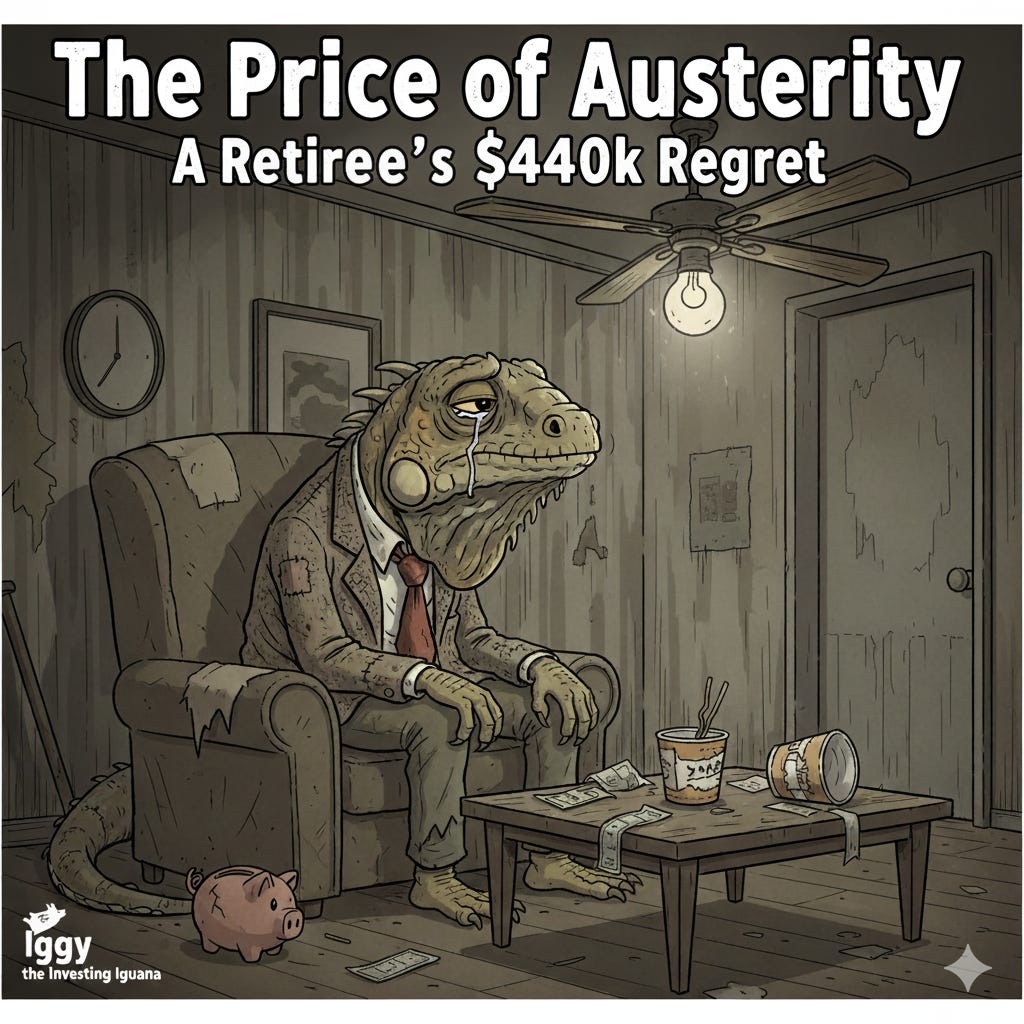
Every penny saved feels like progress, but what happens when extreme frugality costs you life’s most precious moments—and there’s no amount of money that can buy them back?
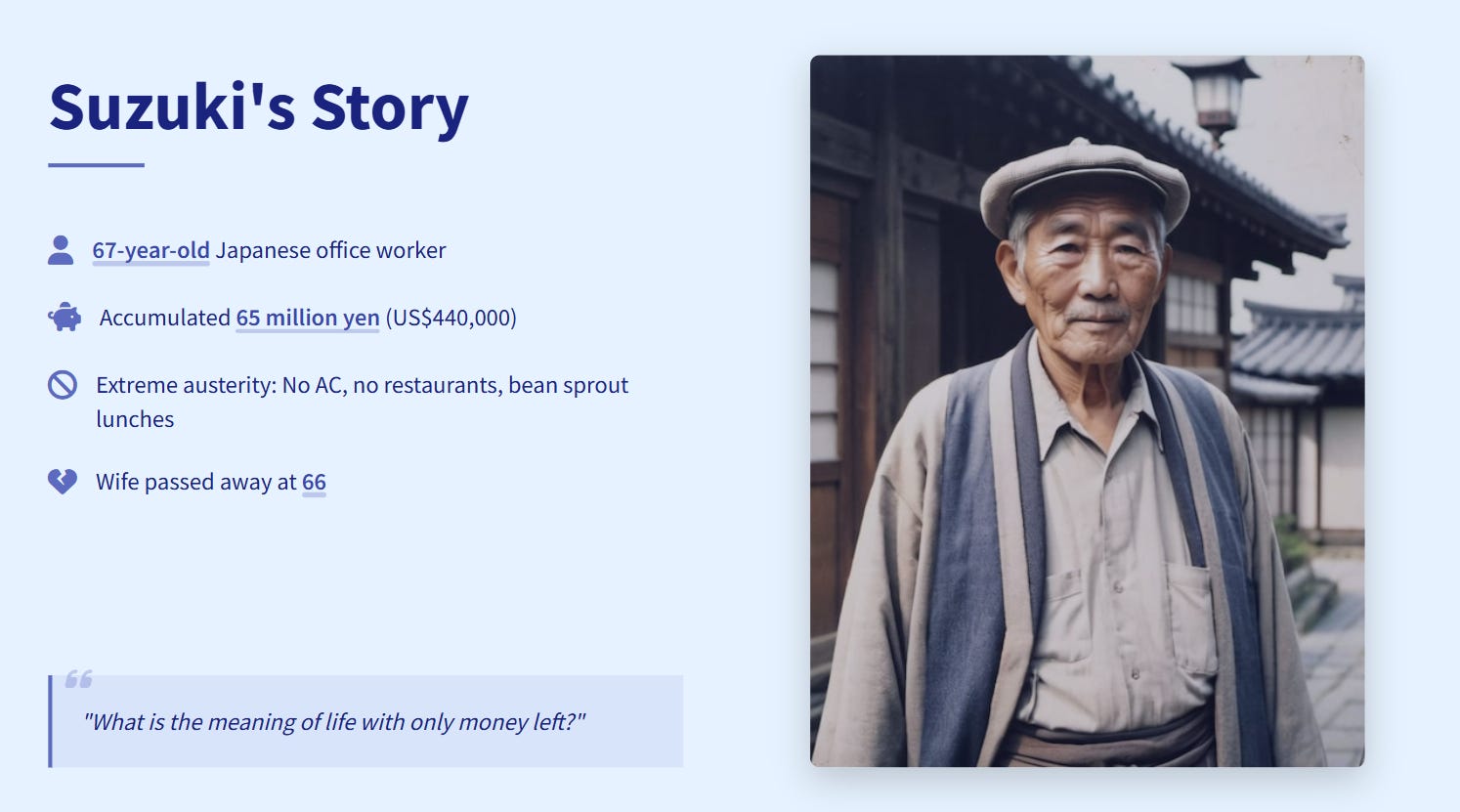
The viral story of “Suzuki,” a 67-year-old Japanese office worker, hits different when you’re managing your own savings in Singapore. He accumulated an impressive 65 million yen (US$440,000) through decades of extreme austerity—no air conditioning, no restaurant meals, and packed bean sprout lunches daily. But after his wife passed away at 66, Suzuki’s reflection broke hearts across Asia: “What is the meaning of life with only money left?”
This isn’t just another savings story. It’s a wake-up call for every Singaporean balancing CPF contributions, SRS planning, and the constant pressure to optimize every dollar. The real question isn’t whether Suzuki made good financial choices—it’s whether we’re making the same mistake right now.
The Real Cost of Extreme Frugality
Suzuki’s financial discipline was textbook perfect. Born into poverty, he worked part-time during secondary school and maintained laser focus on savings throughout his career. He rented the cheapest flat far from his office, cycled everywhere, and never once ate at a restaurant. Every decision passed through the filter of cost optimization.
The numbers tell an impressive story. Starting from 35 million yen in savings, strategic pension fund investment pushed his assets to 65 million yen by retirement. In Singapore terms, imagine building a portfolio worth over S$600,000 through pure discipline and smart investing.
But here’s the psychological trap that catches so many of us: Suzuki treated money as the end goal, not the tool. He optimized for spreadsheet perfection while his actual life—the experiences, relationships, and memories—remained systematically under-funded.
Extreme Frugality vs. Essential Living Costs
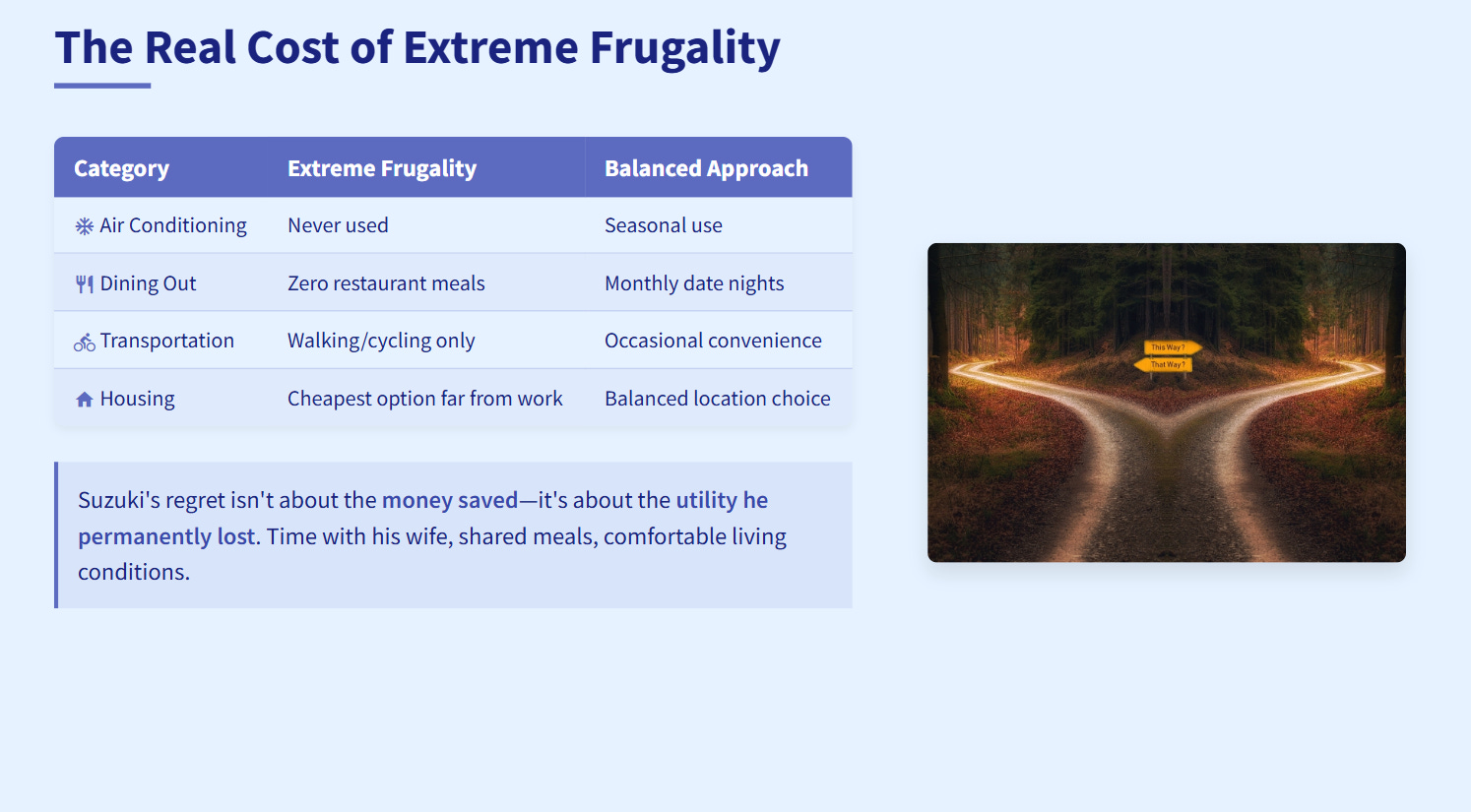
This comparison shows how extreme cost-cutting can create hidden life costs that money can’t recover.
The data reveals something crucial: Suzuki’s regret isn’t about the money he saved—it’s about the utility he permanently lost. Time with his wife, shared meals, comfortable living conditions. These weren’t luxuries to defer; they were the actual reasons to build wealth in the first place.
