


Why This Decision Feels Hard (And What You’ll Get Here)
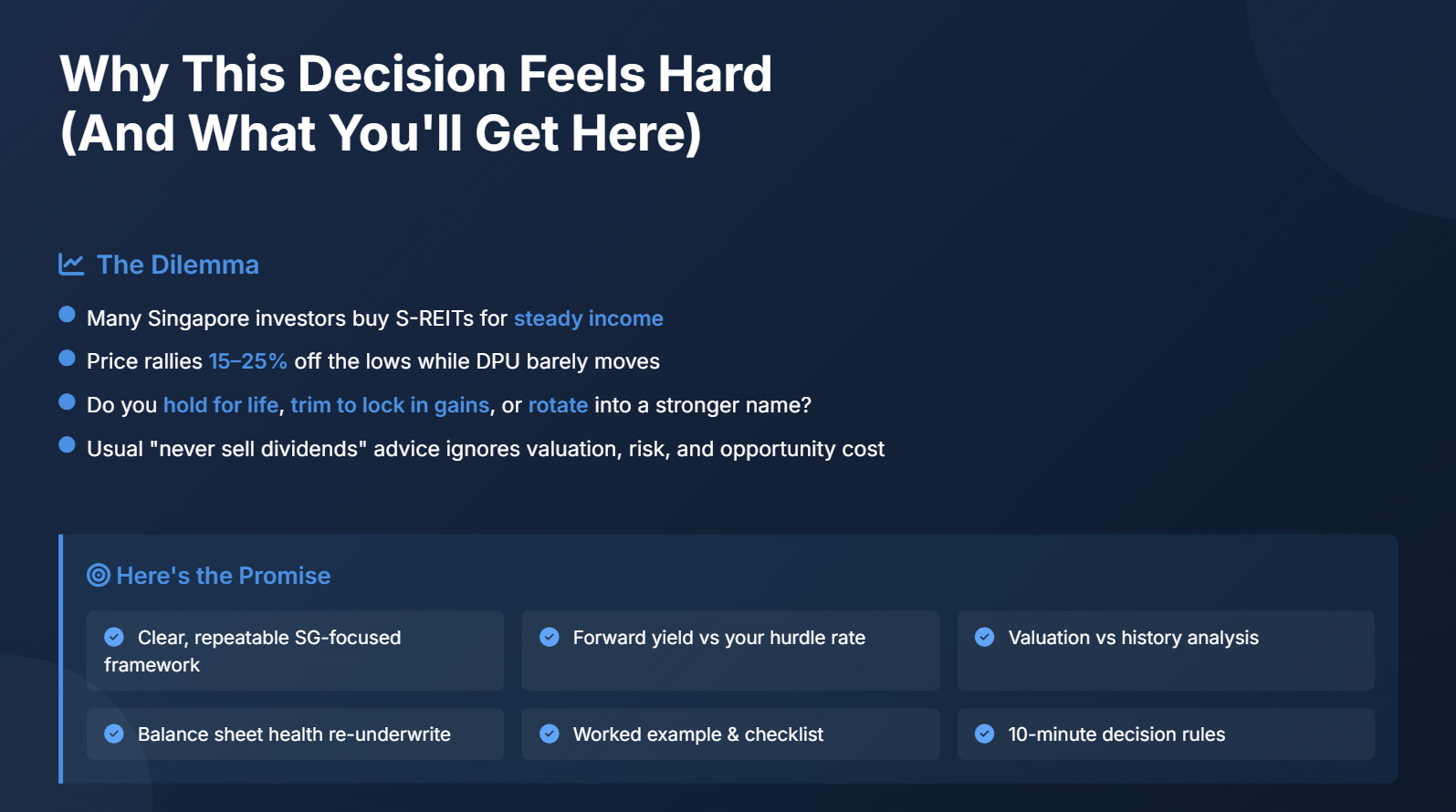
Many Singapore investors buy S-REITs for steady income. Then price rallies 15–25% off the lows while DPU barely moves. Do you hold for life, trim to lock in gains, or rotate into a stronger name? The usual “never sell dividends” advice sounds comforting but ignores valuation, risk, and opportunity cost—especially with higher-for-longer rates.
Here’s the promise: by the end of this post, you’ll have a clear, repeatable, SG-focused framework to decide. We’ll look at forward yield versus your hurdle, valuation versus history, and a fast re-underwrite of balance sheet health. You’ll also get a worked example, a checklist, and simple decision rules you can run in 10 minutes.
Core Insight: Think Like a Capital Allocator
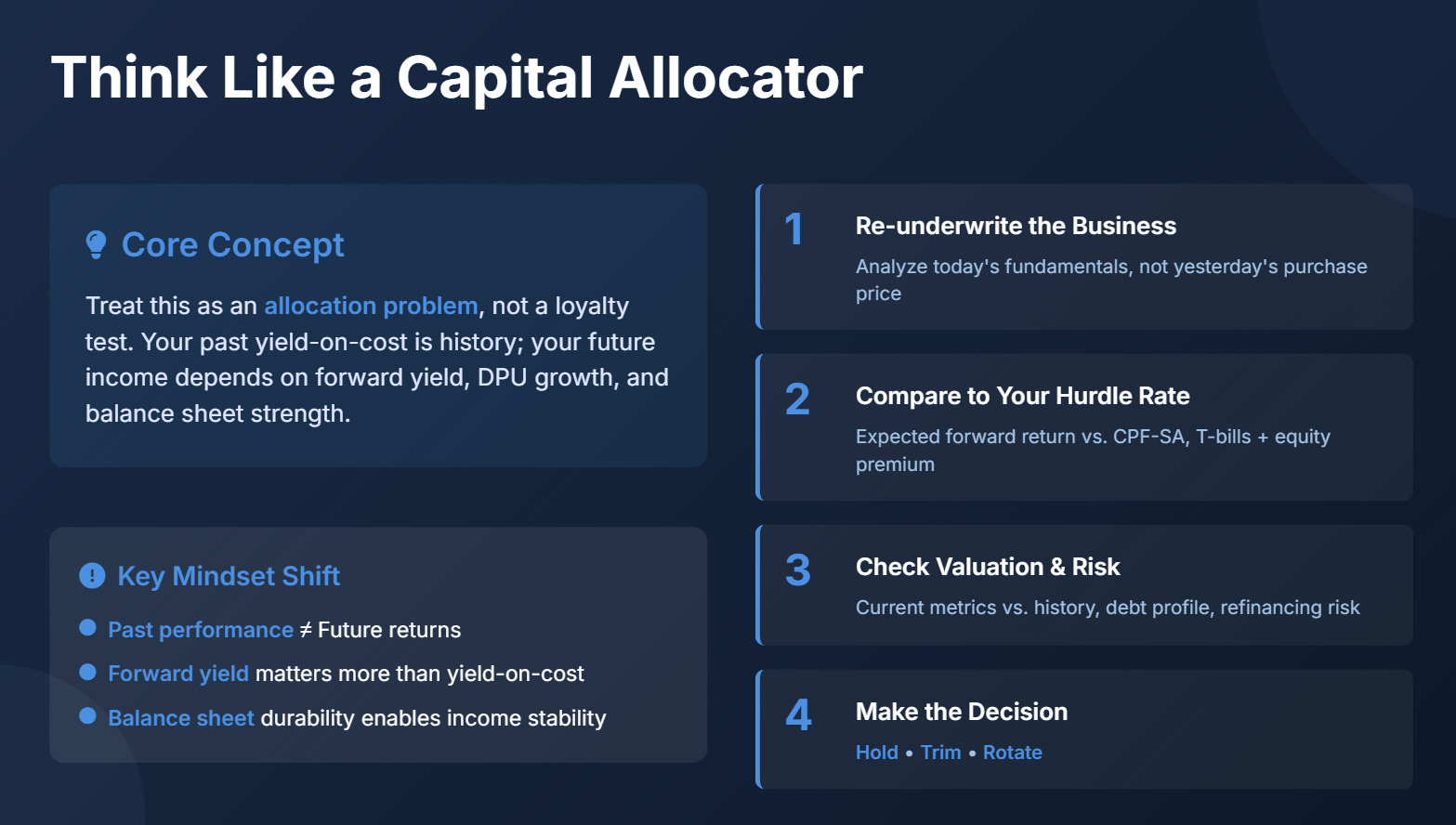
Treat this as an allocation problem, not a loyalty test. Re-underwrite the business today, compare expected forward return to your hurdle, check valuation and risk, then choose: hold, trim, or rotate. Your past yield-on-cost is history; your future income depends on forward yield, DPU growth, and balance sheet strength.
The 5-Step S-REIT Decision Framework
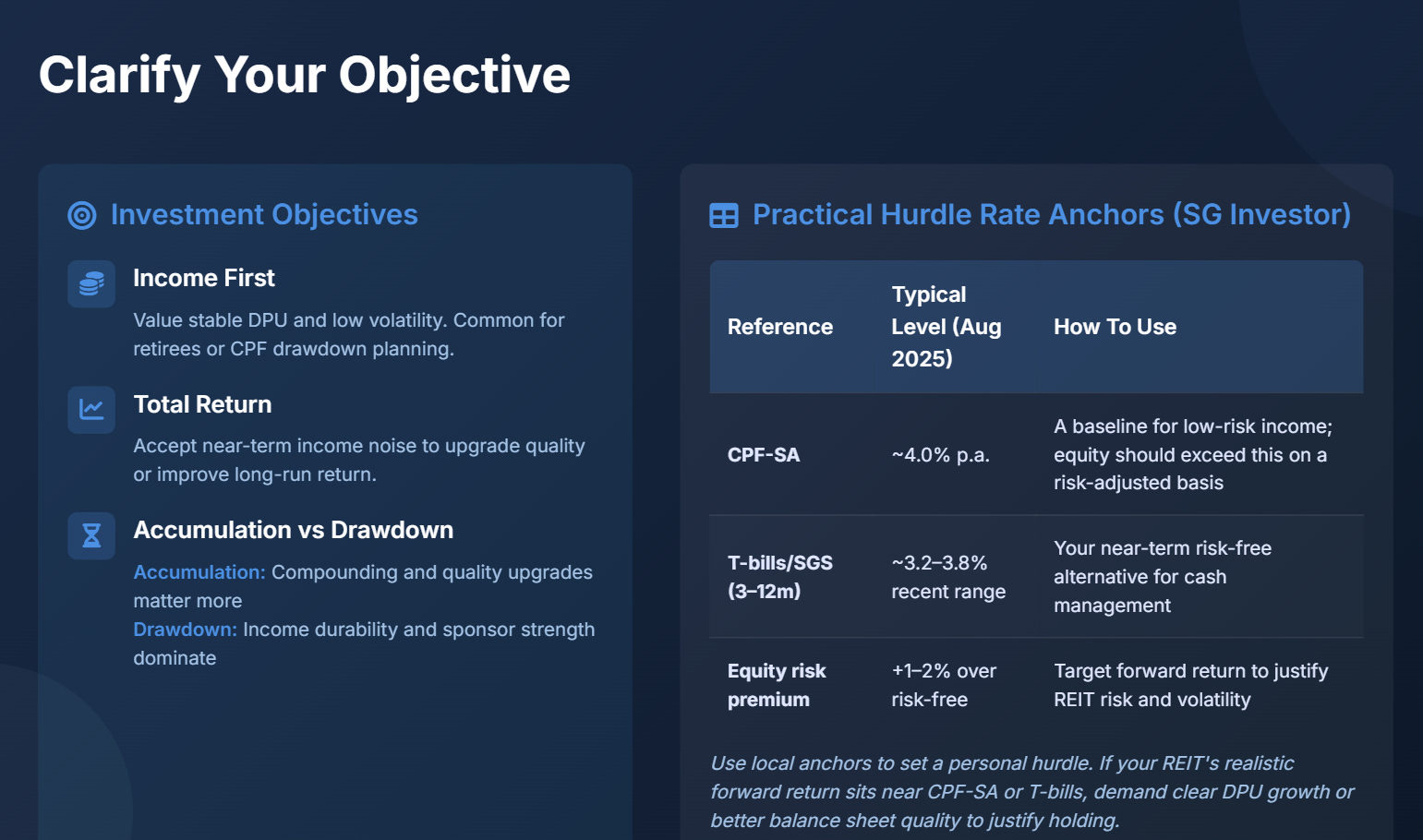
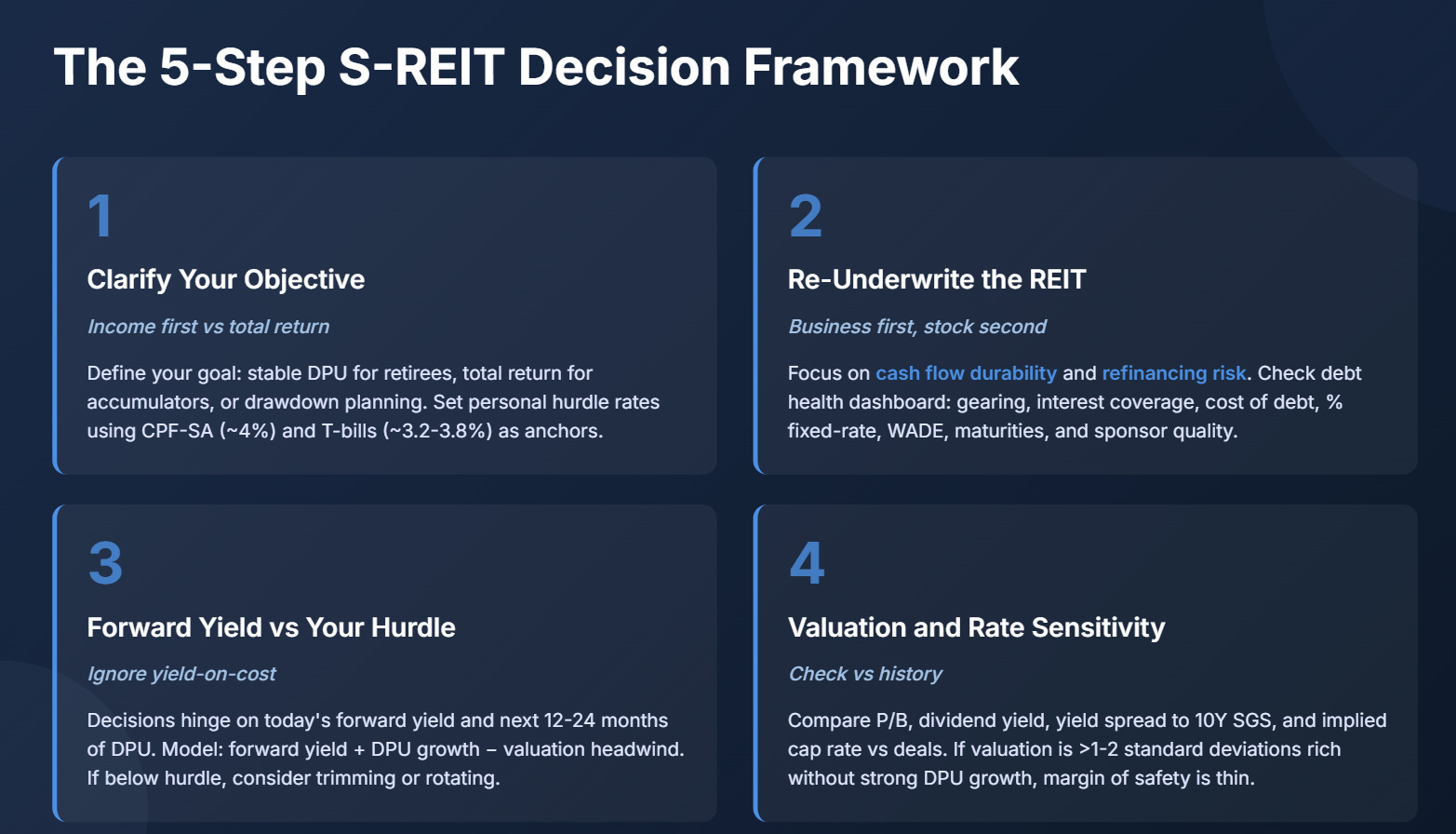
1) Clarify Your Objective
Income first: You value stable DPU and low volatility. Common for retirees or CPF drawdown planning.
Total return: You accept near-term income noise to upgrade quality or improve long-run return.
Accumulation vs drawdown: In accumulation, compounding and quality upgrades matter more. In drawdown, income durability and sponsor strength dominate.
Use local anchors to set a personal hurdle. If your REIT’s realistic forward return sits near CPF-SA or T-bills, demand clear DPU growth or better balance sheet quality to justify holding.
