


The Silicon War Arrives in Singapore
The silicon war gets a uniquely Singapore twist as Broadcom’s launch of the Thor Ultra networking chip intensifies the rivalry with Nvidia—not just on Wall Street, but across the region’s data centres, REIT portfolios, and the backbone of our digital economy. Investors in Singapore, from those tracking SGX-listed Keppel DC REIT to asset managers watching regional hyperscale deployments, are now at an inflection point where technological shifts like these impact not only global capex, but also the cash flows and valuations of Singapore’s infrastructure investments.
Broadcom’s Thor Ultra: A Dual Challenge to Nvidia
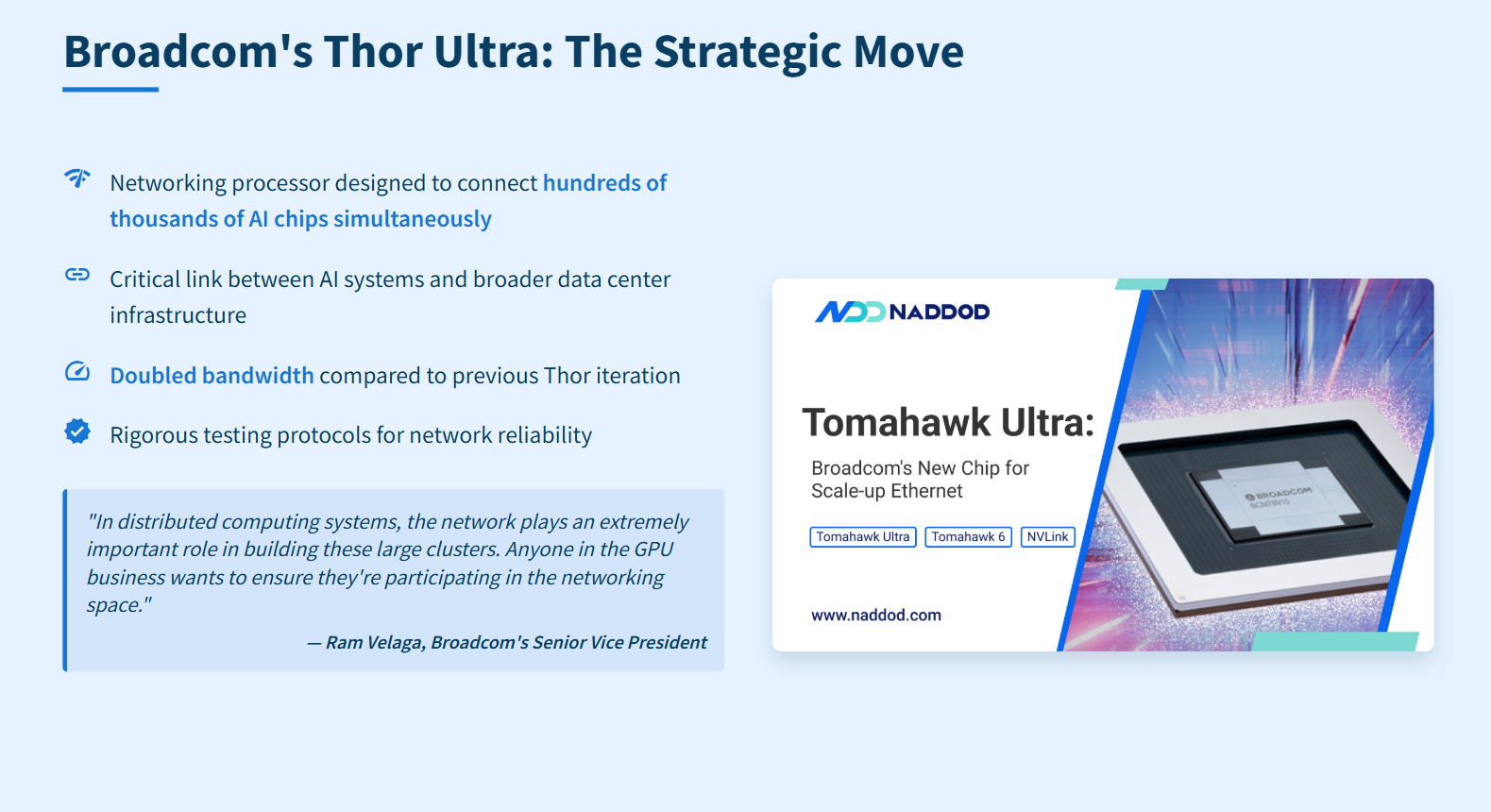
Broadcom’s announcement was no ordinary tech launch. Within 24 hours of revealing a landmark deal to supply 10 gigawatts of custom chips to OpenAI from late 2026, the Silicon Valley titan rolled out Thor Ultra. This networking processor is engineered to string together hundreds of thousands of AI chips—an innovation that speaks directly to enterprise transformation for Singapore’s telcos, financial institutions, and logistics networks. The dual-pronged approach squarely challenges Nvidia’s dominance on both accelerators and networking, potentially shifting spend patterns for regional players planning data centre expansions in Jurong, Batam, or Iskandar.
In This Article:

• The Silicon War Arrives in Singapore
• Broadcom’s Thor Ultra: A Dual Challenge to Nvidia
• Why Infrastructure Matters for Singapore
• Local Data Sovereignty and Regulatory Demands
• Market Dynamics and Growth Projections
• The Custom Silicon Revolution
• Broadcom’s Explosive Growth in AI
• Project Economics and Cost Efficiency
• Engineering Benefits for Local Ecosystem
• Competitive Positioning: Nvidia vs. Broadcom
• Platform Lock-In vs. Open Architecture
• Serving Singapore’s Smart Nation Agenda
• Investment Implications for Singapore Investors
• Market Opportunity and Regional Adoption
• What Singapore Investors Should Watch
• Conclusion
Why Infrastructure Matters for Singapore
Local Data Sovereignty and Regulatory Demands
Let’s pause to lay out why infrastructure matters at home. Singapore is a hub where data sovereignty, low-latency trading, and compliance with MAS regulations demand robust, high-throughput networking between AI processors. Here, Thor Ultra isn’t just a chip—it’s the vital plumbing enabling vast AI clusters in financial services, urban planning, and even HDB predictive maintenance to run smoothly. Instead of thinking in US dollar terms alone, imagine this innovation’s impact on Singapore’s DC operators, multi-national tenants, and the REITs powering investor CPF and SRS portfolios.
Market Dynamics and Growth Projections
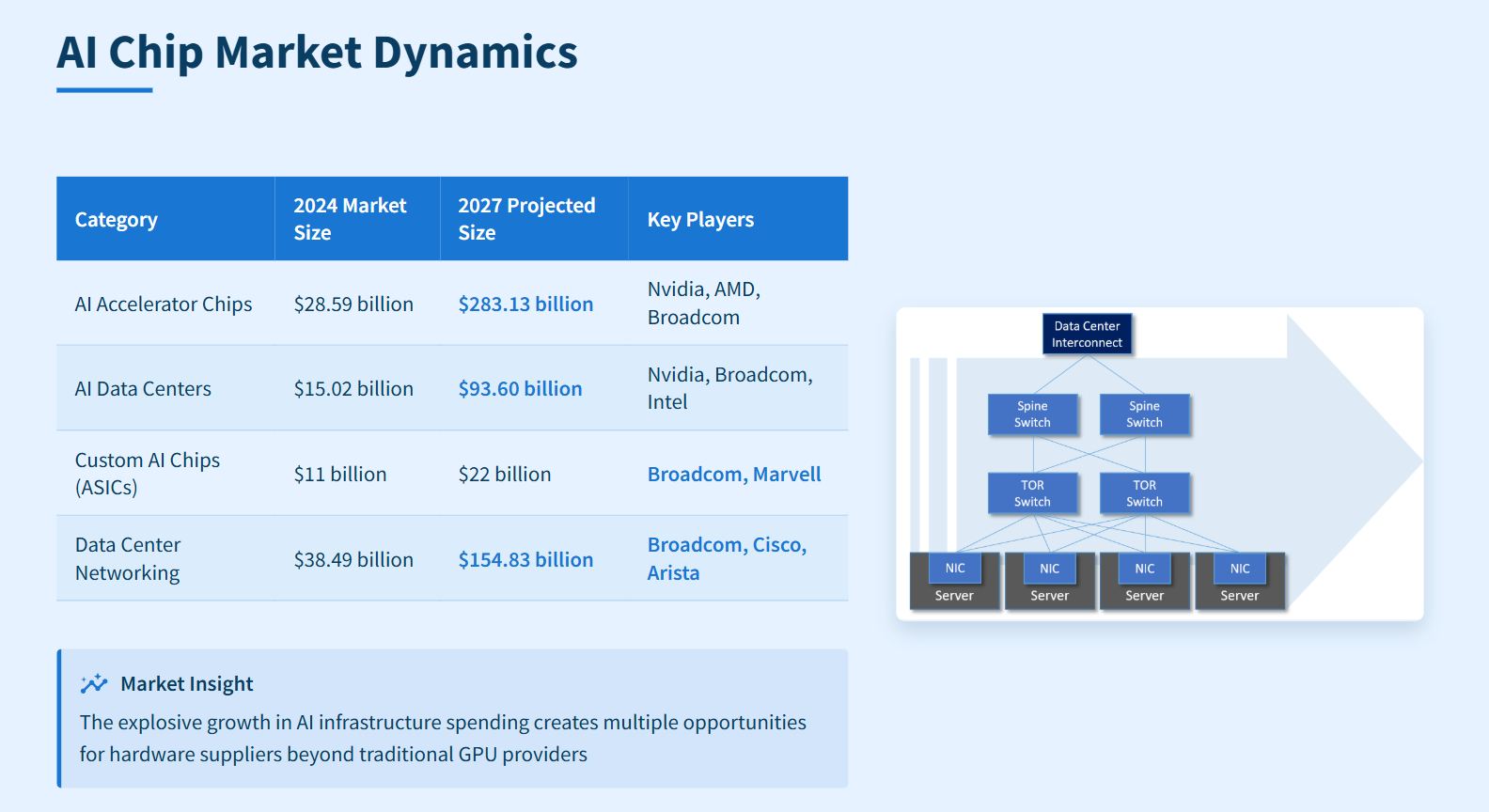
Market dynamics show dramatic growth: by 2027, the AI accelerator chip space could surge to over US$283 billion, with data centre networking growing to US$155 billion. While Nvidia, AMD, and Broadcom lead globally, regionally we see integration challenges that Thor Ultra can address—making local deployments more cost-effective and scalable for Singapore’s future-facing tech, healthcare, and logistics sectors. For Singapore investors, it means more opportunities in companies linked to DC facilities, network equipment, and services—beyond just holding global tech stocks.
Networking’s strategic importance in distributed AI is echoed by Broadcom’s Ram Velaga, and is equally felt by Singapore CIOs balancing cost, scale, and regulatory demands. As MAS tightens guidance and local enterprises push into AI-powered solutions, the reliability, speed, and compatibility of networking chips could define the next decade’s winners. Those adopting new networking innovations are better poised to capture government contracts, cross-border digital projects, and greenfield DC developments.
The Custom Silicon Revolution
Broadcom’s Explosive Growth in AI
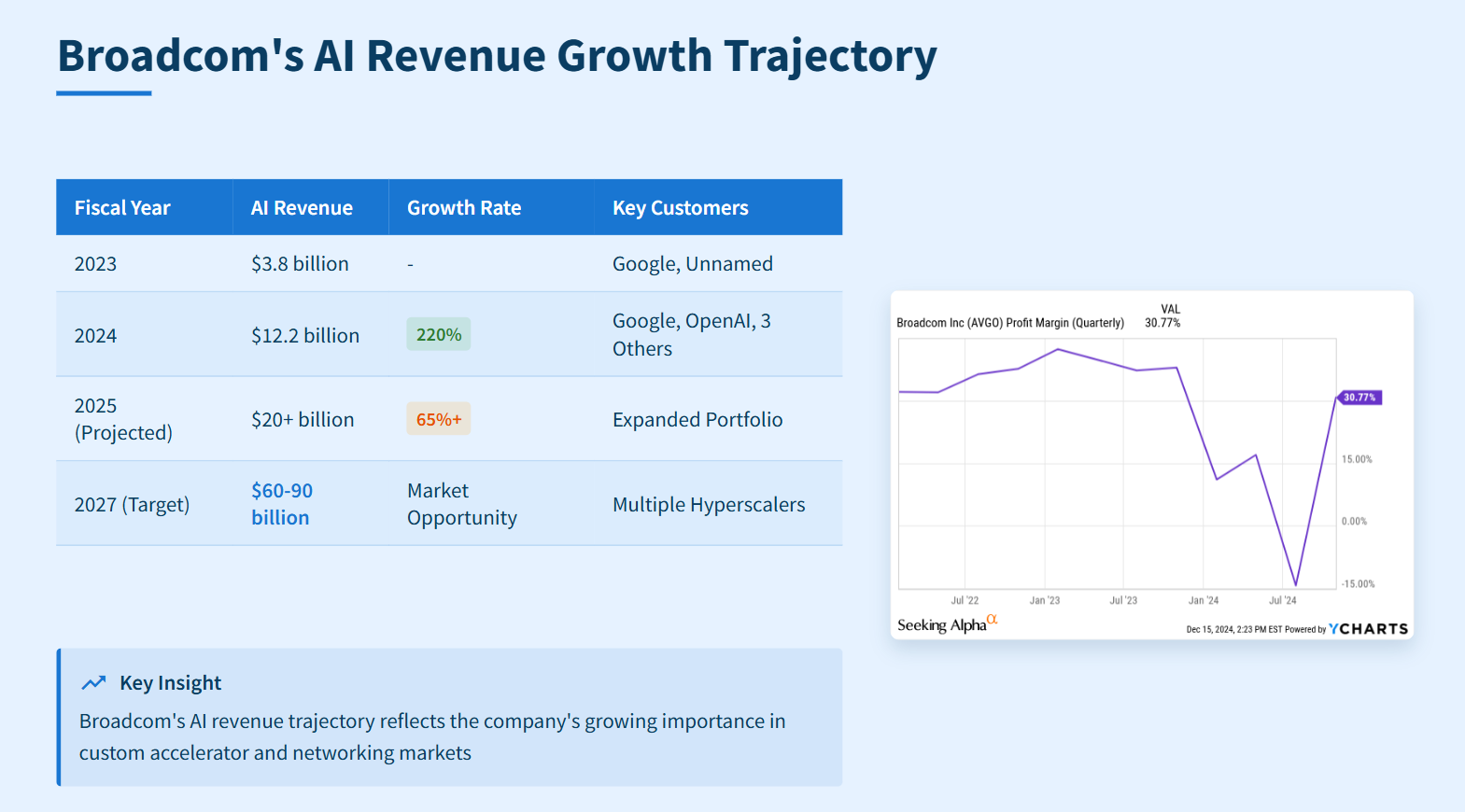
Broadcom’s custom silicon revolution—highlighted by explosive 220% AI revenue growth to US$12.2 billion last year—shows what happens when off-the-shelf solutions don’t suffice. In Southeast Asia, hyperscalers are increasingly looking at non-standard chips to manage energy costs, latency, and regional compliance. For property trusts and investors, shifts in DC specifications can mean earlier lease-ups, faster asset ramp-up, and more stable income streams flowing back to CPF and SRS accounts.
Project Economics and Cost Efficiency
Project economics bear this out. A purpose-built 1GW data centre can run to US$50 billion—about S$68 billion—with nearly 70% going to chips if legacy solutions like Nvidia’s are used. Broadcom’s custom approach brings potential savings and efficiency, letting Singapore’s regional DC assets serve more tenants or run more advanced services, which translates directly to higher utilisation, rental escalations, and long-term value for investors.
Engineering Benefits for Local Ecosystem
Singapore’s data centre ecosystem also stands to gain from Broadcom’s approach to engineering. The Thor Ultra doubles bandwidth versus previous models, meeting intense local needs for AI model training in languages, biomedical research, and automated financial risk analytics. Local engineering teams benefit via reference designs that reduce development times, align with SGB-compliant sustainability frameworks, and help win regional tenders where efficiency is king.
Competitive Positioning: Nvidia vs. Broadcom
Platform Lock-In vs. Open Architecture
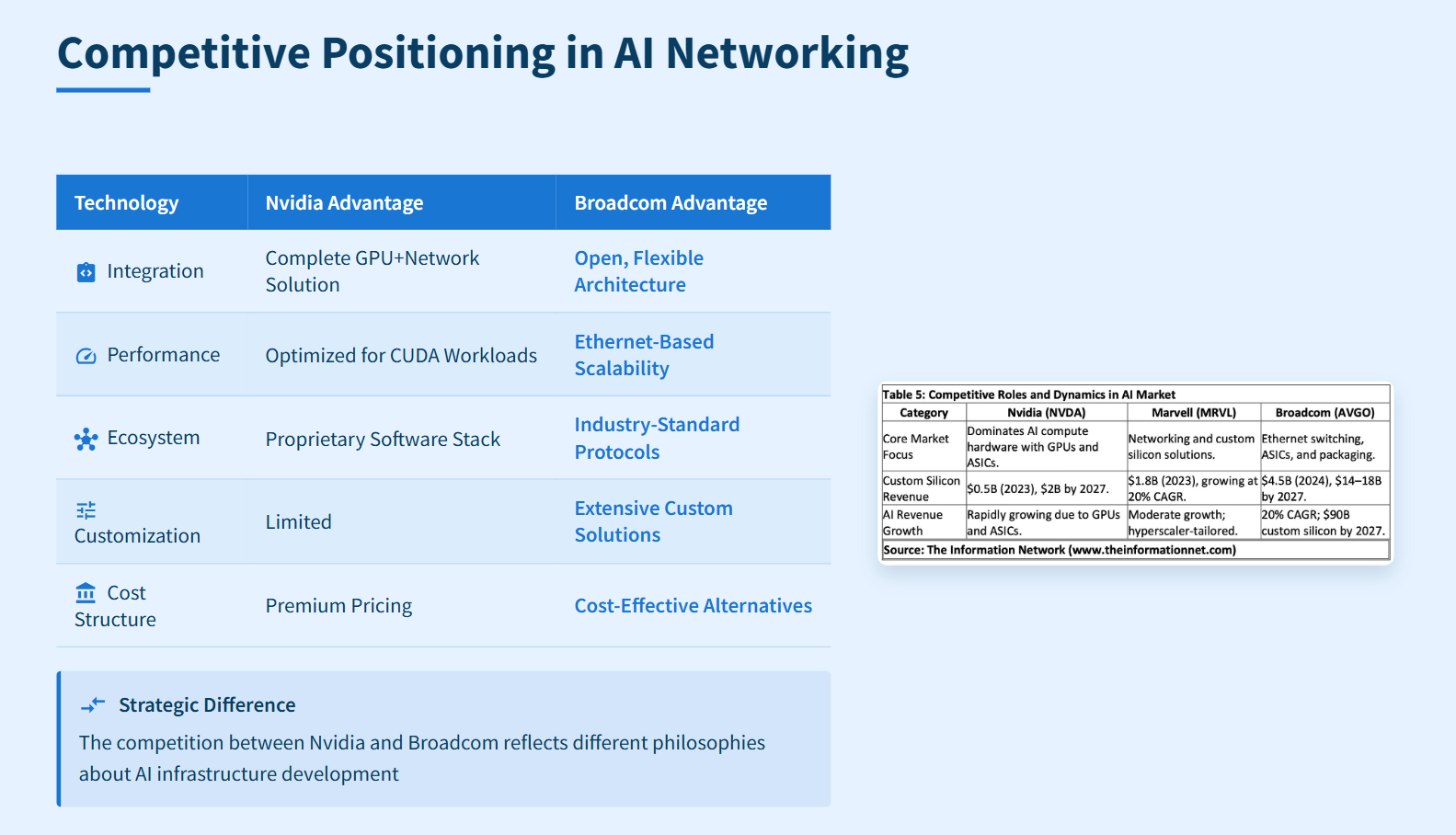
When it comes to competitive positioning, Nvidia continues to leverage their tightly integrated GPU-network platform, which suits big US clouds but can lock Singapore and ASEAN players into costly, less flexible deals. Broadcom’s ethos of open architecture, standard protocols, and customisable solutions is better matched to smaller markets aiming for lower TCO and regulatory agility. In Singapore, where REITs, government-linked corporations, and NTU innovation labs balance budgets and policy, the ability to pick and mould infrastructure is a real strategic edge.
Serving Singapore’s Smart Nation Agenda
As AI applications spill from text and vision into logistics, energy management, and public safety—critical for Singapore’s Smart Nation agenda—the need for high-performance, affordable, and adaptable networks gets sharper. Broadcom’s dual play in custom accelerators and advanced networking helps local CIOs keep options open, striking deals that make sense for the city-state’s unique land constraints, energy tariffs, and data privacy goals.
