



The STI Is Up 23%. REITs Are Down 12%. The Question I’d Ask About the Payout 🦖
Three Singapore REITs, Three Different Answers: What CapitaLand Ascendas REIT, Keppel DC REIT and Sasseur REIT Made Me Ask
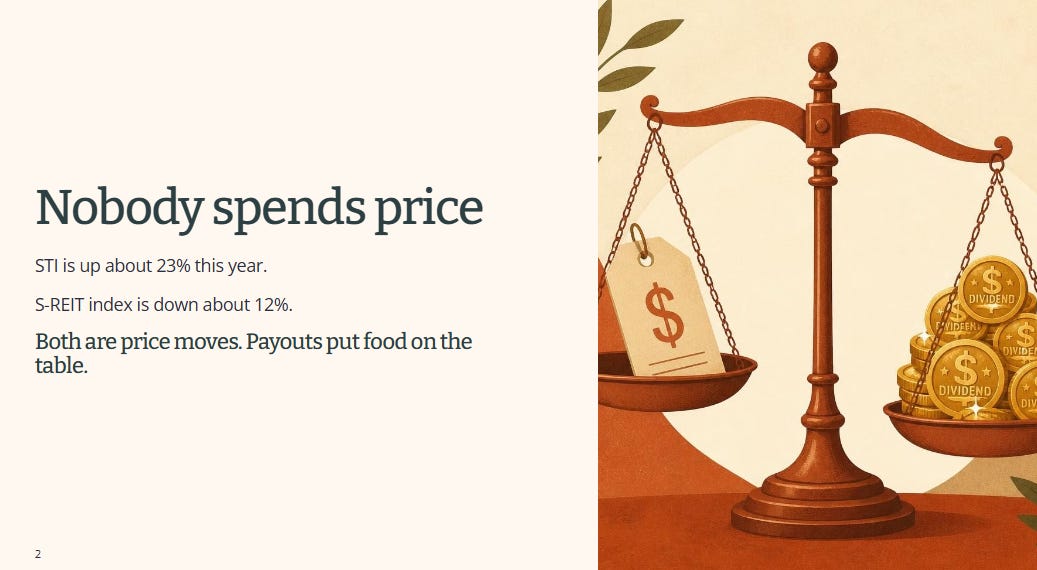
As at 30 September 2026, the STI is up about 23% this year and the S-REIT index is down about 12%. Both are price moves, and nobody living on distributions spends price. The number that decides whether the next payout arrives is not on any index page.
I am writing this for two kinds of reader. One has held REIT units for years and is watching the price slip, wondering whether to worry. The other has cash on the side and is looking at the same lower price, wondering whether it is a bargain. Iggy runs the forensic screens, so what I can offer is the three questions I would ask before trusting any REIT distribution, and what I noticed when I put them to three trusts.

What the Index Gap Does and Doesn’t Tell Us
Comparing price with price
Two readers, two different yields
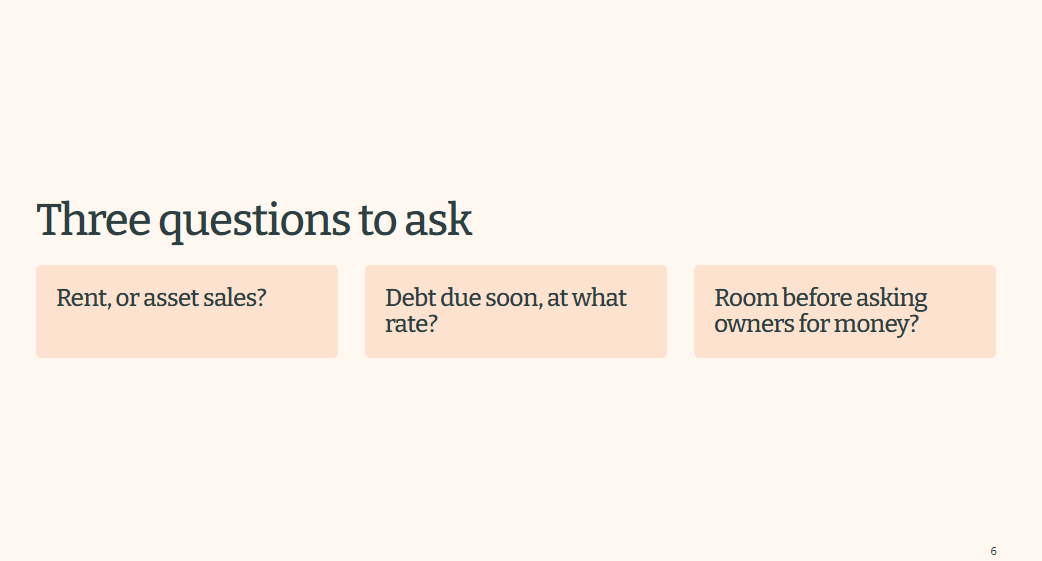
The Three Questions I Would Ask About Any REIT Distribution
Is the payout paid from rent, or from selling assets?
Is a lot of debt coming due soon, and at what rate?
How much room is left before the trust has to ask unitholders for money?
🟠 Angela’s Observation
🔒 Teaser Alert
Three Trusts, Three Different Answers
CapitaLand Ascendas REIT: Debt Came Down Because Owners Put Money In
Keppel DC REIT: A Purchase That Moves One Number and Leaves Another Alone
Sasseur REIT: A Clean-Looking Balance Sheet and a High Yield
But a Yield Is a Yield
🟠 Angela’s Observation
The Three Questions, to Take With You
Iggy’s Elite Read
What the Index Gap Does and Doesn’t Tell Us
Comparing price with price

Both headline figures are price figures. The STI had risen about 23.5% as at 31 August 2026, according to The Star’s reporting on 5 September 2026. REITs are built to pay out, though. One condition for a Singapore REIT’s tax transparency is distributing at least 90% of its specified taxable income to unitholders, so a large part of what an owner receives never shows up in the unit price.
That is the usual argument for looking past the price gap, and it is a fair one. It only works if both sides are measured the same way. Many companies in the STI pay dividends too, so adding distributions to the REIT side and not to the STI side makes the gap look smaller than it is. The honest comparison is price against price, or total return against total return.
Two readers, two different yields

The same trust has two different yields, depending on who is asking. Someone who bought years ago at a lower price receives a distribution that is a larger share of what they paid. Someone buying today at the lower price receives a distribution that is a larger share of what they pay now. Both are real, and neither answers the question that matters to both of them.
For someone like my neighbour in Tampines, the unit price on the screen matters only on the day she sells. The payout matters every time it arrives. So I do not start with whether REITs are cheap. I start with this: what would have to go wrong for the next distribution to be smaller than the last one?
The Three Questions I Would Ask About Any REIT Distribution

When I was still working, the first question about a long-term prescription was never what it cost. It was whether the patient could keep taking it. I ask the same of a distribution, and I break it into three questions.
Is the payout paid from rent, or from selling assets?
A REIT’s distribution largely reflects the rent its buildings earn after costs and interest. A trust can also sell a building at a gain and pay part of that gain out. The cash is real in both cases, but only one of them repeats. Rent comes back next year. A sale only helps next year if there is another building to sell.

When I read a results announcement, I look for what the manager says the distribution was made up of, and whether anything in it is described as a one-off or as coming from capital. The question I carry from this: how much of the payout would still be there next year if the trust sold nothing?
Is a lot of debt coming due soon, and at what rate?
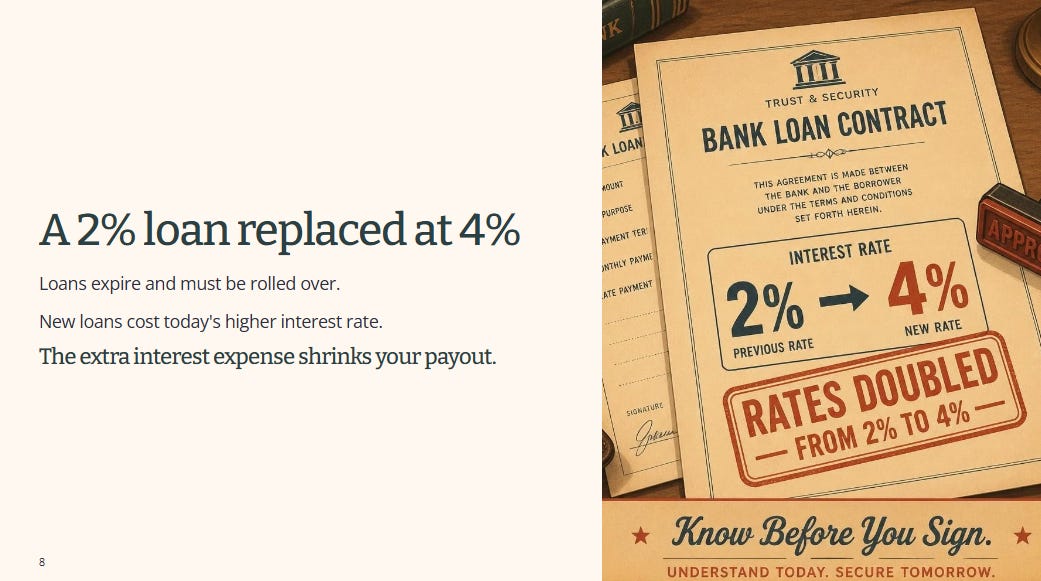
REITs borrow, and loans expire. When one does, the trust replaces it at the interest rate of the day. To keep the arithmetic simple, imagine a loan taken at 2% that has to be replaced at 4%. The interest rate on that loan doubles, before any hedging or repayments are counted, and the extra cost comes out of the same pool of income that pays unitholders. That is why the maturity schedule matters. A trust with little debt due in the next two years has time. One with a lot due soon is exposed to whatever rates are when the date arrives.
Singapore government bond yields rose in the first half of September. The 10-year yield was 2.43% on 3 September and 2.50% on 17 September 2026, according to Beansprout’s reporting of MAS data. A kopitiam stall holder whose lease comes up for renewal at today’s rent, not last decade’s, knows the feeling. If the next loan costs more than the last one, who absorbs the difference: the manager, or the unitholder through a smaller payout?
How much room is left before the trust has to ask unitholders for money?
Gearing is the share of a trust’s assets that is paid for with debt. When it is high and the trust needs cash, for a purchase or to repay debt, one way to get it is to issue new units. New units mean the same income is shared among more owners, so the distribution per unit can fall even when the total distribution does not.

I pay attention to two things here: how high the debt share is, and whether the trust has recently asked its owners for money. When a trust raises money from its owners to repair its debt, what do those owners get in return?
🟠 Angela’s Observation
I used to think a falling unit price was the warning sign. After going through these three trusts, I am less sure. A price can fall for reasons that have nothing to do with the payout, and it can hold up while something that will not repeat is propping the payout up. The warning, if there is one, seems to sit in the debt notes and in the distribution per unit, which most of us read last. I do not know yet which of the three questions carries the most weight for a retiree. Which would you check first?
🔒 Teaser Alert
Below the line, I put these three questions to CapitaLand Ascendas REIT, Keppel DC REIT and Sasseur REIT, and one of them has an announced deal that is expected to change the answer to the third question.
