


The fragile calm in Asia-Pacific trade relations is over. As the U.S. president lands in Malaysia this weekend for the ASEAN summit, Singapore investors should pay close attention to what unfolds over the next week. These aren’t just diplomatic meetings. They’re high-stakes poker games that will reshape trade flows, rare earth supplies, and semiconductor supply chains across the region.
The Big Picture: Trump’s Asia Tour Sets the Stage for Regional Economic Shifts
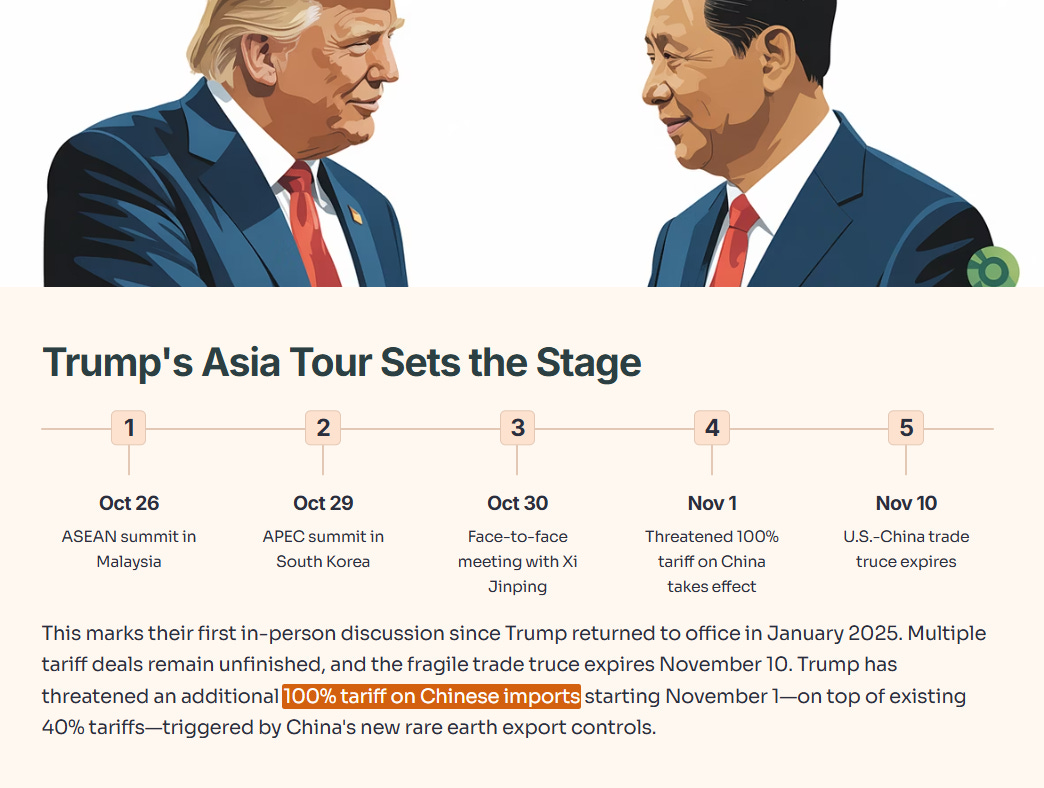
Trump arrives in Malaysia on October 26 for the ASEAN summit. He then flies to Japan before heading to South Korea for the APEC summit on October 29. The trip culminates with a crucial face-to-face meeting with Chinese President Xi Jinping on October 30. This marks their first in-person discussion since Trump returned to office in January 2025.
The timing matters. Multiple tariff deals remain unfinished. A trade dispute between Washington and Beijing continues to simmer. And the fragile trade truce between the U.S. and China expires on November 10. If no extension is negotiated, the situation could escalate quickly.
Trump has already threatened to impose an additional 100% tariff on Chinese imports starting November 1. This comes on top of existing tariffs that already average around 40% on Chinese goods. The trigger? China’s new export controls on rare earth elements announced on October 9, 2025.
Malaysia’s Semiconductor Gamble: 99.9% Done, But the Last 0.1% Could Hurt
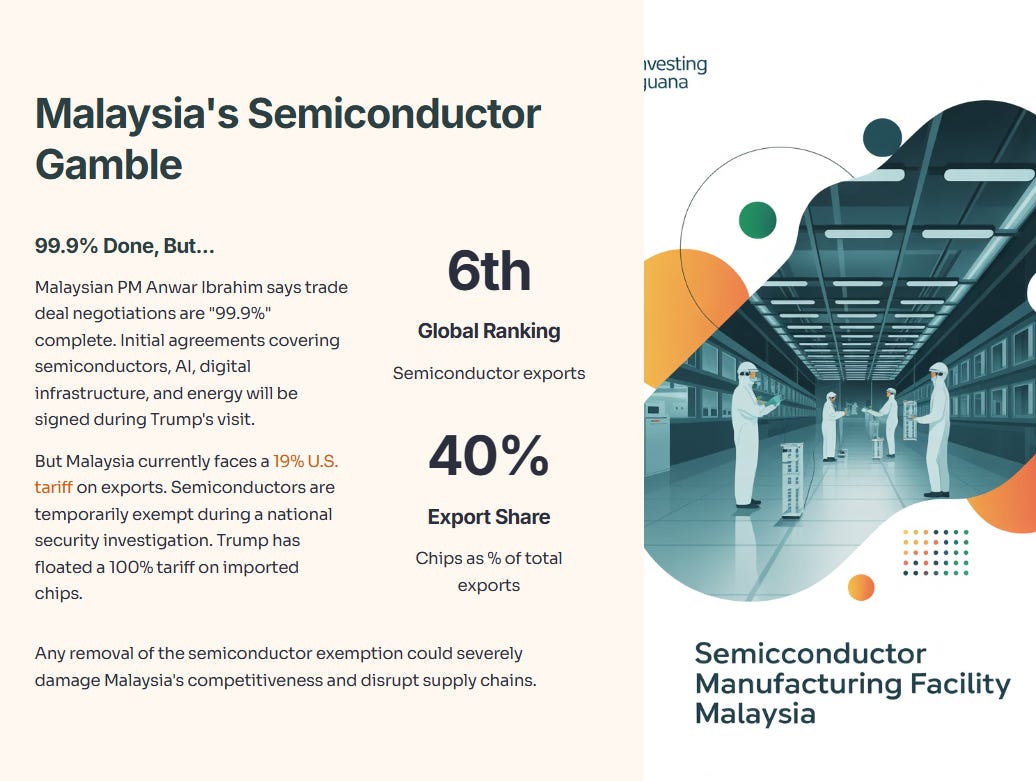
Malaysian Prime Minister Anwar Ibrahim says trade deal negotiations with Washington are “99.9%” complete. The governments plan to sign “initial agreements” to strengthen trade and investment during Trump’s visit. These agreements cover semiconductors, AI, digital infrastructure, and energy.
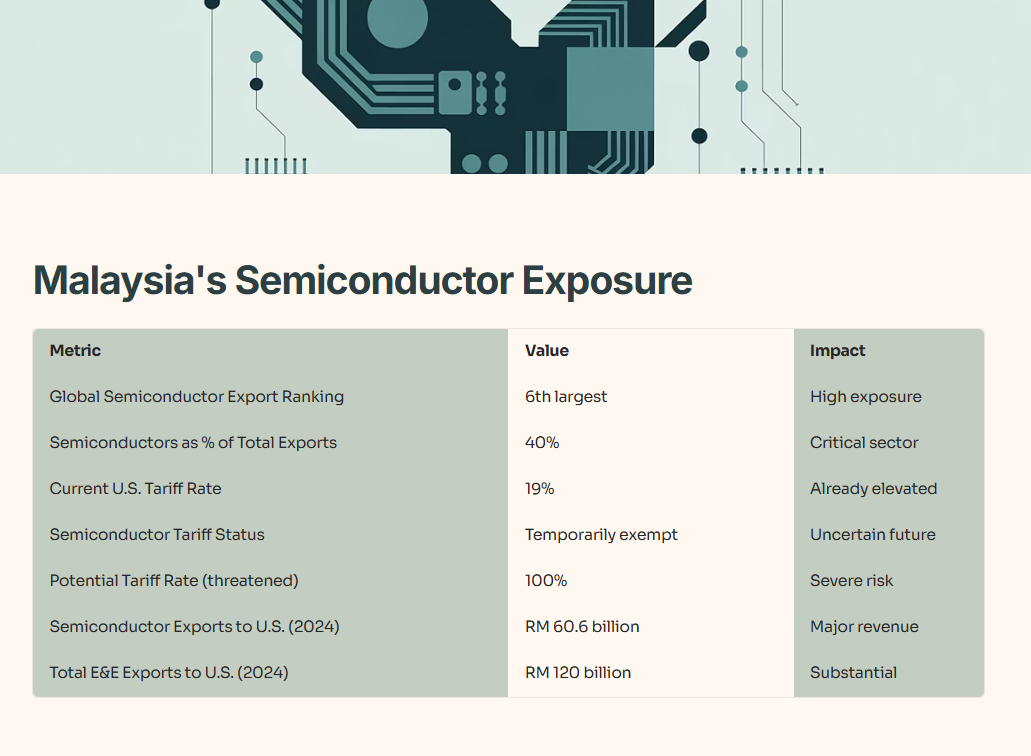
But here’s the catch. Malaysia currently faces a 19% U.S. tariff on its exports. Semiconductors are temporarily exempt while a U.S. national security investigation continues. Trump has floated the idea of imposing a 100% tariff on imported chips, though he said this wouldn’t affect companies with U.S. manufacturing operations or those planning to establish one.
Malaysia is the world’s sixth-largest exporter of semiconductors. Chips make up 40% of the country’s total exports. Any removal of the current semiconductor exemption could severely damage Malaysia’s competitiveness and disrupt supply chains.
Table 1: Malaysia’s Semiconductor Exposure to U.S. Tariff Risk
The Malaysian government projects GDP growth will drop by 0.76 percentage points due to U.S. tariffs. The country already revised its 2025 growth forecast down to 4% to 4.8%, from an earlier 4.5% to 5.5%. For 2026, Malaysia expects growth between 4% and 4.5%.
For Singapore investors, Malaysia’s semiconductor sector offers both opportunity and risk. Companies like UMS Integration have significant manufacturing operations in Penang and recently secured secondary listings on Bursa Malaysia to broaden their investor base. But the tariff overhang creates uncertainty that could delay new investments and expansion plans.
China’s Rare Earth Stranglehold: The Hidden Weapon in the Trade War
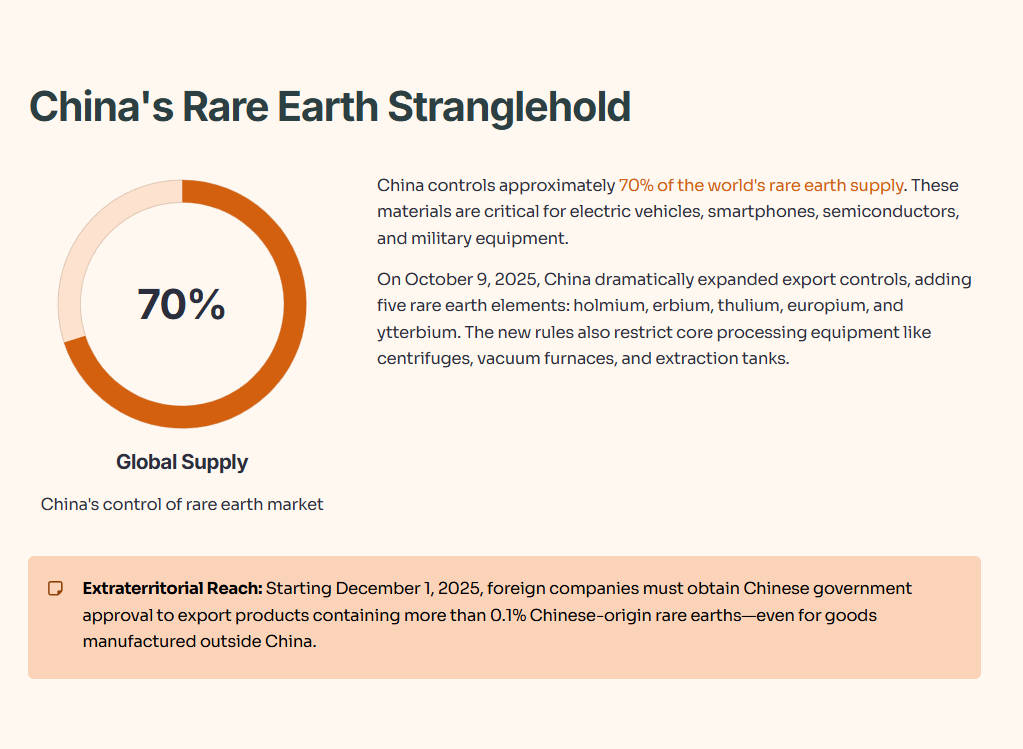
China controls approximately 70% of the world’s rare earth supply. These materials are critical for electric vehicles, smartphones, semiconductors, and military equipment. The U.S. defense sector depends heavily on these materials.
On October 9, 2025, China dramatically expanded its rare earth export controls. The new measures add five additional rare earth elements to the restricted list: holmium, erbium, thulium, europium, and ytterbium. China also imposed heightened scrutiny for semiconductor manufacturers.
Here’s where it gets interesting. The new rules don’t just cover raw materials. They also restrict core processing and separation equipment like centrifuges, vacuum furnaces, and extraction tanks. This prevents technology leakage and preserves China’s dominance across the entire rare earth value chain.
But the real kicker is the extraterritorial reach. Starting December 1, 2025, foreign companies must obtain Chinese government approval to export products containing more than 0.1% Chinese-origin rare earths. This applies even to goods manufactured outside China. It’s basically China’s version of the U.S. “de minimis” rule.
Table 2: China’s Rare Earth Export Control Timeline
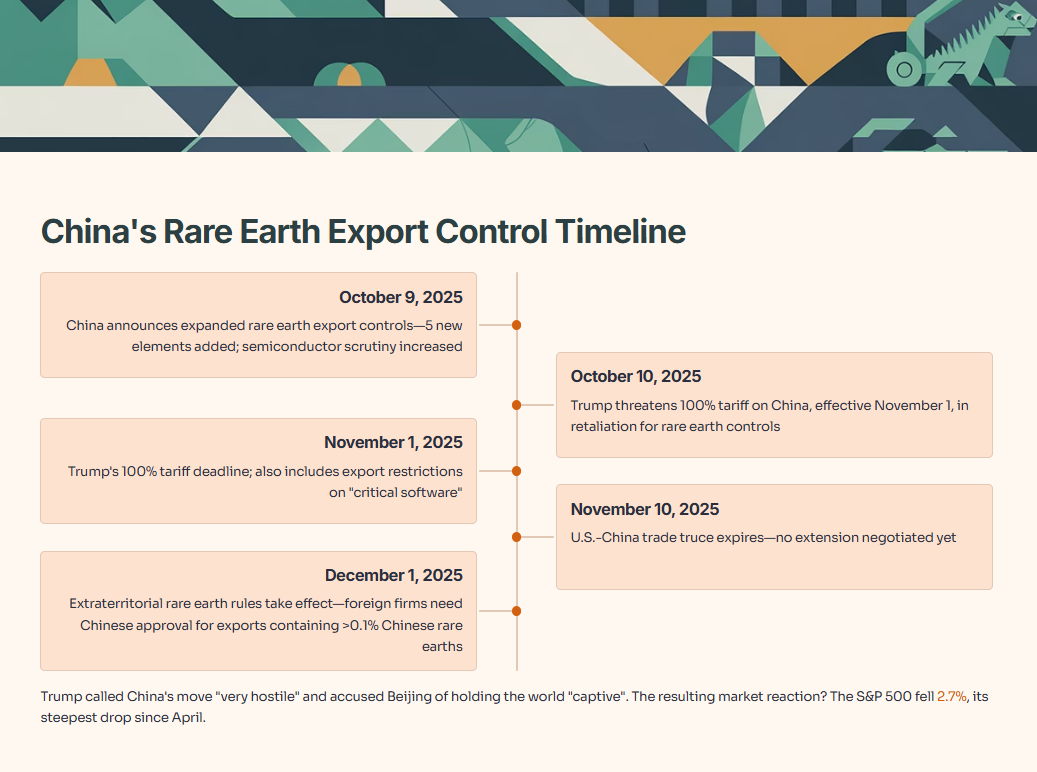
Trump called China’s move “very hostile” and accused Beijing of holding the world “captive”. He initially hinted at canceling his meeting with Xi, then walked it back. The resulting market reaction? The S&P 500 fell 2.7%, its steepest drop since April.
What This Means for Singapore Investors: Three Key Takeaways
1. Singapore’s “Safe Haven” Status Faces a Sectoral Threat
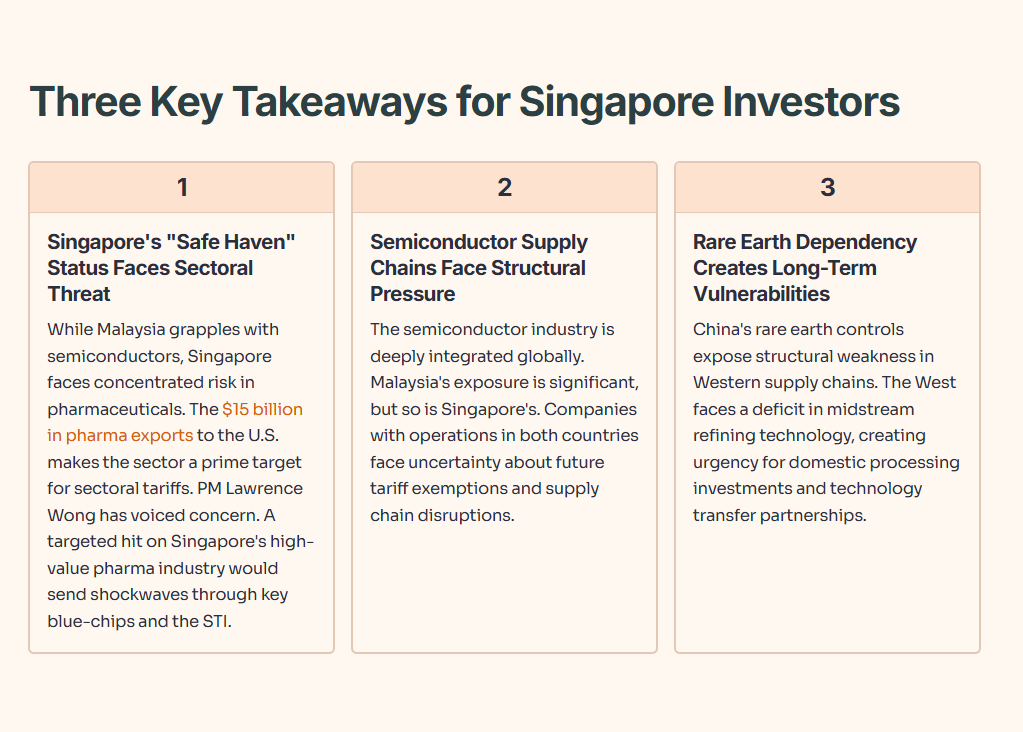
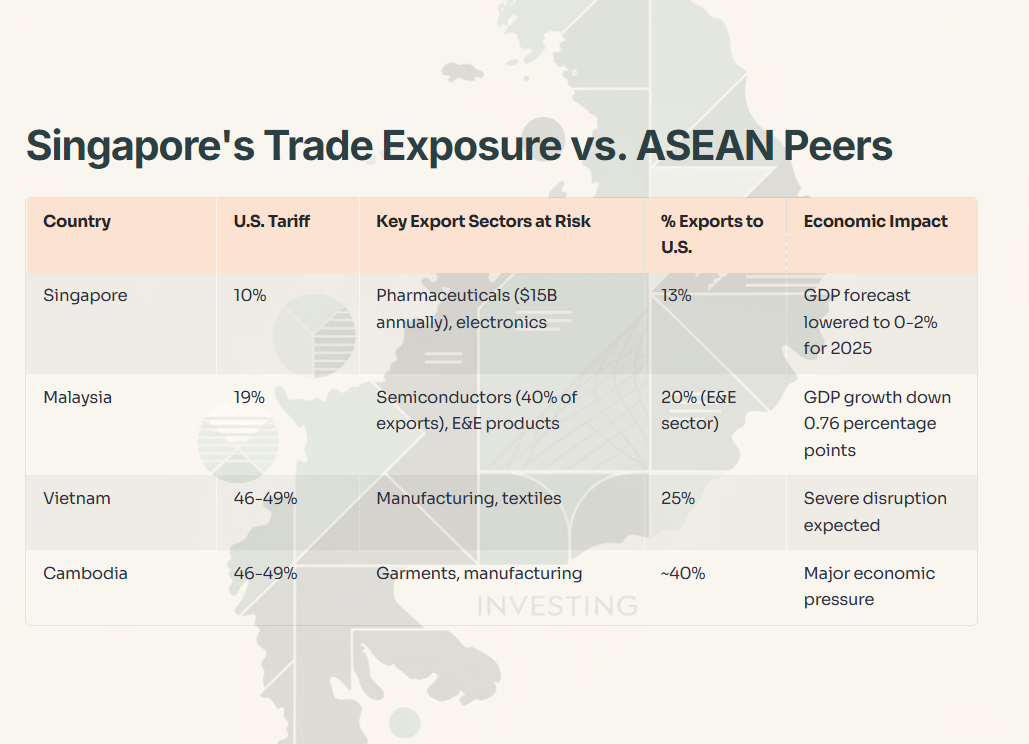
While Malaysia grapples with semiconductors, Singapore faces its own concentrated risk in pharmaceuticals. As Table 3 shows, the $15 billion in pharma exports to the U.S. makes the sector a prime target for any new ‘sectoral tariffs.’ Prime Minister Lawrence Wong has already voiced concern over this. Unlike the broad-based tariffs on Vietnam, a targeted hit on Singapore’s high-value pharma industry would send a shockwave through key blue-chips and the STI, proving that even Singapore isn’t immune to these trade war tremors.
2. Semiconductor Supply Chains Face Structural Pressure
The semiconductor industry is deeply integrated into global supply chains. Malaysia’s exposure is significant, but so is Singapore’s. Companies with operations in both countries, like UMS Integration, face uncertainty about future tariff exemptions.
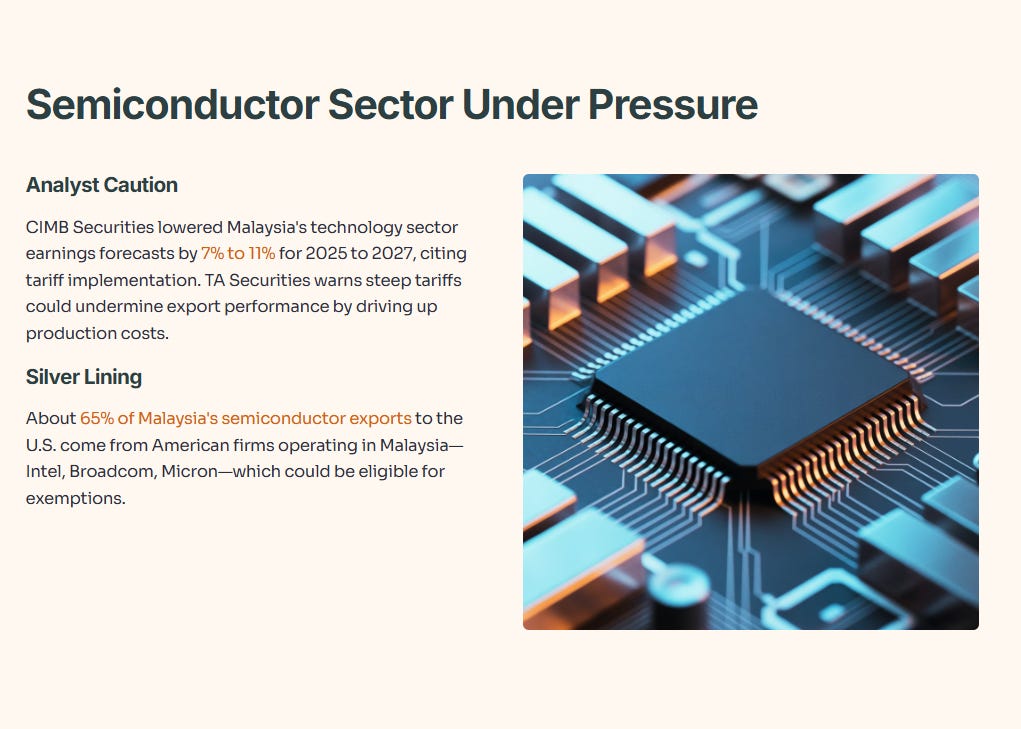
Research houses like TA Securities and CIMB Securities have turned cautious. CIMB lowered Malaysia’s technology sector earnings forecasts by 7% to 11% for 2025 to 2027, citing tariff implementation as one factor. TA Securities warns that steep tariffs could undermine export performance by driving up production costs.
However, there’s a silver lining. About 65% of Malaysia’s semiconductor exports to the U.S. come from American firms operating in Malaysia, which could be eligible for exemptions. Companies like Intel, Broadcom, and Micron have significant operations in the country.
3. Rare Earth Dependency Creates Long-Term Vulnerabilities
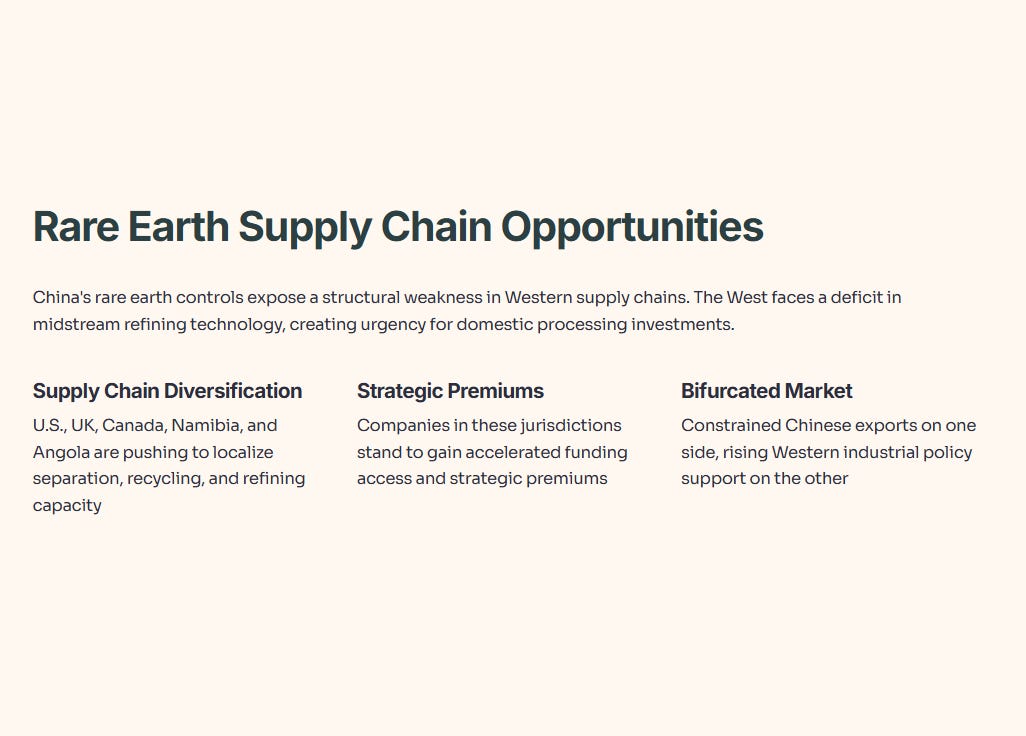
China’s rare earth controls expose a structural weakness in Western supply chains. The West faces a deficit in midstream refining technology. This creates urgency for domestic processing investments and technology transfer partnerships.
For Singapore investors, this means opportunities in companies positioned to benefit from supply chain diversification. The U.S., UK, Canada, Namibia, and Angola are all pushing to localize separation, recycling, and refining capacity. Companies operating in these jurisdictions stand to gain strategic premiums and accelerated funding access.
The rare earth sector is entering a bifurcated phase: constrained Chinese exports on one side, rising Western industrial policy support on the other. This dynamic will redefine valuations across the rare earth value chain.
Table 3: Singapore’s Trade Exposure vs. ASEAN Peers

The Trump-Xi Meeting: What to Watch For
The October 30 meeting between Trump and Xi will be critical. Trump has indicated he hopes to reach a “deal on everything”. The agenda likely includes trade tensions, rare earth exports, agricultural purchases (especially soybeans), and fentanyl cooperation.
Treasury Secretary Scott Bessent and U.S. Trade Representative Jamieson Greer will meet with Chinese Vice Premier He Lifeng in Malaysia on October 25. These talks aim to prevent a trade war escalation and keep the Trump-Xi meeting on track.
