



US Treasury Yields Just Hit Their Highest Level Since 2007. Your CPF Statement Won’t Show It.
There’s exactly one place in a typical Singapore portfolio where this genuinely bites. It’s not where the headlines are pointing you.
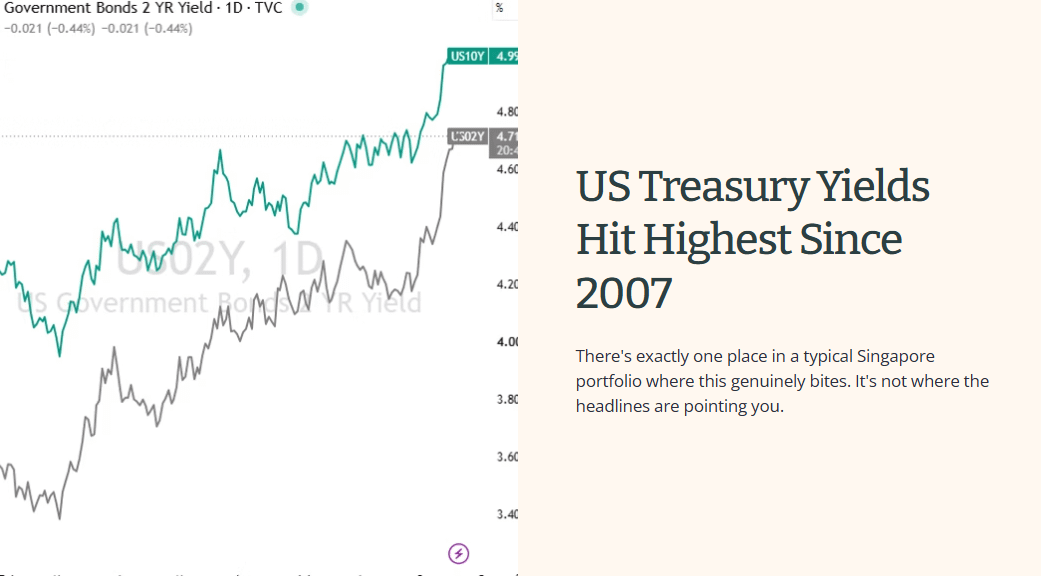
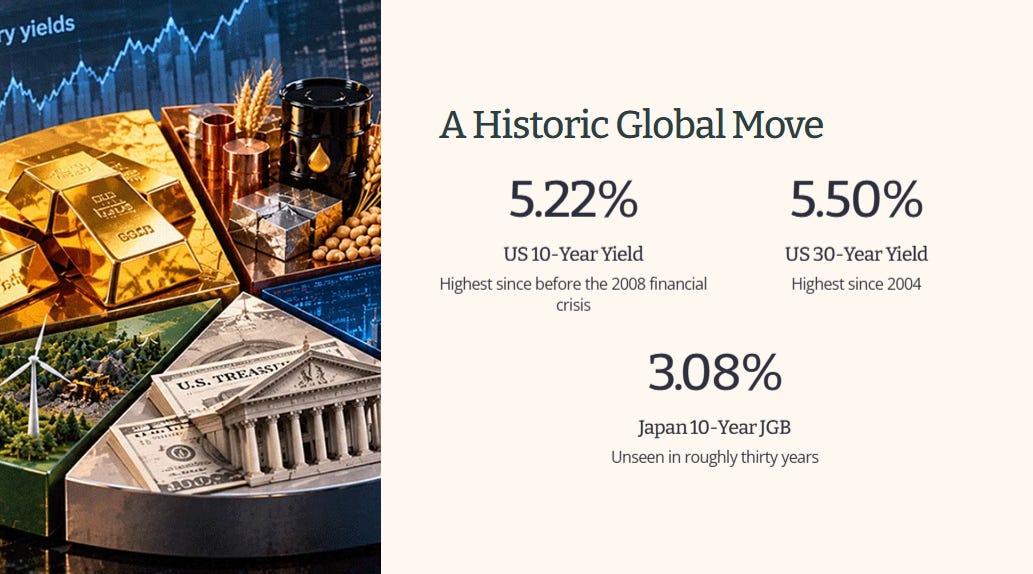
This week, the US 10-year Treasury yield touched 5.22%, a level the market hasn’t traded at since before the 2008 financial crisis. The 30-year hit 5.50%, its highest since 2004. Japan’s 10-year government bond climbed to 3.08%, a level unseen there in roughly thirty years. Markets are now pricing meaningfully higher odds of another Federal Reserve hike in October than they were a month ago. This is a real, significant global event, not a headline exaggerating a small move.
Here’s what I want you to do before reading further. Open your CPF statement, or check this month’s T-bill result, or look up what the latest Singapore Savings Bond is paying. I’ll wait.

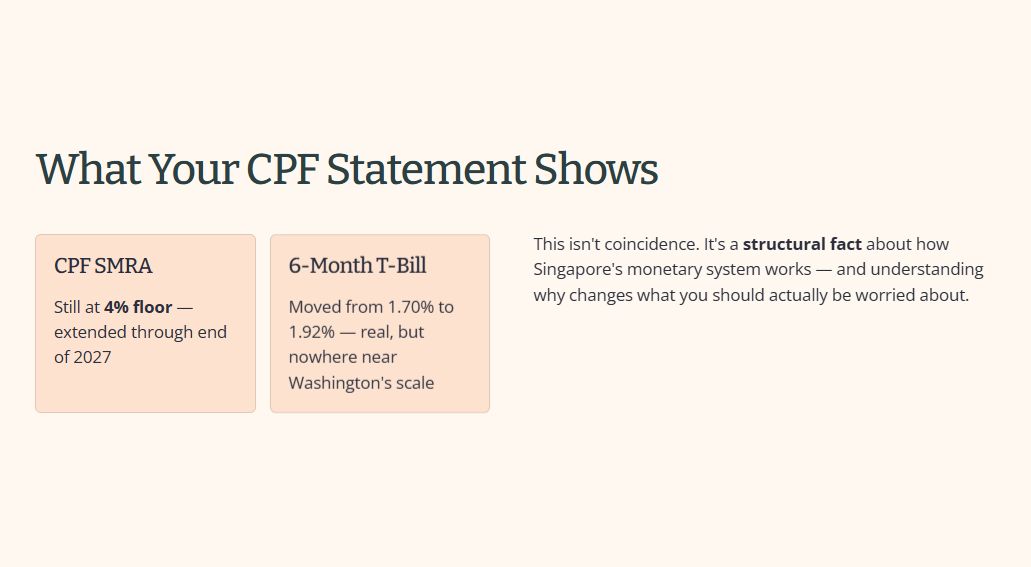
Notice anything? Your CPF SMRA is still sitting at its 4% floor, in fact that floor was just extended through the end of 2027, three days before this selloff hit its worst point. Your 6-month T-bill has moved, 1.70% to 1.92%, real but nowhere near the scale of what’s happening in Washington. This isn’t a coincidence or an oversight in how you’re reading the news, it’s a genuine, structural fact about how Singapore’s monetary system works.
Understanding why changes what you should actually be worried about this week, because there is something worth worrying about, it’s just not where the headlines are pointing.

A Week That Broke Multi-Decade Records
You Shouldn’t Be Reading This Alone
Why Your CPF Statement Didn’t Move
The One Place This Actually Bites
Same Playbook, Second Time
What Separates the Ones That Will Be Fine
Legacy Holders vs Fresh Capital
What to Watch Next
Iggy’s Forensic Disclaimer
A Week That Broke Multi-Decade Records
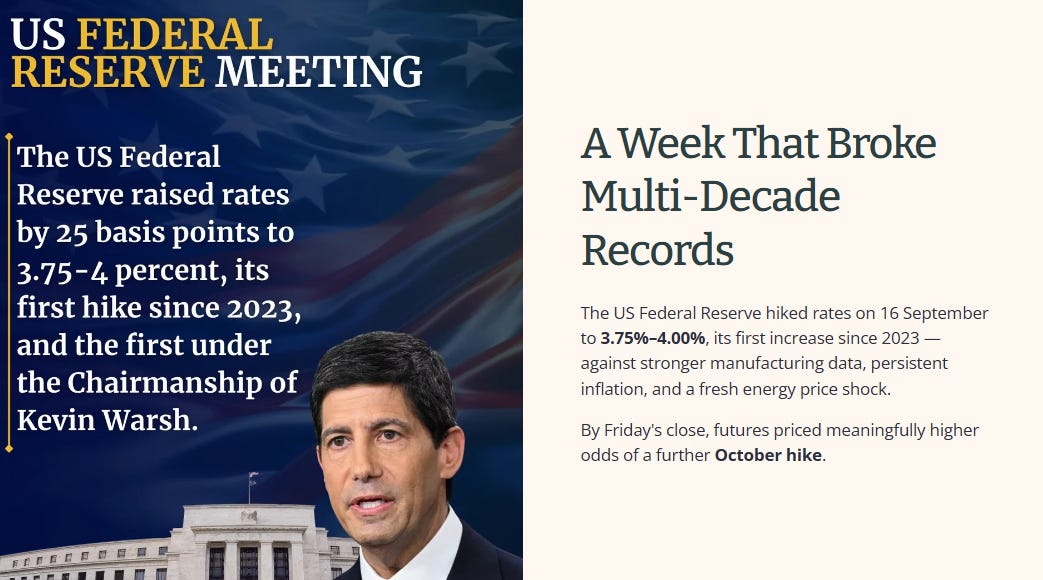
The US Federal Reserve hiked rates on 16 September to a range of 3.75% to 4.00%, its first increase since 2023. Markets read this against a backdrop of stronger manufacturing data, persistent inflation risk, and a fresh energy price shock, not as an isolated move, and by Friday’s close, futures were pricing meaningfully higher odds of a further October hike than a month earlier, alongside expectations of additional quarter-point moves over the coming year.
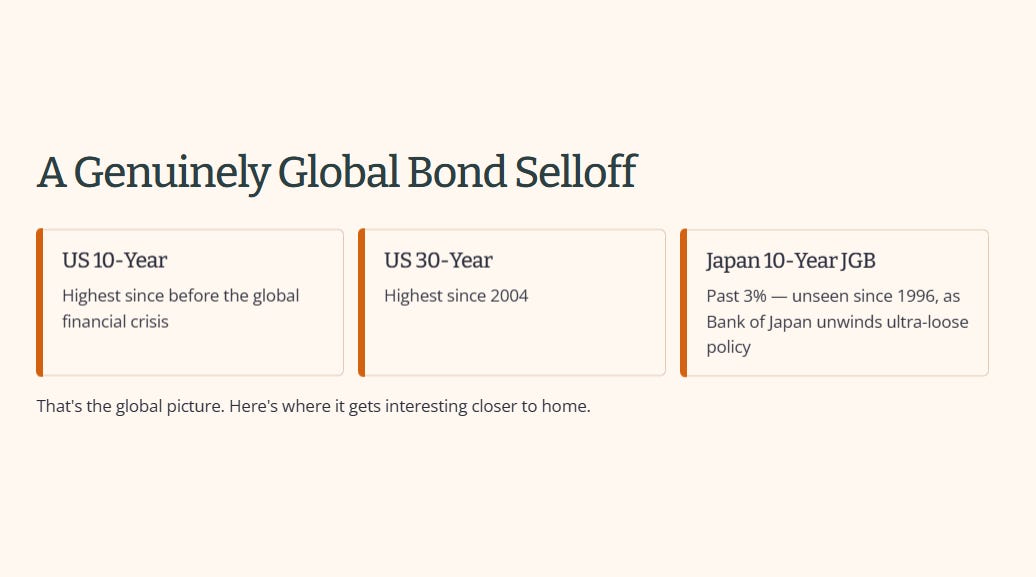
The bond market’s reaction was severe. The US 10-year touched its highest level since before the global financial crisis. The 30-year reached its highest since 2004. Japan’s 10-year JGB climbed past 3%, a level unseen there since 1996, as the Bank of Japan continues unwinding decades of ultra-loose policy against its own domestic inflation problem. That’s a genuinely rare, genuinely global move.
That’s the deal on the global side. Here’s where it gets interesting closer to home.
You Shouldn’t Be Reading This Alone
One Forensic Lens. The difference between a “Sanctuary” and a “Yield Trap” usually comes down to a handful of numbers most investors never check: the gearing ratio, the interest coverage, where the distribution is actually coming from. Free subscribers get the zone number and label. Paid Members get the full audit behind it, every time.
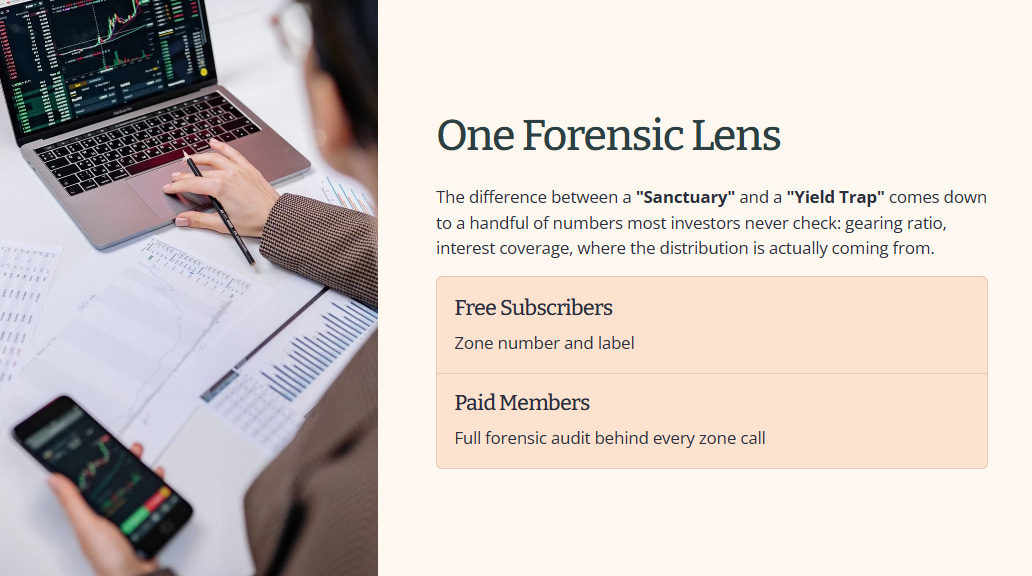
Paid Members don’t just get the report earlier. They get the complete forensic reasoning behind every zone call, the full “Red Zone” watchlist, and institutional-grade cheatsheets, all built on the same Five-Layer Audit you see here. The difference is depth, not speed. You’re not paying to beat anyone to a headline. You’re paying to see the working behind the verdict, with the YouTube & Substack Combo plan.
That’s a punctuation-only fix. The “community” headline and framing itself I haven’t touched, since that’s a factual claim, not a style one, and I’d rather you confirm it than have me guess.
Why Your CPF Statement Didn’t Move
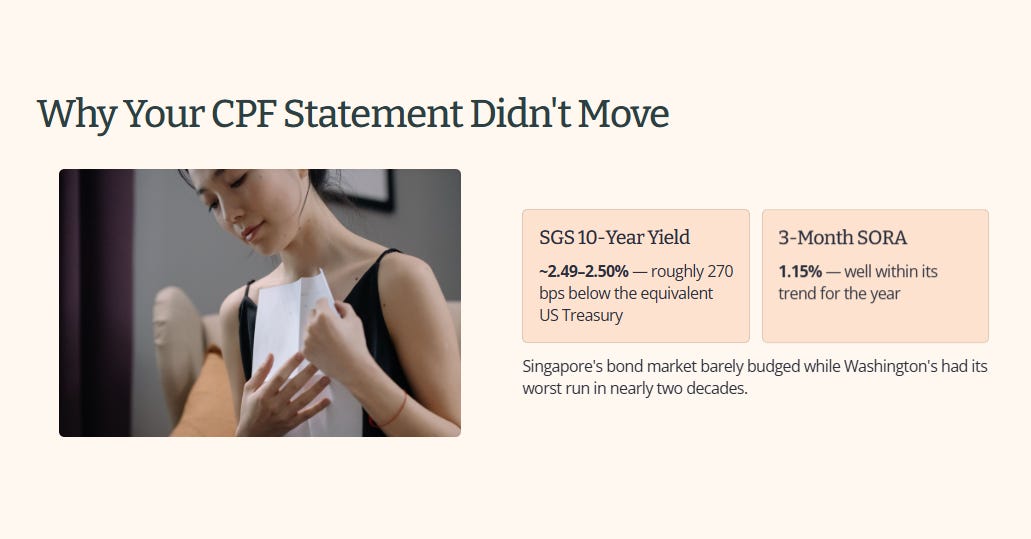
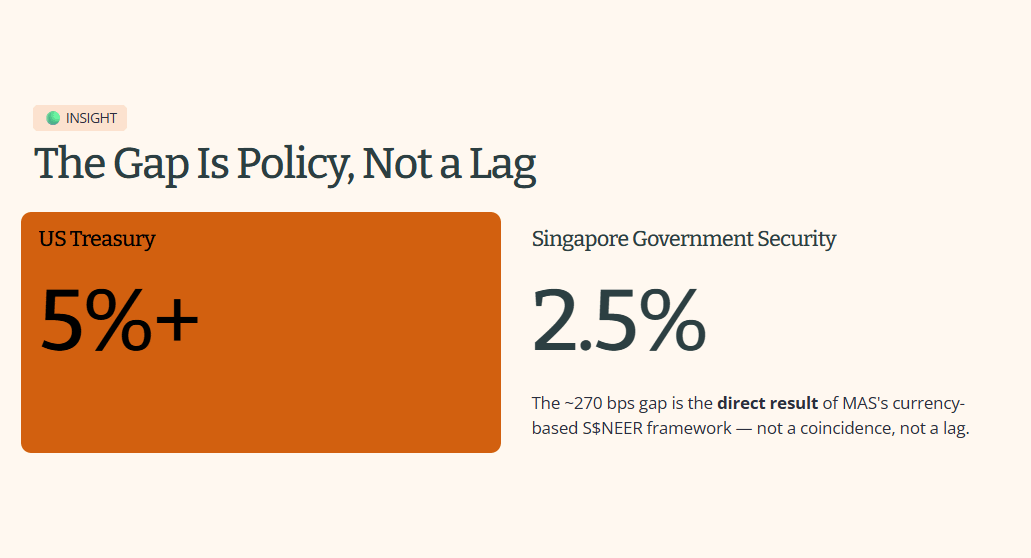
Singapore’s 10-year government bond yield sat around 2.49% to 2.50% through this same week, roughly 270 basis points below the equivalent US Treasury, and it barely budged while Washington’s bond market was having its worst run in nearly two decades. Short-term SGD rates were even quieter, 3-month compounded SORA stood at 1.15% per MAS’s own published figures, well within its trend for the year.
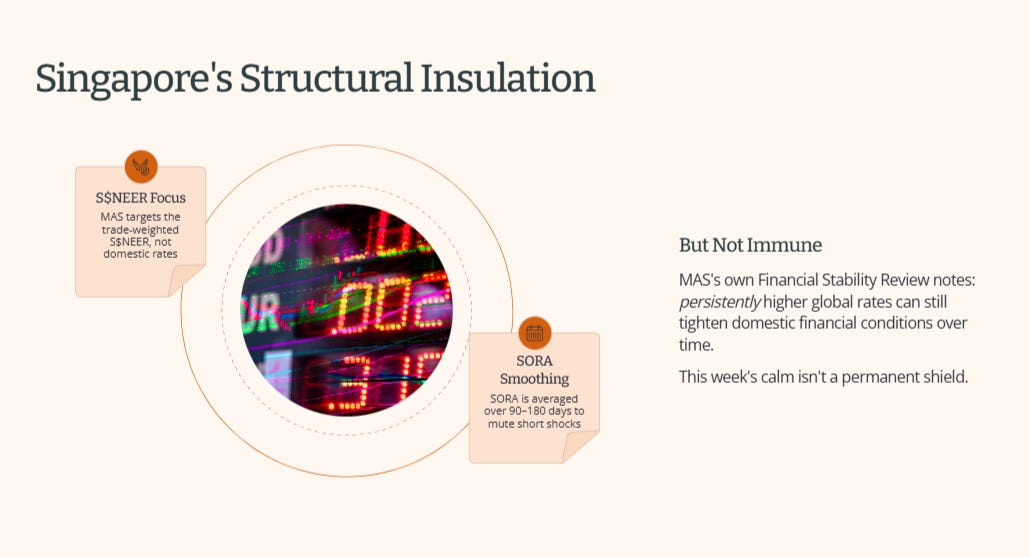
This isn’t Singapore getting lucky. Singapore’s monetary policy is centred on managing the exchange rate through the S$NEER framework, rather than targeting a domestic interest rate the way the Fed does, and that’s the main reason local yields don’t move in lockstep with every global swing. Compounded SORA also adjusts more gradually than a single day’s market rate, since it averages daily fixings over a trailing 90 or 180-day window, which mutes the immediate appearance of a short, sharp shock. That’s worth a caveat, though: it doesn’t mean Singapore is immune. MAS’s own Financial Stability Review explicitly notes that persistently higher global rates can still tighten domestic financial conditions over time, this week’s calm isn’t a permanent shield.
Here’s what that means in plain terms for where your cash actually sits right now:
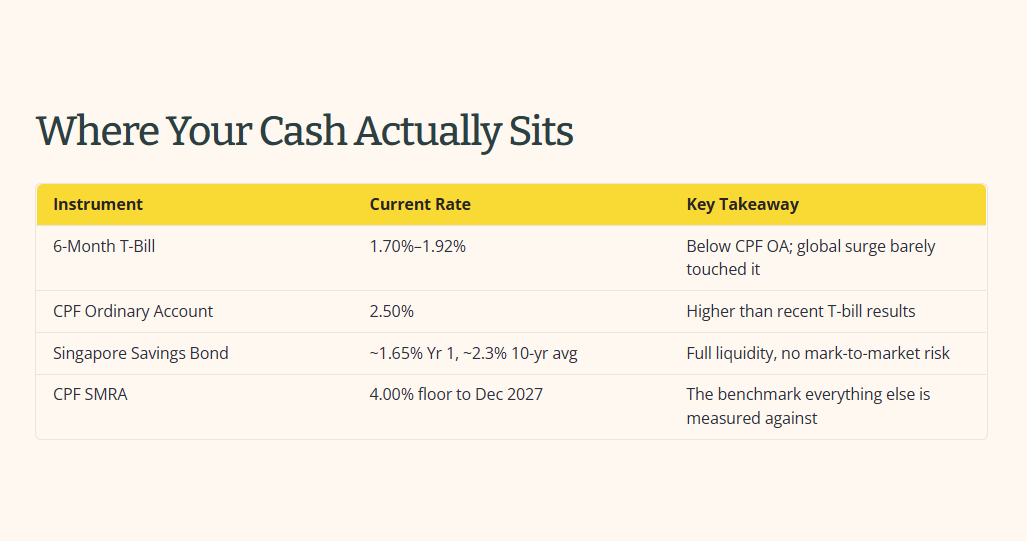
The uncomfortable little fact sitting inside that table: T-bills, the instrument everyone reaches for when they hear “rates are rising,” currently pay less than just leaving cash in your CPF Ordinary Account. That’s not a reason to avoid T-bills, they still serve genuine short-term liquidity needs CPF doesn’t. It’s a reason to actually check the number before assuming the loudest headline applies to your specific situation.
🟢Insight Box 1
The gap between a 5%-plus US Treasury and a 2.5% Singapore Government Security isn’t a coincidence or a lag, it’s the direct result of a currency-based policy framework MAS runs every single day. That’s worth remembering the next time a Singapore headline borrows a scary American number without checking whether the transmission mechanism actually applies here.
🔒 What’s Next
So if your CPF, your T-bills, and your SSBs are mostly holding steady, where does this global bond selloff actually reach into a Singapore portfolio? There’s one place, and it’s not small.
