


Most Singapore investors think trading halts are rare market hiccups. But with more companies halted or suspended than many expect, every investor should know what really happens when the market hits pause — and how to protect capital when it does.
Picture this: You open your trading app and see “HALTED” next to your stock. Your chest tightens. Is your money gone? Can you sell? What now?
You’re not alone. Trading halts feel scary because they remove control. Yet halts exist to keep markets fair. The goal today: turn fear into a clear plan. I’ll break down the mechanics, share real examples, explain what to do when it happens, and give you a checklist you can use anytime the tape freezes.
What Exactly Is a Trading Halt?
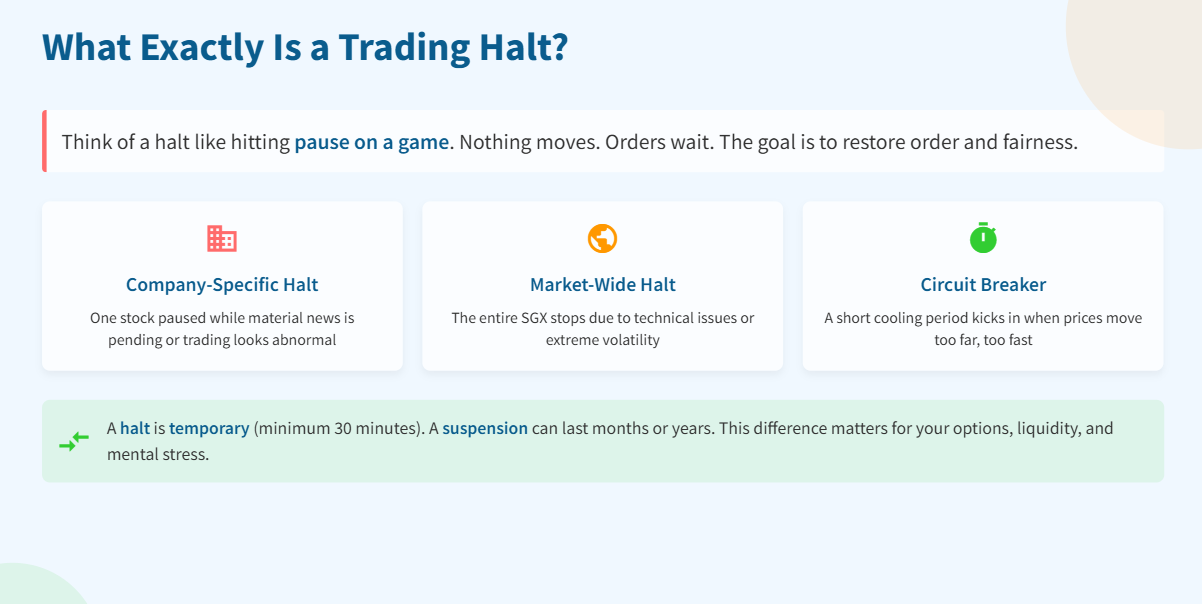
Think of a halt like hitting pause on a game. Nothing moves. Orders wait. The goal is to restore order and fairness.
There are three key states to grasp:
Company-specific trading halt: One stock is paused while material news is pending or trading looks abnormal.
Market-wide halt: The entire SGX stops due to a technical issue or extreme volatility.
Circuit breaker: A short cooling period kicks in when prices move too far, too fast.
A halt is different from a suspension. A halt is temporary. A suspension can last months or years. That difference matters for your options, liquidity, and mental stress.
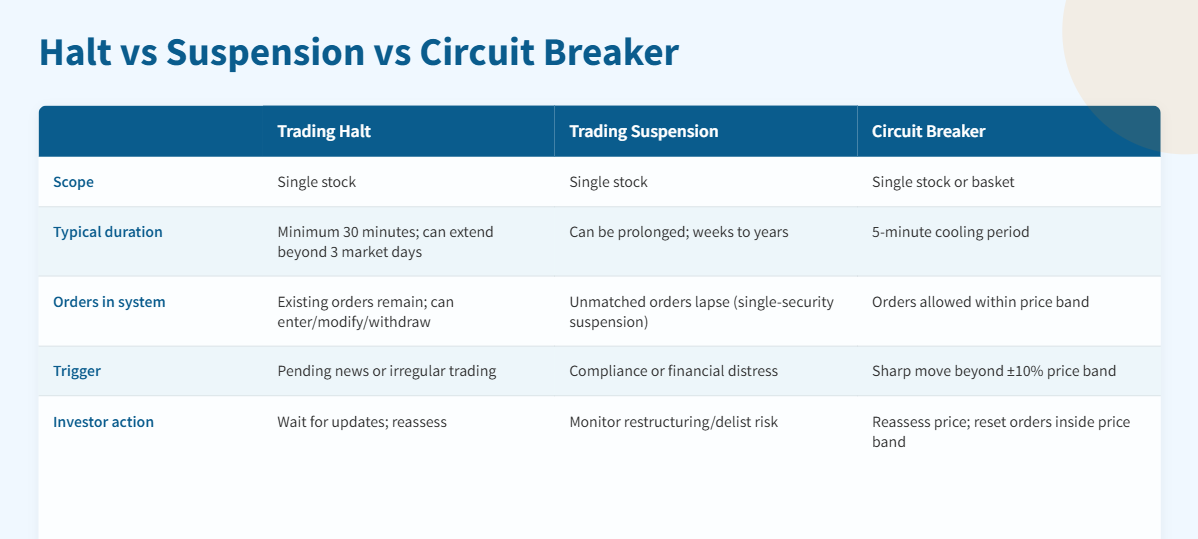
This table clarifies the three most common pause states on SGX and how they affect liquidity and investor actions. Use it to set expectations on timing, order handling, and next steps.
Why SGX Pulls the Emergency Brake
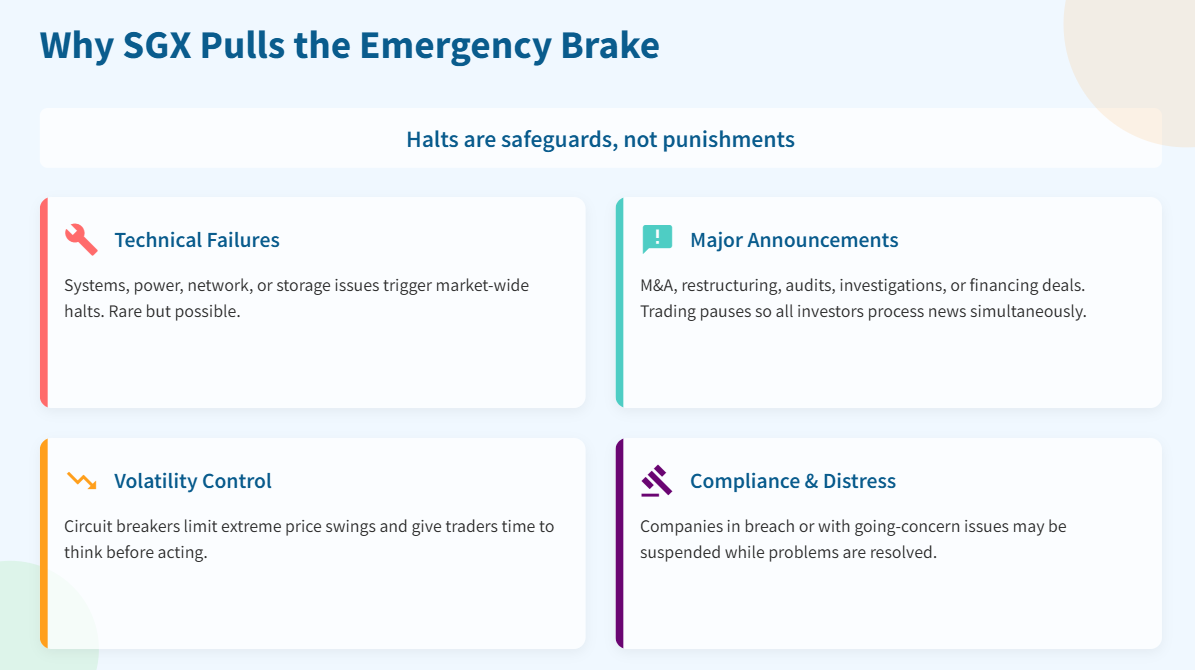
Halts are not punishments. They are safeguards.
Technical failures: Systems, power, network, or storage issues. These trigger market-wide halts. They are rare, but they do happen.
Major announcements: M&A, restructuring, audits, investigations, or financing deals. The exchange pauses trading so all investors process news at the same time.
Volatility control: Circuit breakers limit extreme price swings and give traders time to think.
Compliance and distress: Companies in breach, or with going-concern issues, may be suspended while problems are resolved.
Trading halts are not meant to punish anyone—they act as safety nets for the whole market. Sometimes, a halt is needed because of technical problems like a system crash or power cut, which can stop trading for everyone. Other times, a company might have big news—like a merger, serious audit, or legal investigation. Trading pauses so that every investor has a fair chance to catch up on the facts. If prices start swinging wildly, circuit breakers kick in to cool things down and let everyone think before making a move. And if a company runs into serious trouble, like breaking important rules or having money problems, the exchange may suspend trading until things are fixed. Each of these stops is a way to protect regular investors and keep the market fair.
