


Editor’s Note: This post has been updated on October 19, 2025, with the latest data on Singapore’s family office boom. We’ve also added new, specific analysis for our Malaysian investors (on currency and diversification) and for our Singaporean investors (on using CPF/SRS funds).
In boardrooms from Silicon Valley to Shanghai, the world’s ultra-wealthy are asking the same question: where can generational wealth survive the next decade of chaos? The answer increasingly leads to a small island nation that’s rewriting the global wealth playbook.
The Great Wealth Migration Unfolds
Something extraordinary happened in Singapore over the past three years. The city-state transformed from a regional financial hub into the world’s most coveted address for billionaires seeking both safety and opportunity. Picture managing a billion-dollar fortune while watching trade wars escalate, currencies fluctuate wildly, and political systems strain under pressure. Where do you place your bets for the long haul?
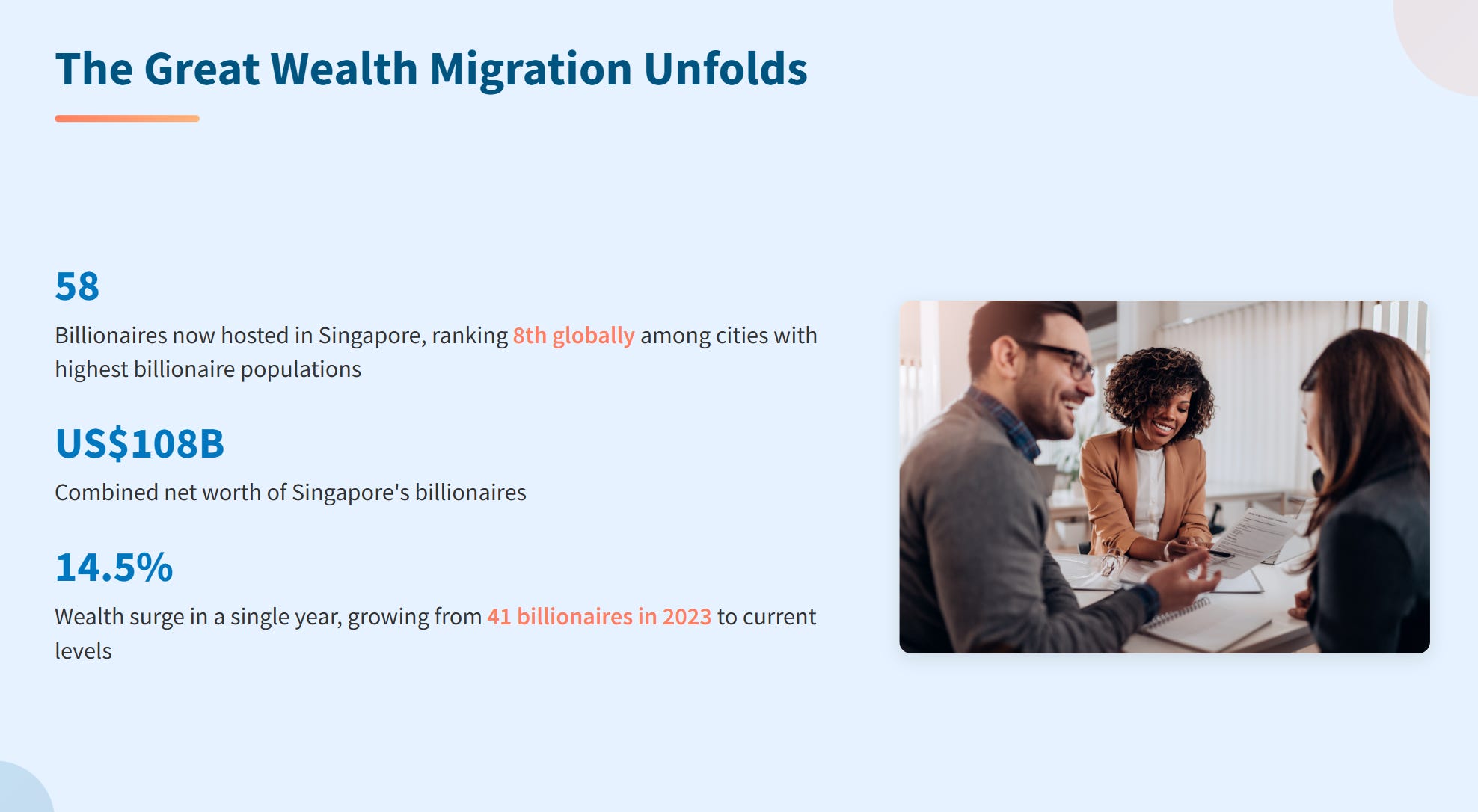
Singapore now hosts 58 billionaires with a combined net worth of US$108 billion, ranking 8th globally among cities with the highest billionaire populations. This represents explosive growth from just 41 billionaires in 2023, with their collective wealth surging 14.5% to US$155.5 billion in a single year. These aren’t just numbers on a spreadsheet—they represent a fundamental shift in how ultra-high-net-worth individuals think about wealth preservation in an increasingly uncertain world.
The migration tells a deeper story about global capital flows and risk management at the highest levels. When Ray Dalio, the legendary founder of Bridgewater Associates, relocated his family office to Singapore, he wasn’t simply chasing tax savings. He was hedging against geopolitical uncertainty, recognizing that Singapore’s consistent governance and crisis management capabilities had transformed it into the ultimate safe haven for nervous billionaires.
Beyond Tax Benefits: The Strategic Advantage
Singapore’s appeal extends far beyond its zero capital gains tax policy, though that certainly helps when managing billion-dollar portfolios. The city-state has crafted a sophisticated family office incentive structure that treats tax efficiency as just one component of a comprehensive wealth management ecosystem.
Singapore Family Office Tax Incentive Structure (2025)
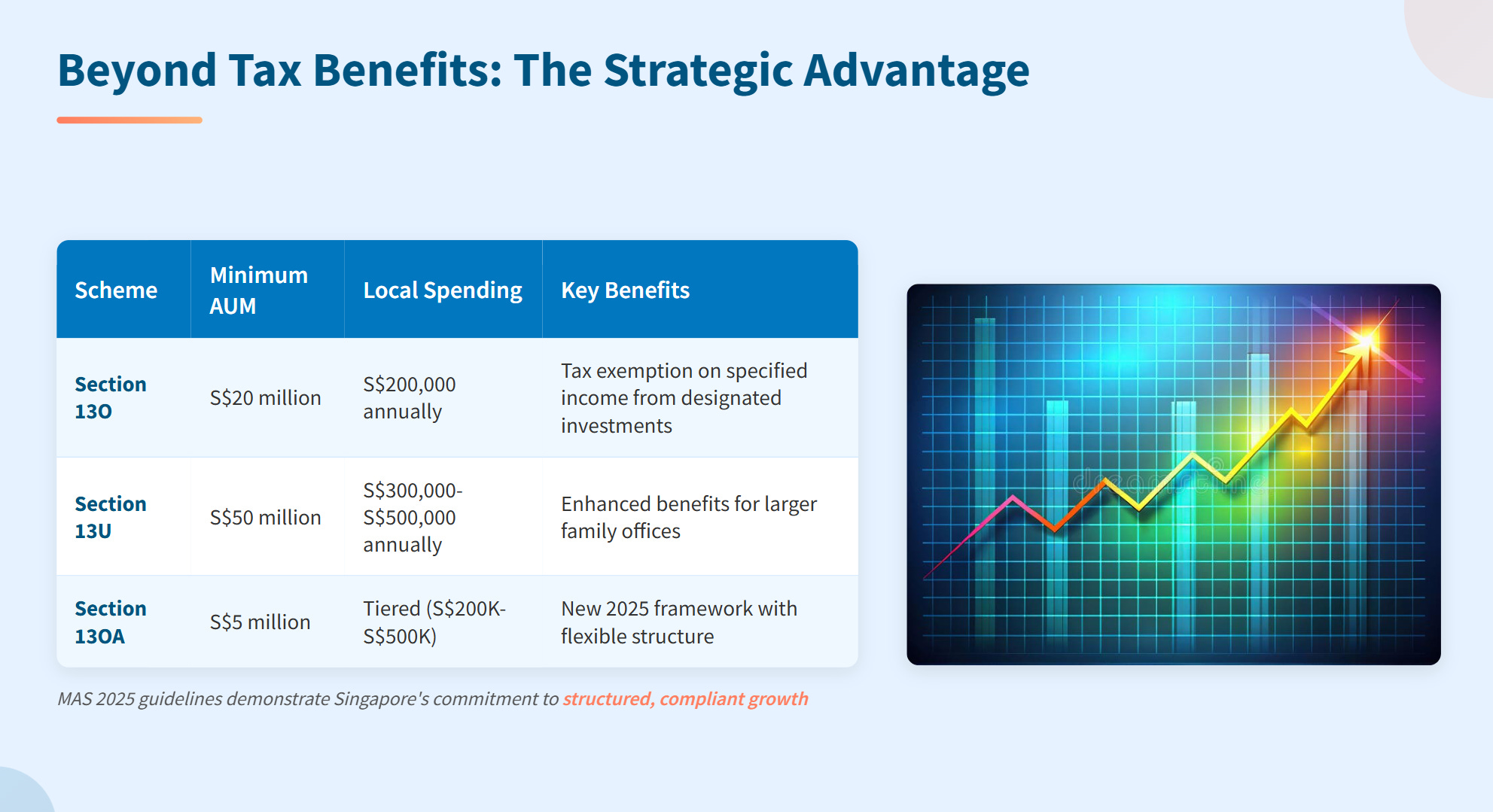
MAS 2025 guidelines demonstrate Singapore’s commitment to structured, compliant growth
These incentives function as strategic wealth management tools rather than simple tax breaks. The Local Business Spending requirements ensure family offices contribute meaningfully to Singapore’s economy while accessing preferential treatment. It’s a win-win structure that creates sustainable growth rather than paper shuffling.
The business ecosystem advantage becomes even more compelling when you consider the network effects. Singapore isn’t just attracting individual billionaires—it’s becoming the nerve center for Asia’s entire wealth management industry. Assets under management have reached S$6.1 trillion (US$4.7 trillion), representing 12.2% year-over-year growth. The 1,650 single-family offices operating in Singapore as of 2024, up from just 400 in 2020, have created a self-reinforcing ecosystem where billionaire presence validates and attracts more billionaire presence.
The Geopolitical Chess Game
Singapore’s masterful navigation of global tensions offers perhaps the most compelling reason for its billionaire appeal. As Deputy Prime Minister Gan Kim Yong recently acknowledged, “neutrality is not possible” in today’s world, but Singapore’s approach of taking principled positions rather than choosing sides makes it attractive to global wealth holders seeking to minimize political risk.
Consider the strategic positioning from a billionaire’s perspective. Singapore maintains strong security ties and financial cooperation with the United States, providing access to US markets and regulatory stability. Simultaneously, it operates as China’s major trading partner through pragmatic engagement, offering Asian market opportunities without political risk. This balancing act extends to ASEAN leadership, where Singapore’s regional financial hub status enables diversification across the world’s fastest-growing economies.
Singapore’s Geopolitical Advantages for Ultra-Wealthy
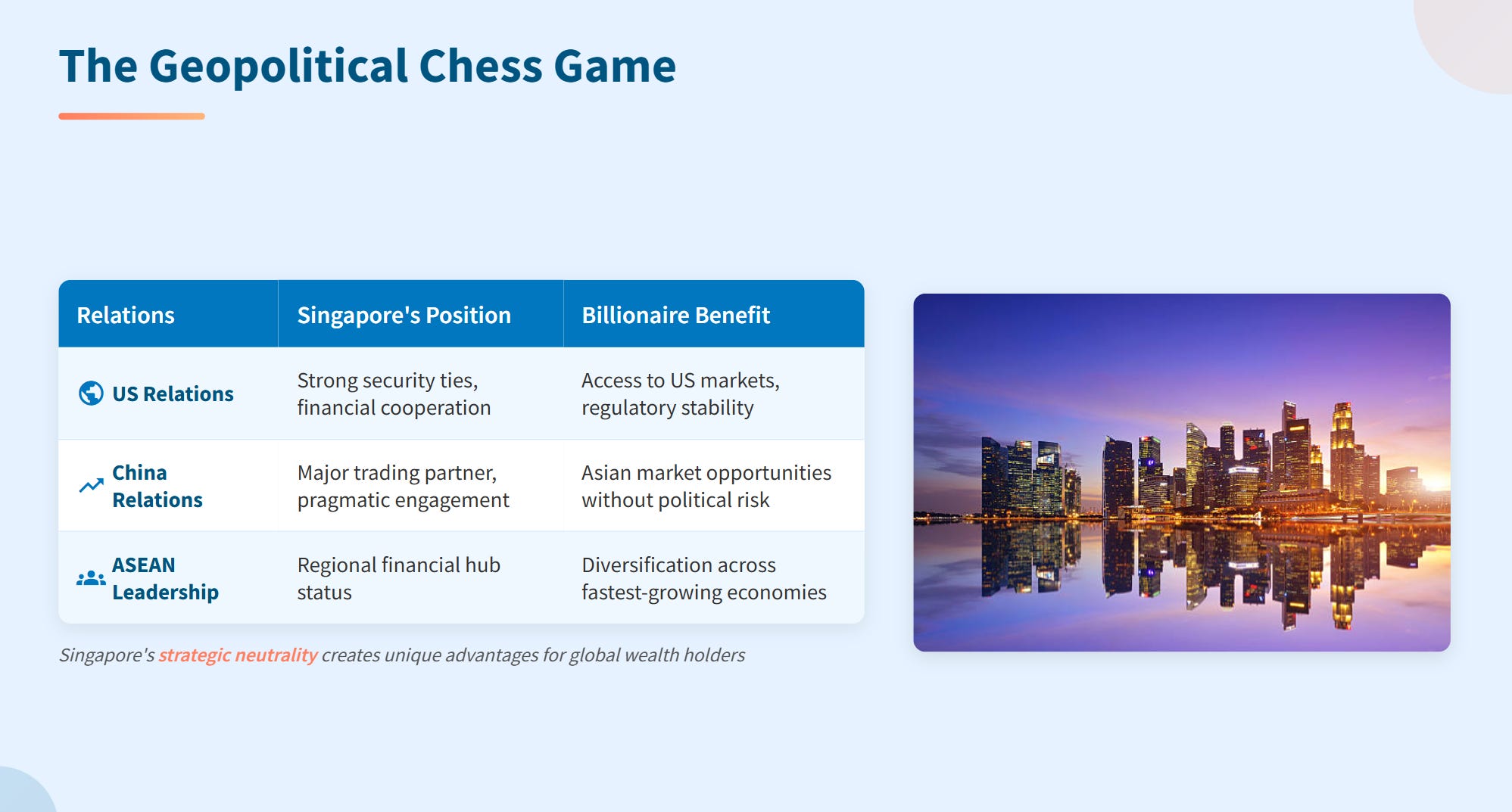
Analysis reflects Singapore’s 2025 strategic positioning amid global tensions
This strategic neutrality attracted tech titans like Sergey Brin, Google’s co-founder, who established Bayshore Global Management in Singapore, and business magnate James Dyson, who relocated his entire business headquarters to the city-state. These moves weren’t driven by tax considerations alone—they reflected calculated bets on Singapore’s ability to maintain stability and connectivity across fracturing global relationships.
Economic Impact: The Multiplier Effect
The billionaire influx is reshaping Singapore’s economic landscape in ways that extend far beyond individual wealth accumulation. The wealth management sector recorded over 8% growth in assets under management for 2023, with a five-year compound annual growth rate of approximately 10%. These numbers reflect not just growth, but transformation.
Singapore’s Billionaire Economic Impact (2024-2025)
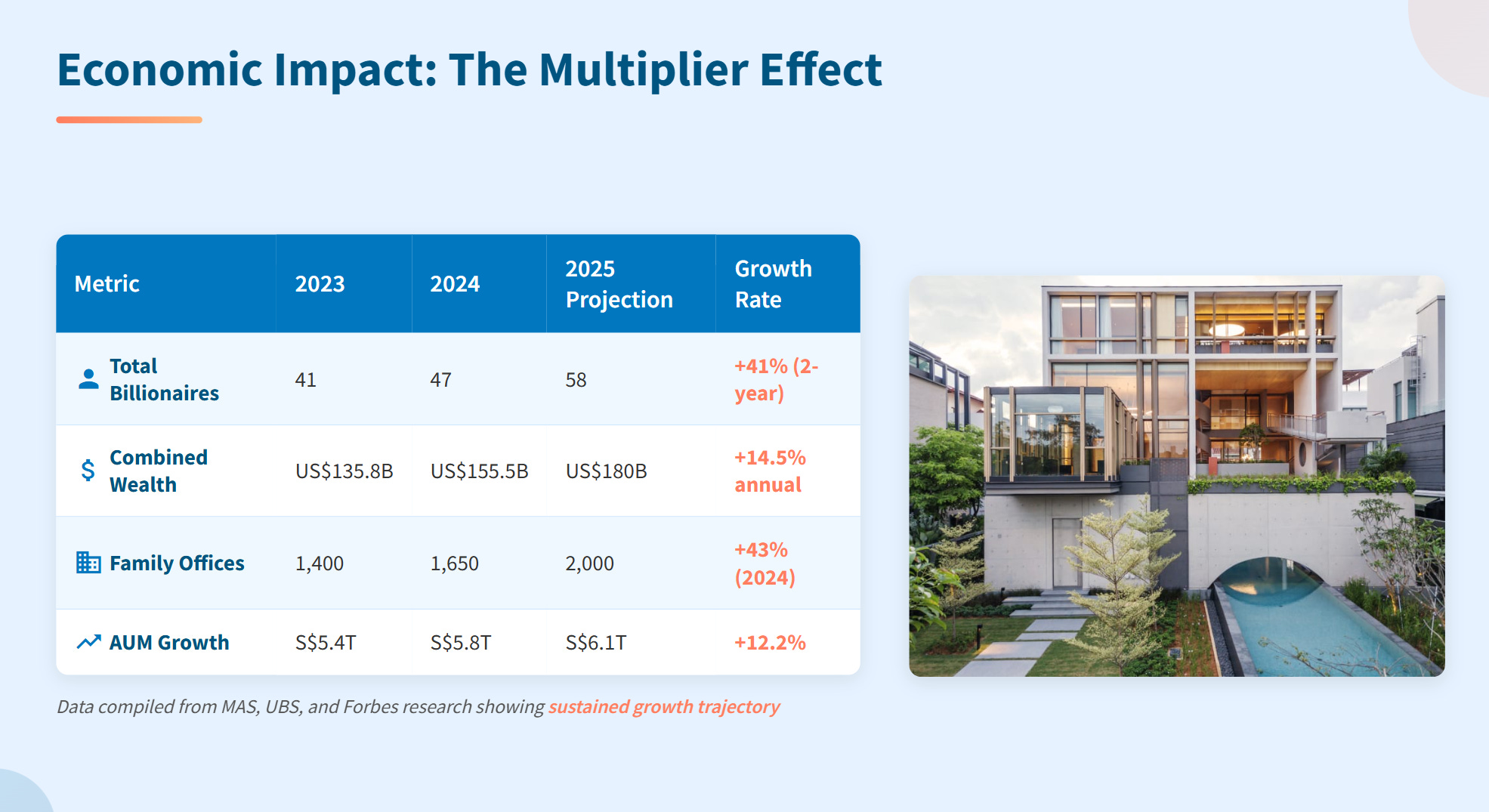
Data compiled from MAS, UBS, and Forbes research showing sustained growth trajectory
The multiplier effect becomes apparent when you examine what happens beyond the headline numbers. Each ultra-high-net-worth individual who relocates to Singapore brings employment opportunities, as family offices typically employ 10-50 highly skilled professionals. Luxury property markets benefit from increased demand, while service sectors including private banking, legal services, and wealth management expand to meet growing needs. Perhaps most intriguingly, family offices increasingly invest in local startups and growth companies, creating a venture capital ecosystem that benefits Singapore’s broader innovation economy.
Investment Implications: Following the Smart Money
Singapore’s real estate investment trusts represent perhaps the most direct way for investors to capitalize on this wealth migration. Increased demand for premium office space, luxury retail, and high-end residential properties creates sustained tailwinds for quality REITs positioned in the right segments.
Top Singapore REITs Benefiting from Wealth Migration
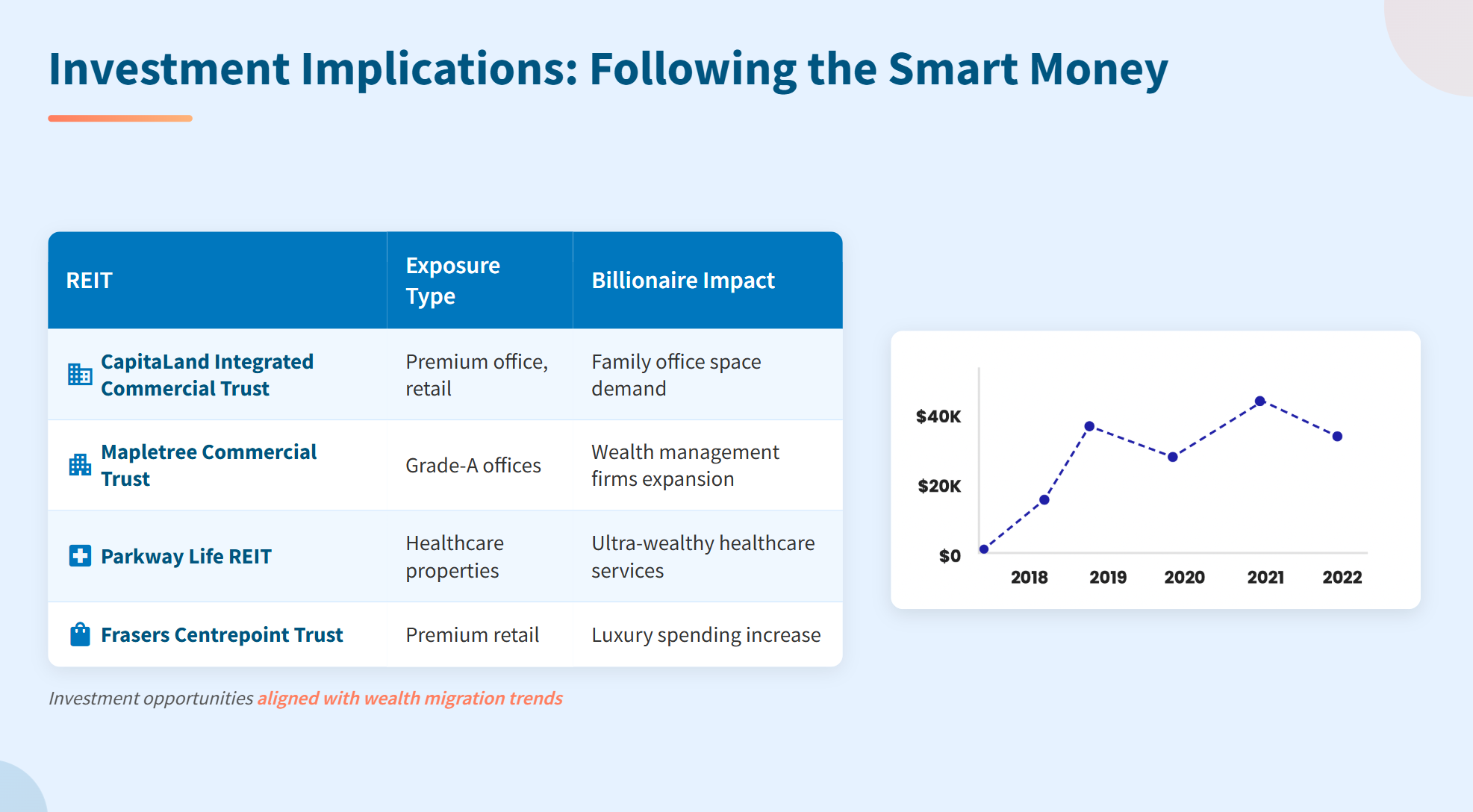
Investment opportunities aligned with wealth migration trends
The banking sector presents equally compelling opportunities. Singapore’s major banks—DBS, UOB, and OCBC—are experiencing significant growth in their private banking and wealth management divisions. UOB expects high single-digit loan growth in 2025, while OCBC’s wealth management fees grew 25% year-over-year. These aren’t temporary windfalls but structural shifts in business mix toward higher-margin, relationship-driven revenue streams.
Infrastructure investments also merit attention. Family offices require world-class infrastructure extending beyond financial services to technology, connectivity, and urban planning. Singapore’s continued investment in these areas directly supports the growing wealth management sector while creating investment opportunities across multiple sectors.
Iggy’s Take for Malaysian Investors
While the capital is landing at Changi, the ripple effects are felt across the Causeway. For Malaysian investors, this trend reinforces the ‘flight to quality’ narrative.
This massive wealth inflow provides structural support for the Singapore Dollar (SGD), strengthening its ‘safe haven’ status against the Ringgit.
More importantly, it offers a direct thesis: for powerful portfolio diversification, consider allocating to the very SGX-listed REITs and banks (like DBS or UOB) that are directly benefiting from this boom.
