


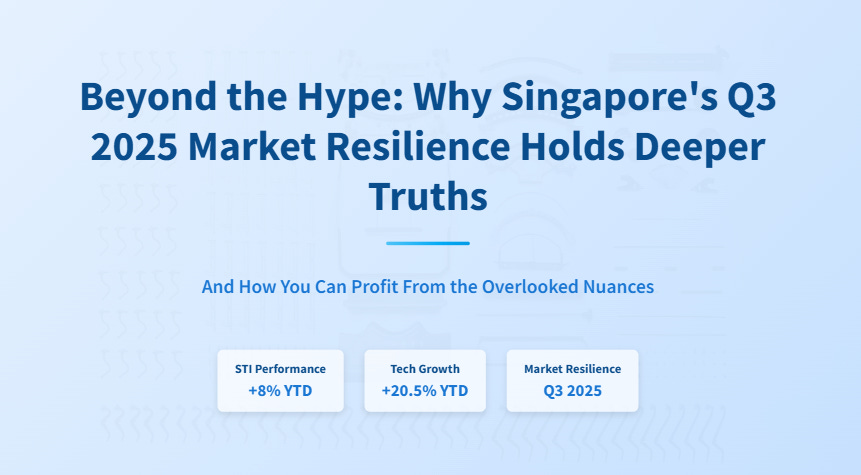
Another quarter wrapped up. If you're like most Singaporean investors, you’re looking at recent headlines and wondering what’s really going on. Globally, recession talk lingers, interest rates are still uncertain, and geopolitics is tense. Yet, on our little red dot, the Q3 2025 market tells a different, resilient story—or so it seems at first glance.
You’ve seen the numbers: the Straits Times Index (STI) touched new highs above 4,300 before closing at 4,298, up roughly 2% for the quarter and 8% year-to-date. There's plenty of chatter about property still being hot, bucking global trends, and a surge in several local tech stocks. It’s tempting to just ride the wave. But that’s where most investors fall short. Instead of reacting to “what,” you’ll want the “why” and, even more importantly, “what’s next.”
Let’s cut through the noise. We’re going past “Singapore is resilient.” I’ll walk you through a detailed and actionable framework so you’ll know which sectors performed, what drove them, where risks lie, and how to tune your CPF, SRS, and cash portfolios for Q4 and beyond. This isn’t a recap—it’s your roadmap to navigating Singapore’s unique market.
Igniting the Q3 Singapore Spark: What You Missed Behind the Headlines
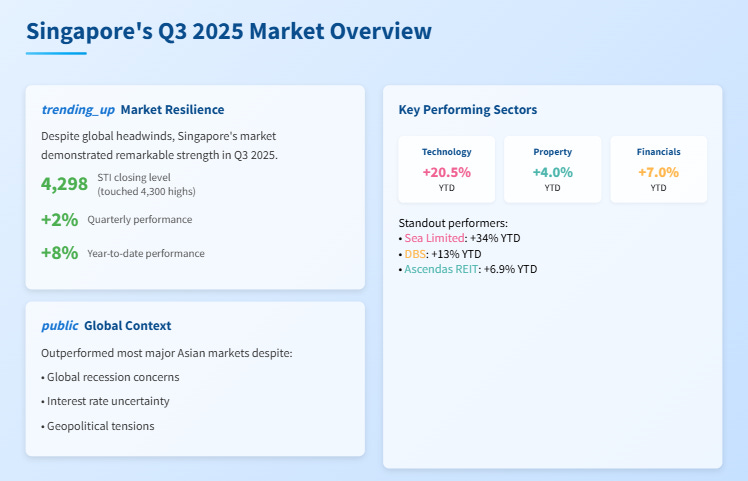
Q3 2025 was fascinating for Singapore—thanks in large part to our open economy and strategic sector mix. While global markets grumbled about still-elevated inflation and high interest rates in the US and Europe, Singapore mostly charted its own course.
The Unexpected Climb of Local Tech
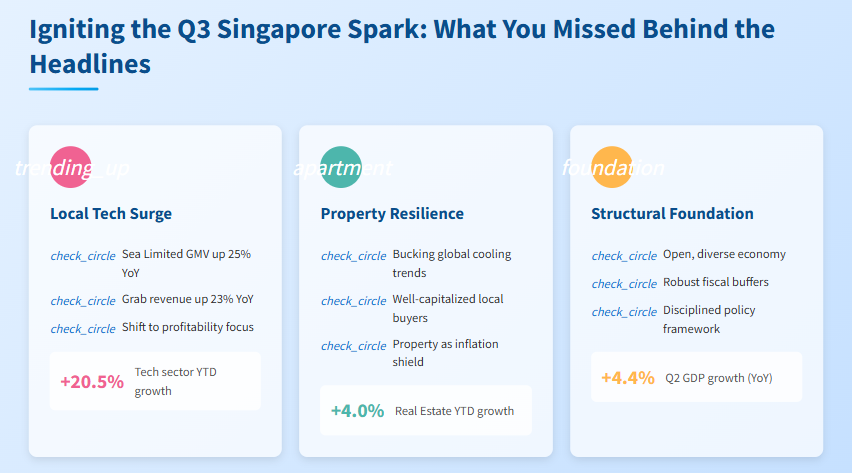
This quarter’s standout was the return of local tech. Heavyweights like Sea Limited (Shopee, Garena) and Grab Holdings reported robust revenue growth (Sea’s e-commerce GMV up 25% YoY in 1H25, Grab’s group revenue up 23% YoY in Q2). Both have shifted their focus to maintaining profitability, backed by leaner cost structures and tangible improvements in their bottom line. Result: investors started seeing Singapore tech as credible—no longer just a ‘global story.’
Property: Still Hot in a Cool World
Despite higher rates and softer property markets abroad, Singapore’s property sector remained resilient. Demand is propped up by well-capitalized local buyers and the view of property as an inflation shield. Government cooling measures nipped speculative excess, but the long-term trend—especially for quality HDB resale and prime locations—remains up.
The Structural Foundation
Singapore’s resilience has roots. Our open, diverse economy with robust fiscal buffers and disciplined policy acts as a shock absorber. Yes, global headwinds matter, but often with a lag or in a gentler form.
